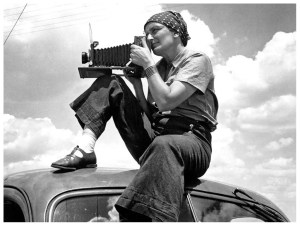
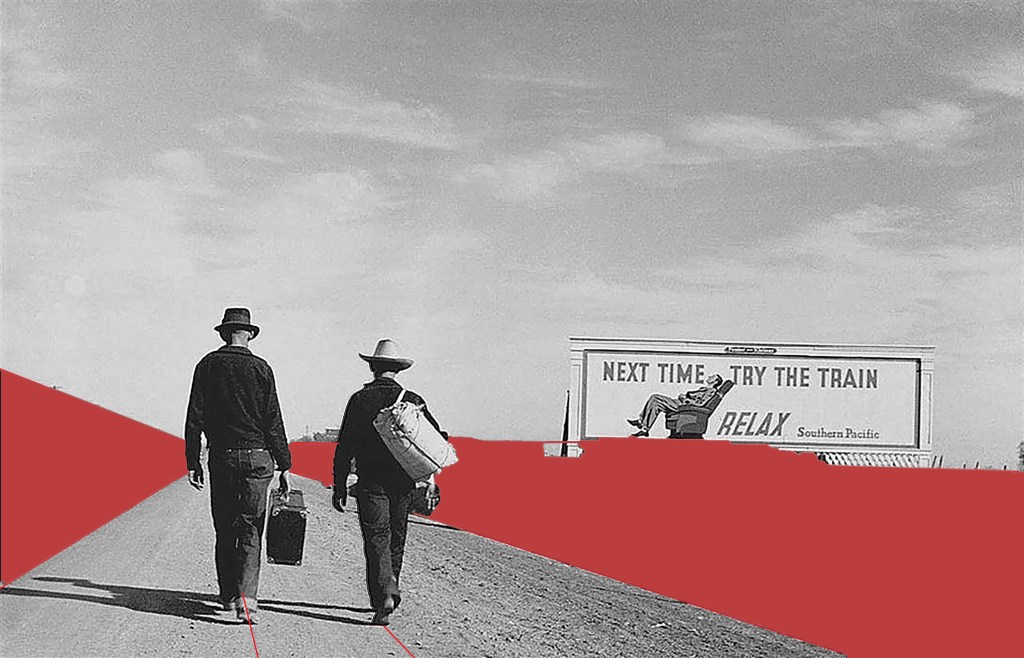
In this research I will look at Towards Los Angeles a photograph by Dorothea Lange taken in the great depression in the USA. Before I critique this photograph I would like to discuss the journey the artist took to get to the point of taking this photo.
Dorothea Lane was born on the 26th of May 1895 in Hoboken New York her birth name was Dorothea Margareta Nutzhorn her parents were of German dissent and were named Heinrich Nutzhorn and her mother Johanna Lange. In 1907 her father abandoned the family who were completed by a boy, Martin. When this happened Dorothea dropped her middle name and took her mother’s surname becoming Dorothea Lange.
At age seven she contracted polio and while many would see this as a handicap Dorothea embraced it saying “It formed me, guided me, instructed me, helped me and humiliated me. (Lange, 1998)” After graduating from school she attended Columbia University where she was tutored by Clarence H. White. Leaving university she worked in several of the best photographic studios in New York.
Her wanderlust took her on a trip with her friend they planned to see the world but were robbed in San Francisco so they settled there. She worked in photo studios meeting several influential people who helped her set up a successful studio taking photos of the wealthy. In 1920 she married Maynard Dixon and over the next ten years had two sons.
During this period she completed several projects one being of the unemployed and homeless. She by chance took an exposure at the soup kitchen run by a widow nicknamed “The White Widow” (Lange, 1936). This photo naturally had the title “White Angel Breadline” (Lange, 1936). It was liked locally by influential practitioners’ and it led to work with the Resettlement Administration (RA) the forerunner of the Farm Security Administration (FSA).

During 1935 she divorced Dixon and married the economist Paul Schuster Taylor. Taylor was a Professor of Economics at the University of Berkeley. They went onto record the poverty around the area where they lived. Taylor wrote pieces about the families encountered while Dorothea photographed them.
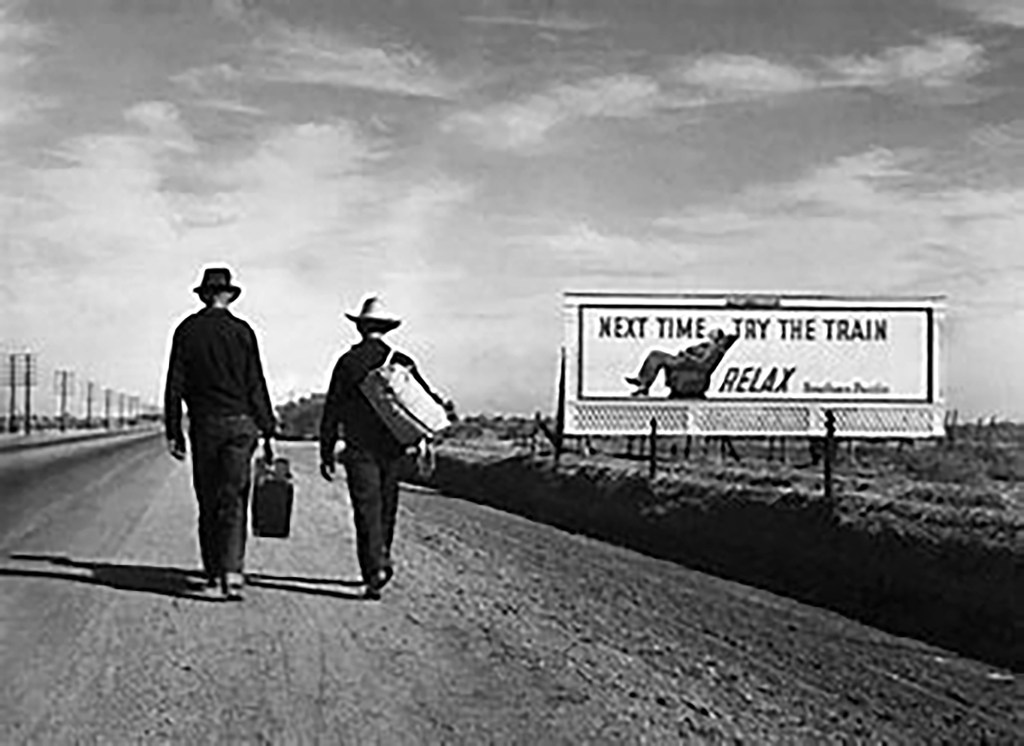
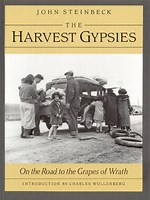
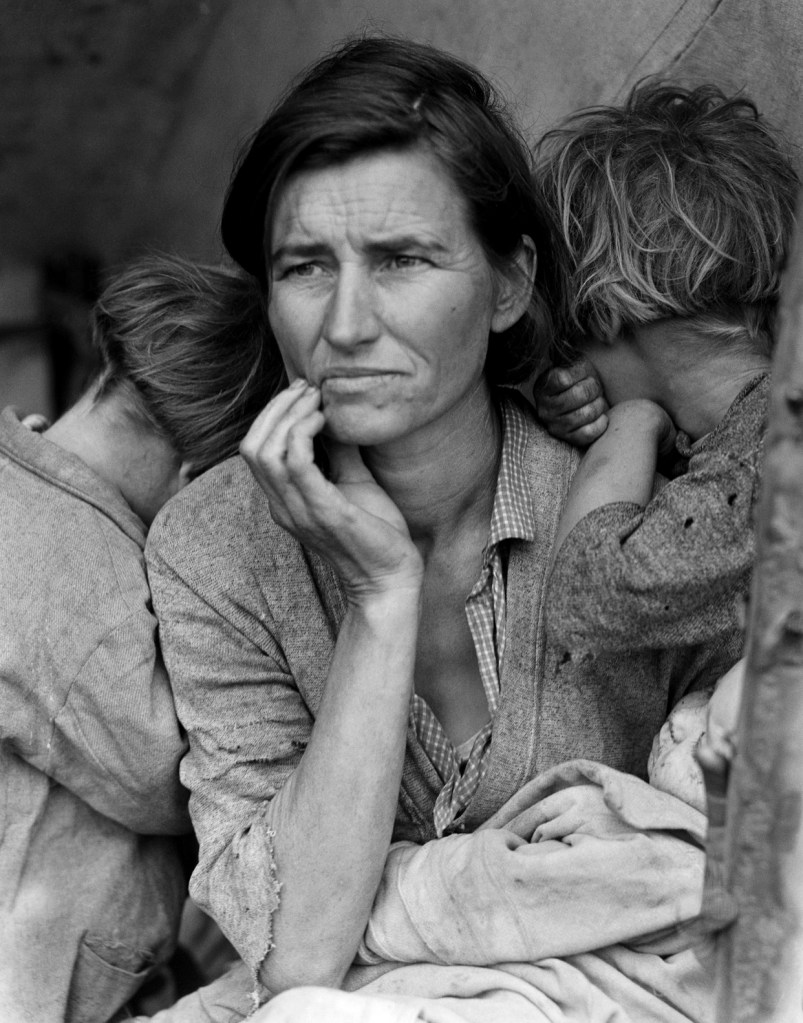
Working for the FSA allowed her to capture some of the most important photos of the time. “Migrant Mother” (Lange, 1937) is one of the most revered images of all time and was taken around the same time as “Towards Los Angeles.” (Lange, 1937) Many of her photos were printed by the “San Francisco News”, when they supported John Steinbeck’s work “The Harvest Gypsies” (Steinbeck, 1936), a collection of articles about the farmers suffering the depression supported by images including “Migrant Mother”.
Her next big piece of work was documenting the lives of interred Japanese-Americans; this work was carried out for the War Relocation Authority. She applied herself to the plight of these people so well that the government wouldn’t let them be seen. They didn’t want any sympathy for the Japanese citizens.
In 1945 Ansell Adams asked Dorothea to teach at California School of Fine Arts. Their friend Imogen Cunninham from Group f.64 joined at the same time.

She Co-founded the magazine LIFE in 1952 and Dorothea did several pieces of work for this magazine including the damming of Berryessa and its effect on the residents. Again she documented the suffering warts and all.
Then in 1952 Dorothea Co-founded Aperture Magazine which is still in print today she had been familiar with Group f.64 and the magazine this group produced called “Camera Craft” (Lange, 1935).

John Szarkowski displayed her work at the MoMA between 26th January and 10th April 1966. He couldn’t believe the collection of work she held at home and how well they were indexed. She worked tirelessly even though her health was now failing.
From about this time until her death in San Francisco her health suffered. She died from Cancer on October 11th 1965. She must be remembered for her favourite saying “Grab a Hunk of Lightning”.
Susan Sontag (Sontag, 1979) says about privileged photographers hanging around the oppressed and even looking down on people. “Social misery has inspired the comfortably off with the urge to take photographs”. Susan Sontag On Photography ISBN 978-0-141-037678-9 Page 55 Par 1 Line 8. I don’t feel this with Lange. I see someone who wanted to tell the story visually whilst improving the lives of the people photographed and the ones who were not.
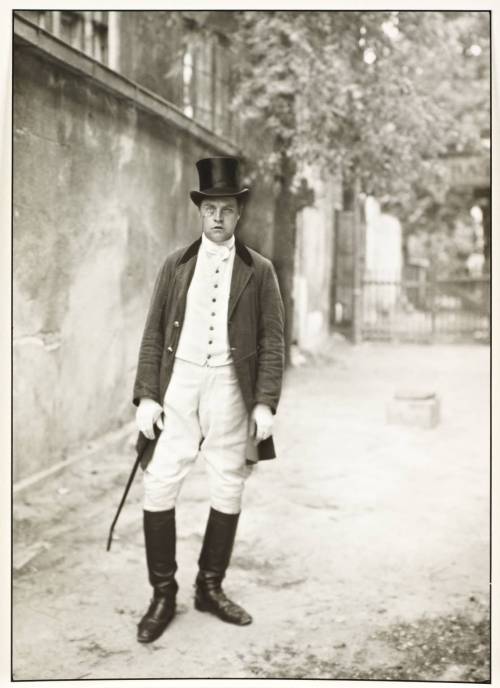
August Sander`s work recording the vocations of Germany work inspired Dorothea Lange and others working for the FSA. In researching the work of the FSA I came across an on line essay written by Marcello De Aroujo, Professor at the University of Rio de Janiero Brazil (Aroujo, 2016). https://theconversation.com/world-war-i-to-the-age-of-the-cyborg-the-surprising-history-of-prosthetic-limbs-64451
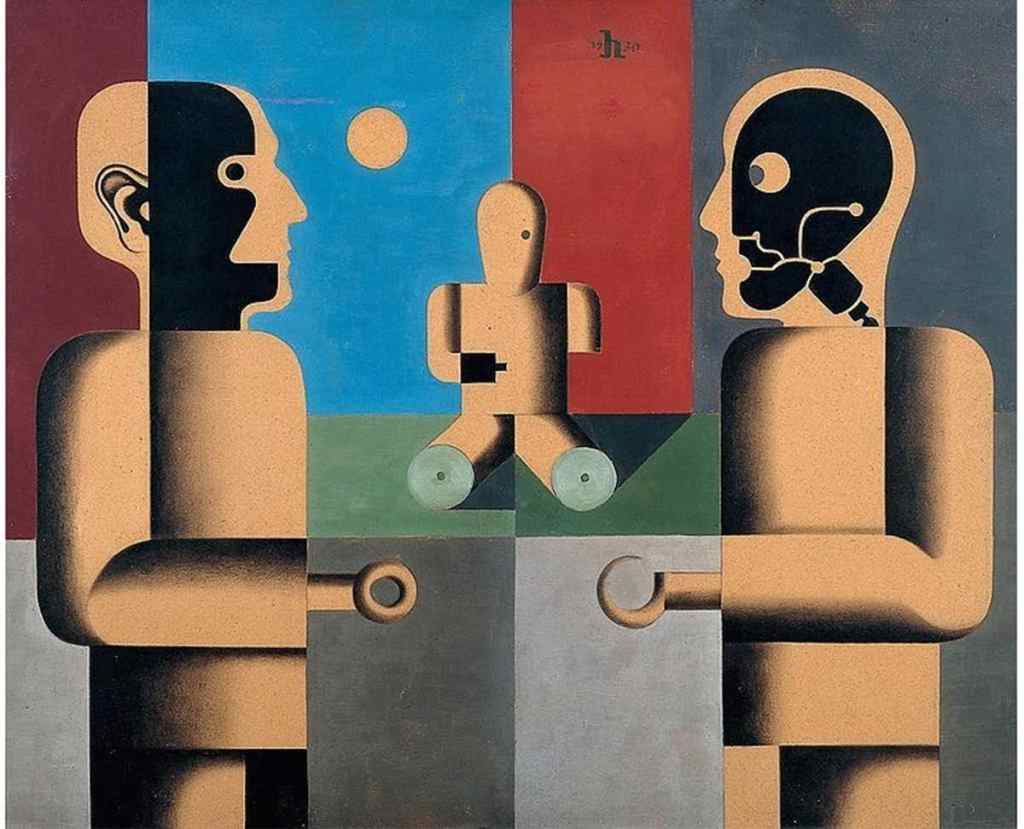
In it he discusses the returning German casualties being fitted with Prosthetic limbs. The Red Cross produced a book entitled “Reconstructing a man” in 1918. It acknowledges the fact that thousands of men were returning home and being “repaired” in fact made better than their pre-war selves by being fitted with prosthetic limbs. They even termed them “Homo Prostheticus”. These “Robots” could complete their work more efficiently than they could have before the war. Could this have been a driver for Sander to record the normal people who did these tasks less efficiently as well as recording the disappearing people pre metropolis? Was he afraid they would be taken over by man machines, and then later he may have seen the war coming with more “Homo Prostheticus” men to flood the county?
Heinrich Hoerle painted “Monument of the Unknown Prostheses’ (Denkmal der unbekannten Prothesen, 1930)”. To show how man had returned and being fitted with prosthetic limbs and had become an uber efficient machine a “better” version of himself. Hoerle wanted to questions this pointing to the anguish these individuals suffered due to their injuries. They were not “Uber Menschen” but victims of war injuries.
The photographers working for the FSA were doing much the same work. Sent out into the landscape to document the suffering of those people living on the land. These people were injured by the Great Depression and their injuries were mental, but just as damaging as losing a limb. You can see the mental anguish in the photograph “Migrant Mother” (Lange, 1936). Dorothea Lange captures it perfectly you can see the vulnerability of this woman at the same time seeing her pride, fear and concern for her offspring all in equal measure.
In the “Great Depression” Franklin D Roosevelt set up several administrations to help show the state of the nation. Then to suggest and document any improvements carried out to improve the situation in the nation. One of these administrations was the Farm Security Administration (FSA).
The man placed in charge of the FSA was Roy Stryker. He was an academic and a man who had served in the US Infantry in World War One. He was disciplined and intelligent so had the right characteristics to complete this huge task. He thought photography was excellent at supporting the written word so employed 13 proven photographers (Dorothea Lange, Arthur Rothstein, Walker Evans, Ben Shahn, John Vachon, Marion Post-Walcott, Russell Lee, Jack Delano, Gordon Parks, John Collier, Carl Mydans, Edwin Rosskam and Louise Rosskam) to capture images across the USA. At the end of the FSA work in 1942 when the FSA was incorporated into the Office of War Information Stryker used all of his discipline to catalogue and archive these exposures including many of the ones with holes punched in them. He was assisted by
This project was a huge undertaking and he would have needed all of his military experience of logistical organization coupled with his knowledge of the US to send these few out into the field to capture the images. He was dictatorial in his approach, giving exposure lists to each of the photographers. Some as detailed as “A white house, with a white fence”, He wouldn’t let the photographers stray from his scripts.
When the negatives came in to his office in Washington he would review each one and any Stryker didn’t like or were out of focus or off topic would be destroyed with a hole punch. Most of the photographers were dismayed to see their work treat in this manner and complained to Stryker. Later in the project he relaxed this practice.
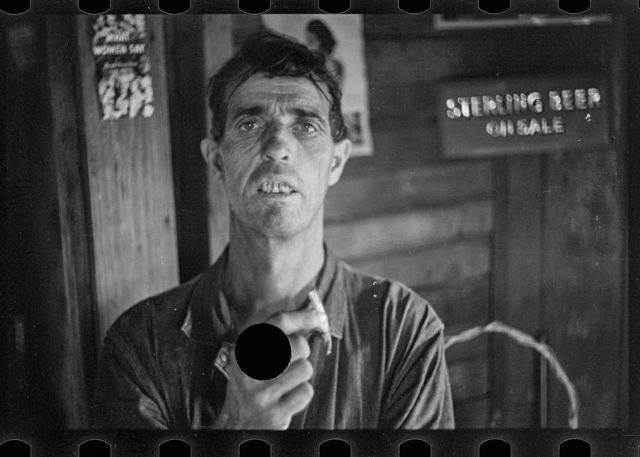
I found it interesting to consider the time scale for each part of the project exposures were made then posted into Washington, Stryker reviewed and printed them and sent them back to be captioned then they were returned to the office for use. This could take two or three weeks. Lange kept detailed notes of what was said by her subjects so she could caption the photos, often with the words the subjects had spoken. These are all kept and shown in the Library of Congress in Washington and are available to all online.
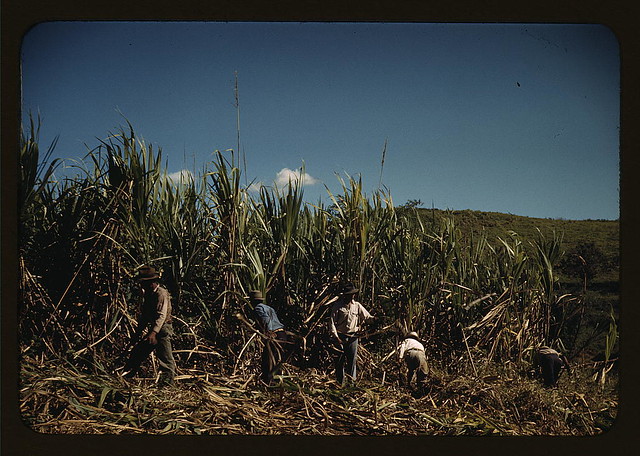
The FSA created 77,000 negatives including 644 in colour they are a record of the conditions agricultural workers were enduring trying to support themselves and their families. Most are regular shots fulfilling Stryker’s lists but some are moving and works of art. I do wonder as I look at Towards Los Angeles if it was staged and looked at examples from before this time where photographs had been manipulated to understand how far photographers and organizations would go to put across a theme.
Joseph Stalin had people removed from photographs as they fell out of favour. One shows a young commissar stood in a group by a river he must have fallen from grace because in later versions he is missing. Frank Hurley who was the photographer on Shackleton`s ill fated expedition recorded all aspects of the journey, but in the rescue photo only one lifeboat rows to shore, he had scratched out the other to make the exposure more dramatic. He had manipulated earlier photos to create his postcard business in Australia. Even Abraham Lincoln had featured in a manipulated negative when his head was imposed on John Calhoun’s body to make a well-used image. So well before Lange took Towards Los Angeles images were being altered to project a message.
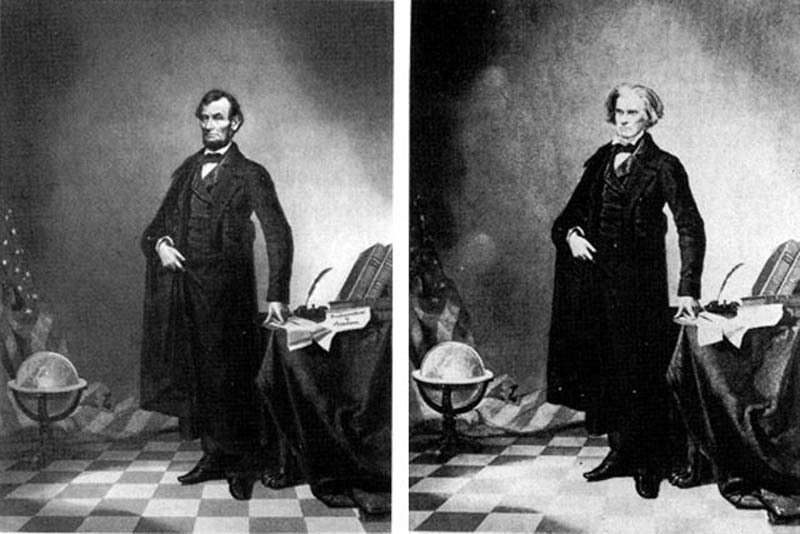
Lincolns head on Calhouns body 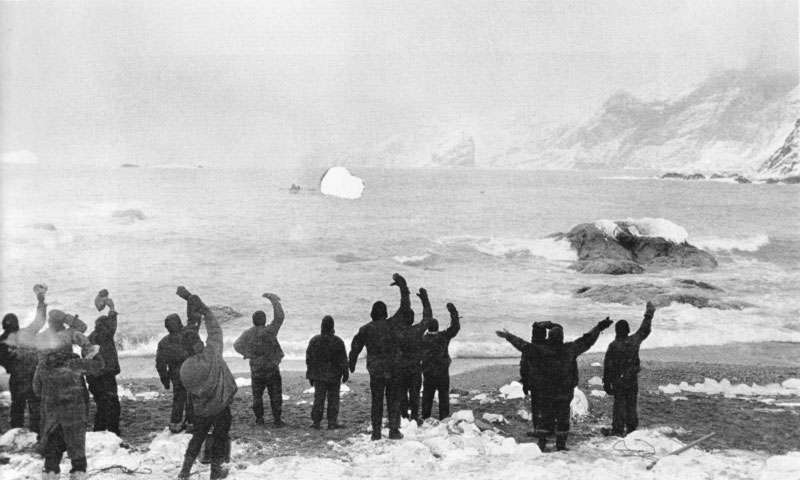
Scratched out boat 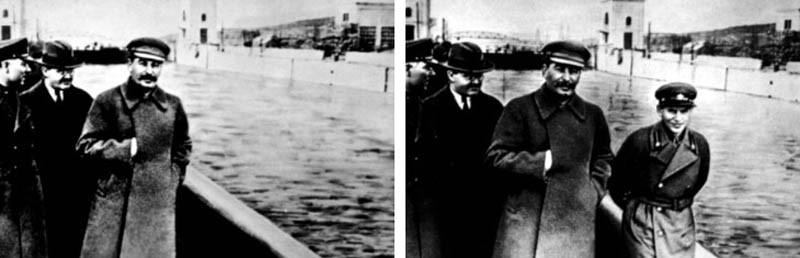
Missing Comissar
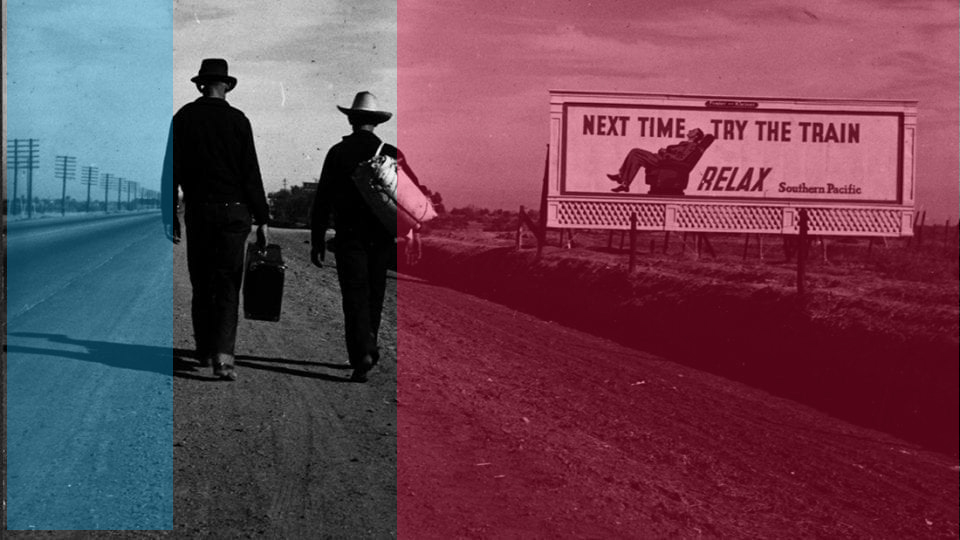
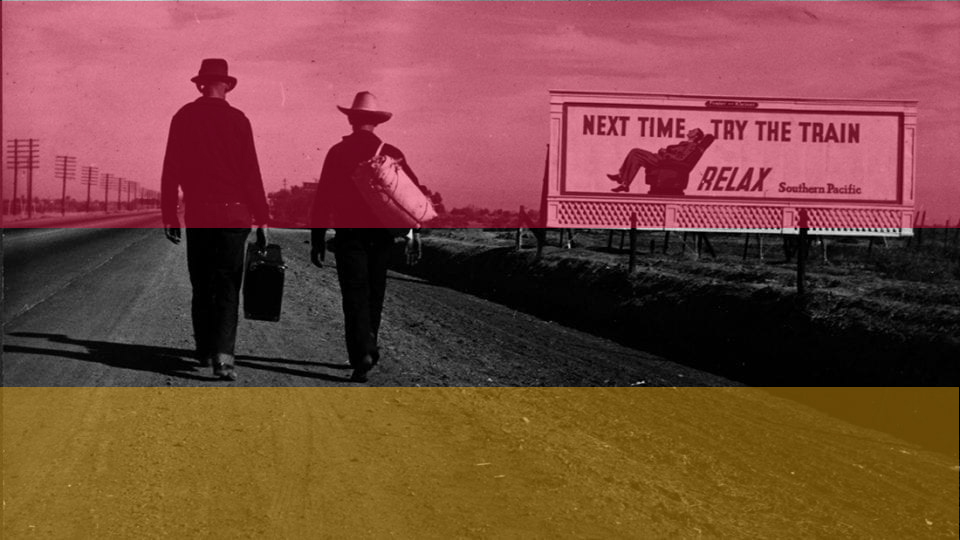
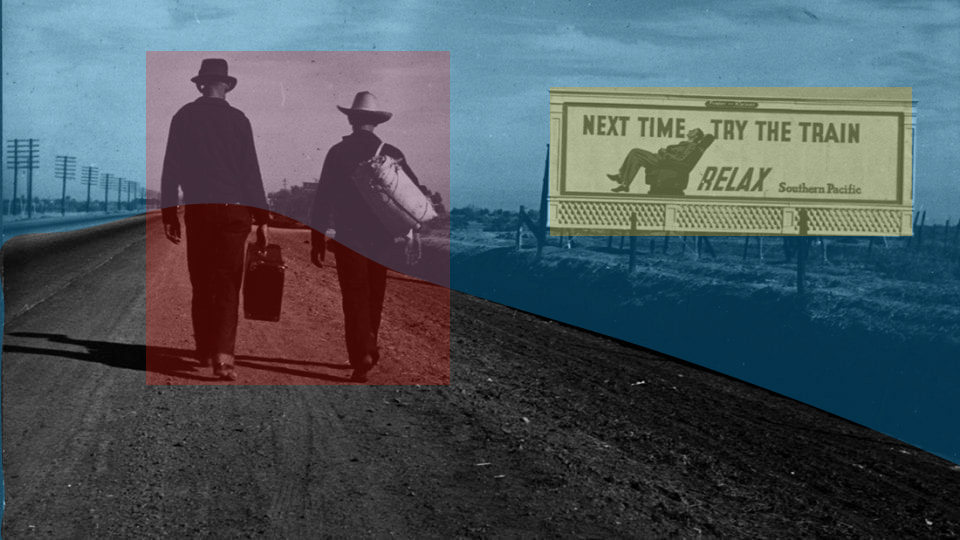
I can find no evidence for Lange having manipulated the exposure and do not think she would do so. However the photo does look as if some staging may have been employed. The fact it is so perfectly aligned to the rule of 3rds both in the horizontal and the vertical. The timing of the steps almost too perfect a decisive moment. The tracks in the dust on the road verge suggests someone pulling over and discussing the staging. Does it matter if it was staged?
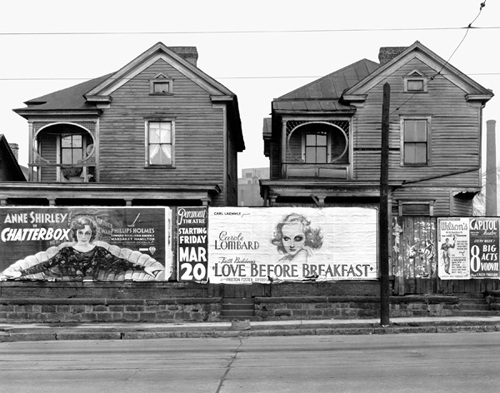
I considered the billboard in Lange’s photo and wondered if others had used them before her. I found that Walker Evans had shown billboards in “Billboards and houses in Atlanta 1936 (Evans, 1936). Lange was a colleague and friend of Evans so would have been aware of this shot. Then I found “Kentucky Flood” (Bourke-White, 1937) a photo, which depicts a group of people queuing for relief in front of a billboard with an all-American family driving a car under the slogan “Worlds highest standard of living”. This was taken just weeks before Lange took “Towards Los Angeles”. She would also have been aware of this image as it was featured across the press and was the cover of “Life” magazine. Evans earlier shot showed just billboards whilst Bourke-Whites image combined people with the billboard making a powerful image.
Kentucky Flood 1937 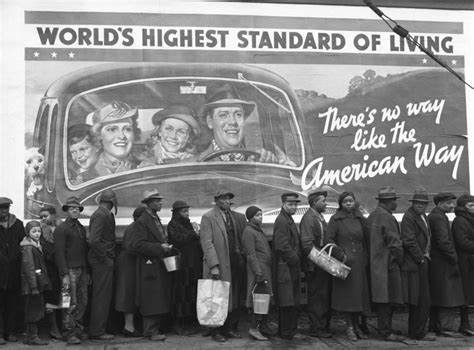
Kentucky Flood 1937 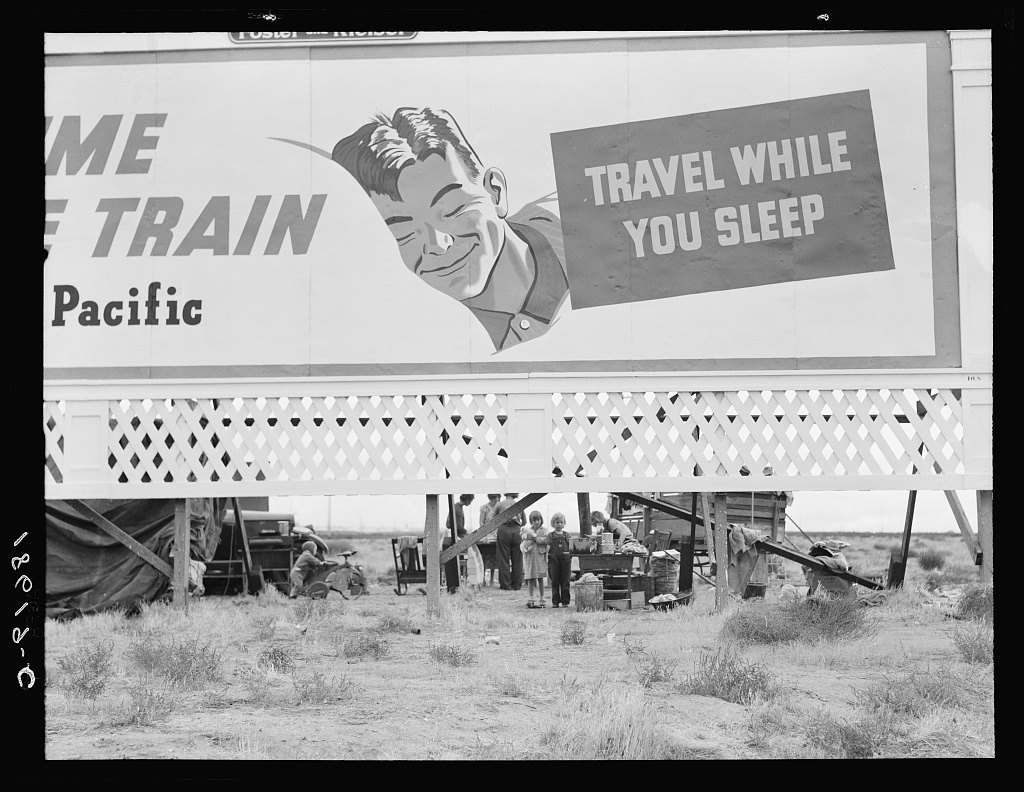
Pea Pickers behind billboard Lange 1937 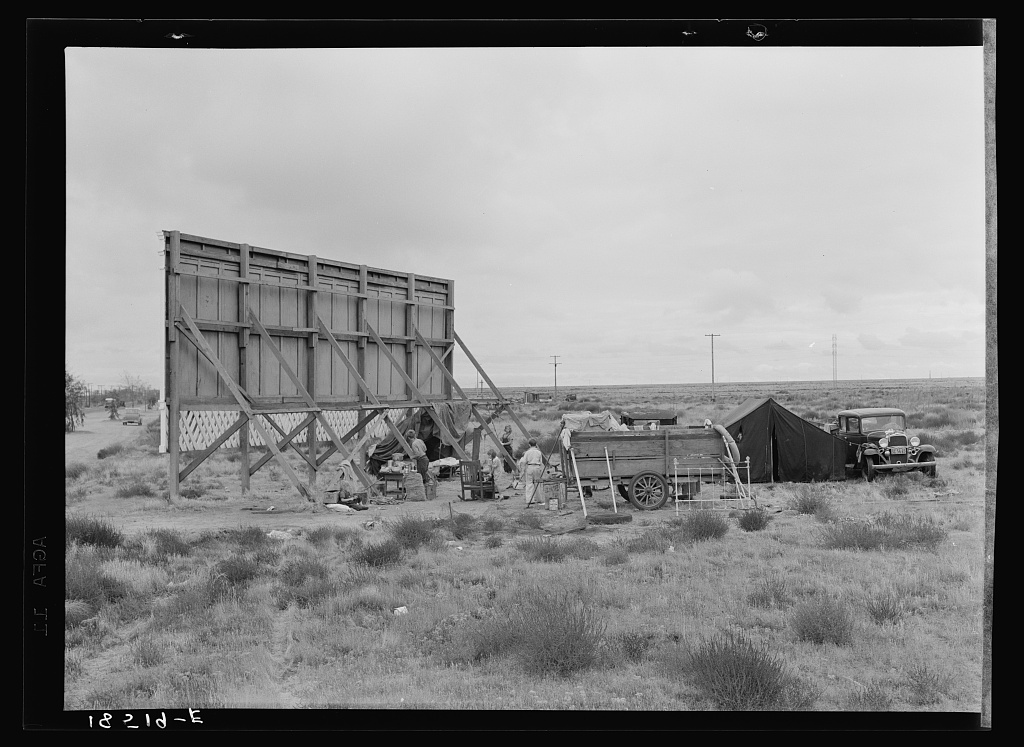
Pea Pickers shelter Lange 1937 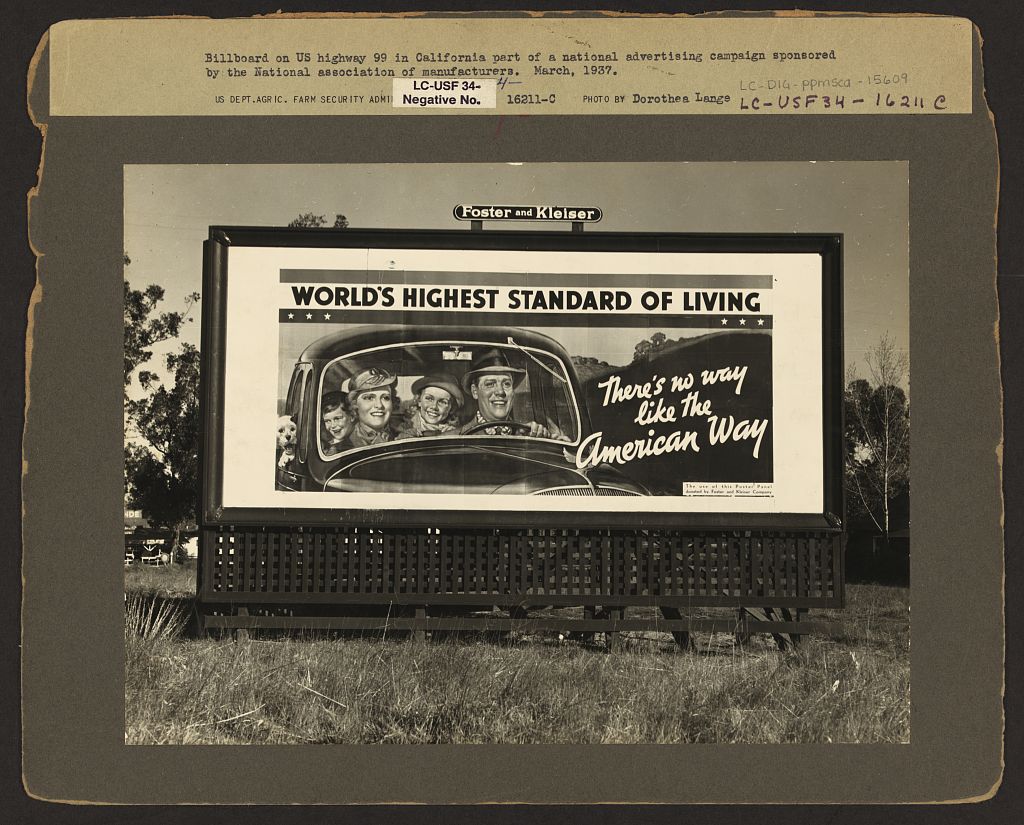
Billboard Route 99 1937
This research should enable me to review Lange’s photo and possibly expand further work describing the FSA and all that it achieved.
Works Cited
Aroujo, Marcello De. “World War 1 to the age of the dyborg.” 6 23, 2016. https://theconversation.com/world-war-i-to-the-age-of-the-cyborg-the-surprising-history-of-prosthetic-limbs-64451 (accessed 5 21, 2019).
Bourke-White, Margaret. “The Kentucky Flood.” Whitney Museum of American Art. Art and Artists. New York.
Delano, Jack. “Farm Labourers in a sugar can field”. Library of Congress. Washington 1941.
Evans, Wlaker. “Houses and Billboards in Atlanta.” Museum of Modern Art. Art and Artists. New York, 1936.
Hoerle, Heinrich. Monument of the Unknown Prostheses. Berlin Museum of Art, Berlin.
Lange, Dorothea. Camera Craft. Camera Craft, 1935.
Grab a hunk of lightning. Directed by Dyanna Taylor. Performed by Dorothea Lange. 2014.
Lange, Dorothea. “Migrant Mother.” Library of Congress. Destitute pea pickers in California. Mother of seven children. Age thirty-two. Nipomo, California. Washington, 1936.
Lange, Dorothea. “The White Angell Bread Line.” MoMA. Chicago. 1936.
Lange, Dorothea. The White Widow. MoMA, Chicago.
“Library of Congress.” Washington USA: Library of Congress, 2020.
Library of Congress. “Library of Congress.” Library of Congress. http://www.loc.gov/pictures/collection/fsa/ (accessed April 19, 2020).
Sontag, Susan. “On Photography.” In On Photography, by Susan Sontag. New York: Penguin, 1978.
Stienbeck, John. The Harvest Gypsies. San Francisco: Pamphlet, 1936.








 Michael Green Landscape Studies