When I read the brief for this assignment I wanted to show the separate components that made up this module.
At the end of the last assignment my tutor advised me to look in more detail and not to cover too much in my work. The title of the brief is “A Journey” so I completed a couple of walks to focus my attention. My attention was drawn to the plants in the hedgerow and verge along the way. These four things show my learning journey and the physical journey I take daily.
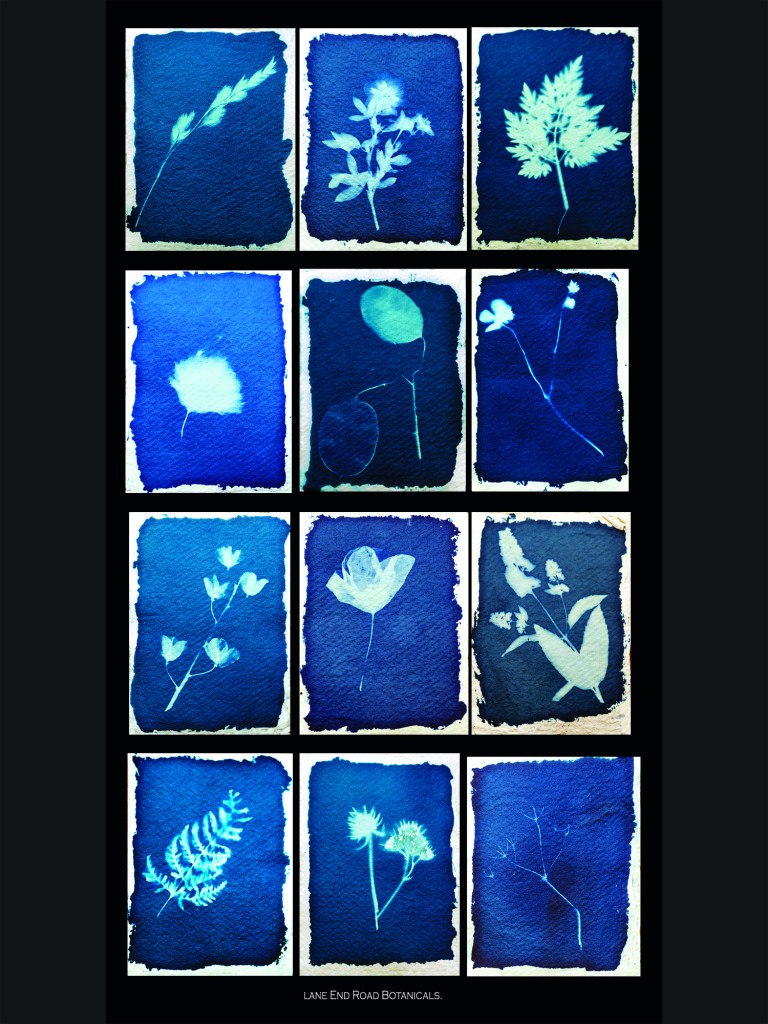
My work shows a pictorial depiction of our countryside, it uses an old technique developed to capture the detail. After reading about and listing words on a walk it seemed a good way to carry this practice into this assignment. Completing this walk puts me in the Promised Land just like the returning soldiers after the war. I see the vegetation on my walk, doing so makes it easier for me to return.
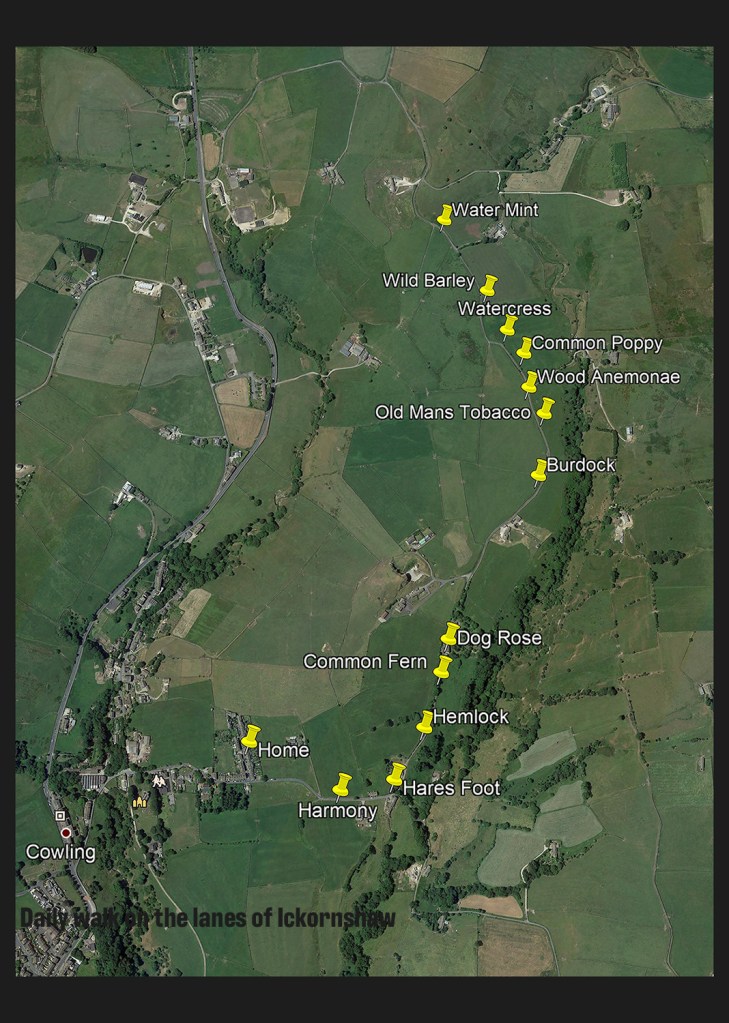
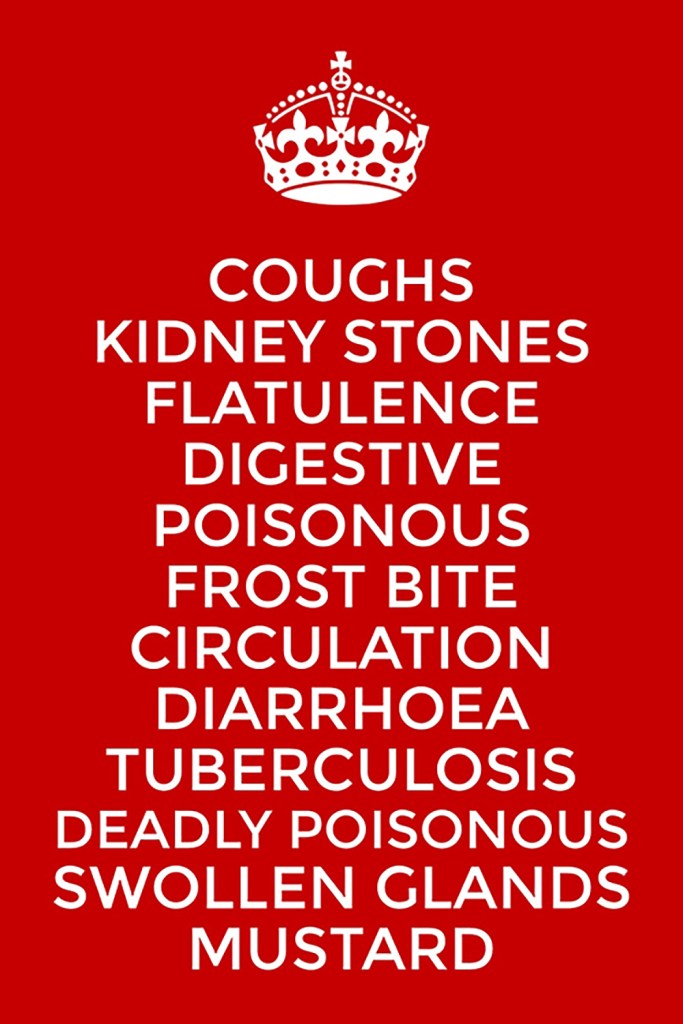
The work completed for this assignment shows the process (1)Anna Atkins used in her work. My composition is good the left and right column point into the centre column keeping the eye on the page. The map is taken from Google and pulls in the appropriation discussed in the coursework. The list of ailments shows words in art it is simple and visually fits in with the era of the soldiers return. The cyanotypes are the main part of my response; they have good detail show the plants in all their glory. The process made me get to know each of the specimens extremely well. Finishing with the poster completing the journey and pointing out you can choose a different path to complete any journey.
If I were to develop this project further I would continue collecting specimens and would place them in a book. To improve them I would work on exposures to get the final colour even more consistent.
All the decisions I made for this work had to include the work covered in the second part of the course. I have already mentioned Anna Atkins however two other artists influenced my work, (2)Washington Teasdale made cyanotypes in Leeds different to Atkins in as much as they show scenes. Finally (3)Kinetta Hill offered advice to me when I started learning the process. She helped me source the chemicals needed. (4)Bernd and Hilla Becher influenced how I presented the work and the war office poster (5)“Keep Calm and Carry” influenced the poster along with the first world war poster (6)“Your Country wants you”.
My tutors advice to focus, made my choices easier, I really wanted to zoom in on the smallest detail. Doing this has helped me understand what I need to do when I get to Assignment 4. This whole project has been a journey, taking me through many new learning’s the most important one has been to look, really look and the subject will jump out at you, with a little luck.

Works Cited
(1)Atkins, Anna. “British Algae.” Victoria and Albert Museum. British Algae. London , 1844.
(2)Teasdale, Washington. Kirkstall Abbey. Museum of the history of science, Oxford.
(3)Hill, Kineta. Bristol Cyanotype. Kineta Hill Gallery, Bristol.
(4)Becher, Bernd and Hilla. Watertowers. MoMA, New York.
(5)Servant, Unknown Civil. “Keep Calm and Carry On.” MoI. Keep Calm and Carry On Poster. London, 1940.
(6)Leete, Alfred. “Your Country Wants You.” War Office. Your Country Wants You. London, 1914.
 Michael Green Landscape Studies