To approach this exercise I decided to organise my findings on a spreadsheet for easy analysis after I had finished my research. This helped me a lot.

The next difficulty was choosing the work by the artists. I searched through several books for ideas of who fits into each of the time periods given in the brief.
I tried to find a mix of well known artists and lesser known ones too, all had to be known to me. Then I started to look at the paintings all together after downloading them from the internet.
The majority have symmetry or follow the rule of thirds. Big skies proliferate, in these skies there is all kinds of weather, lots of storms and choppy seas. People are in many of the landscapes to give scale show land usage or just tell a story. Colour is vital be it vibrant and strong or subtle.
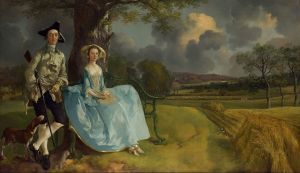
Mr and Mrs Andrews Gainsborough National Portrait Gallery 1780 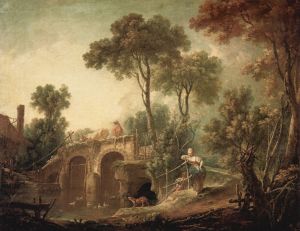
The Sorrow of Telemachus A Kaufman NY Met 1783 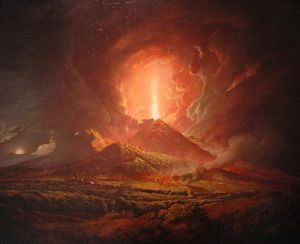
Vesuvius erupting from Portici The Huntington Museum 1775 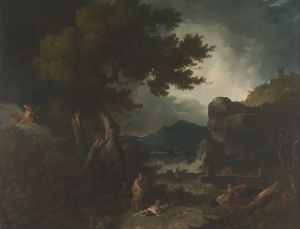
The destruction of the children of Niobe R Wilson Yale Center for British Art 1760 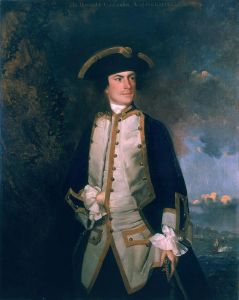
Commodore the honorable Augustus Keppel J Reynolds NPG London 1749 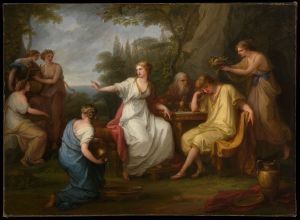
The bath of Venus F Boucher Washington National Gallery of Art 1751
In the early works of the period looked at the paintings either show people who have achieved great things such as(5) Joshua Reynolds “Captain the Honourable Keppel” who was accused of cowardice at the battle of Ushant and won his court martial so his father wanted to promote the fact. Or mythical stories set like a stage on a landscape most of which don’t match the setting of the story.
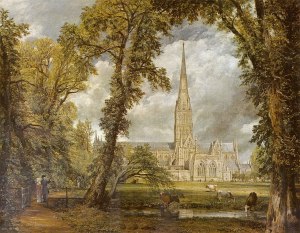
Salisbury Cathedral John Constable V&A London 1823 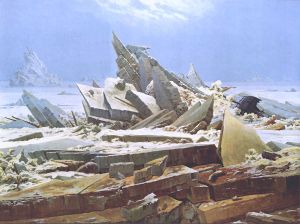
Sea of Ice CD Friedrichs Kunsthalle Hamburg 1823 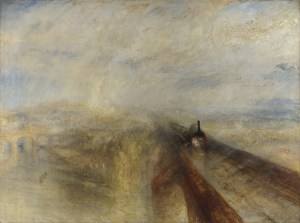
Rain, steam and speed JMW Turner National Gallery London 1844 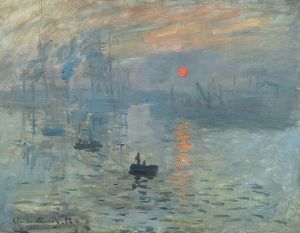
Impression, Sunrise Claude Monet Paris 1872 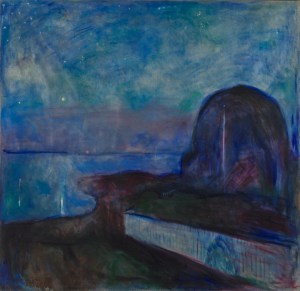
Starry Night. Edvard Munch Getty Museum 1893 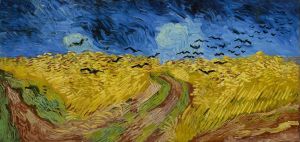
Wheat field with crows. V Van Gogh Van Gogh Museum 1890
Four out of the six are in Landscape format or the length of the top of the painting is longer than the side edge. The two that aren’t are Reynolds painting discussed above this is a portrait with a landscape, the second being (12)Van Gogh`s “Wheat, Sky and Crows this painting was painted on two square panels giving a 2:1 ratio which was unusual. This painting is possibly the last one he painted so all things were strange.
Within the paintings the use of diagonal lines to take your eyes around the frame. Lines of trees tend to stop before the edge of painting to stop your eyes leaving the frame. All have a subject or focal point the lines lead our eyes to these subjects.
Some have hidden messages such as the Hare in (9)JMW Turners “Rain, Steam and Speed” at the bottom right there is a Hare many think this depicts the destruction of the countryside as we “Hare” around.
Many of the paintings use a curve to move your gaze, lots use a curved “S” to soften this further. River shown going straight into the picture has less appeal than a river or road that follows “S”. You can see this in (4)Munch depiction of the coast in “Starry Night”. It helps you take a varied visual journey across a blue night sky.
Thinking about who was responsible for the creation of the work I started by looking a little further back in history. Earlier artists such as Leonardo da Vinci and Michelangelo were funded by rich families such as the Medici family of Florence they then directed the artist as to what kind of work they wanted to commission. In the 18th Century artists tended to be commissioned for a single piece of work or a small series of paintings with a directed theme. Many were commissioned to show the subjects wealth with the painting even showing the type of animals farmed on an estate. This can be seen in (1)Thomas Gainsborough’s “Mr and Mrs Andrews”. You clearly see sheep and crops showing the type of farm they owned.
In the 19th century commissioned work became less popular with many artists completing work to further the chosen style of the artist. Many of the artists were not wealthy and their work became well known much later than the date it was created. Van Gogh died in poverty shortly after creating (12)“Wheat, Sky and Crows.
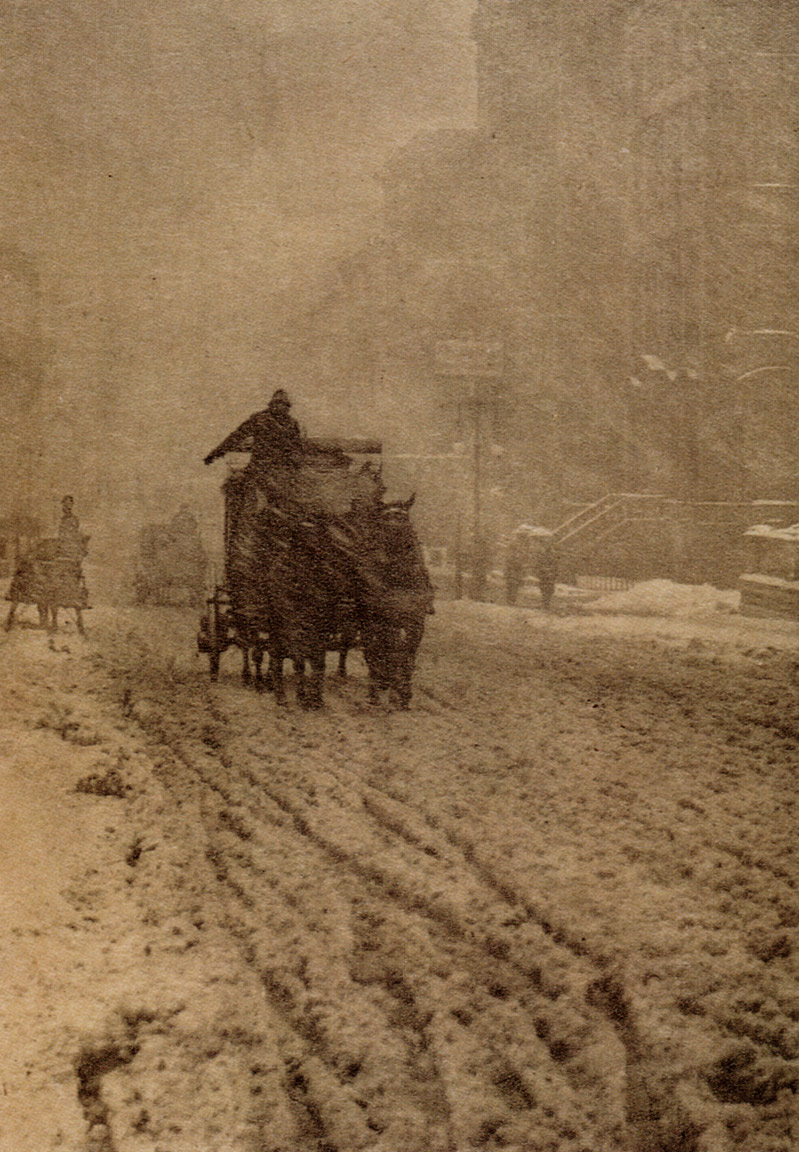
Winter Fifth Avenue, A Stieglitz 1893 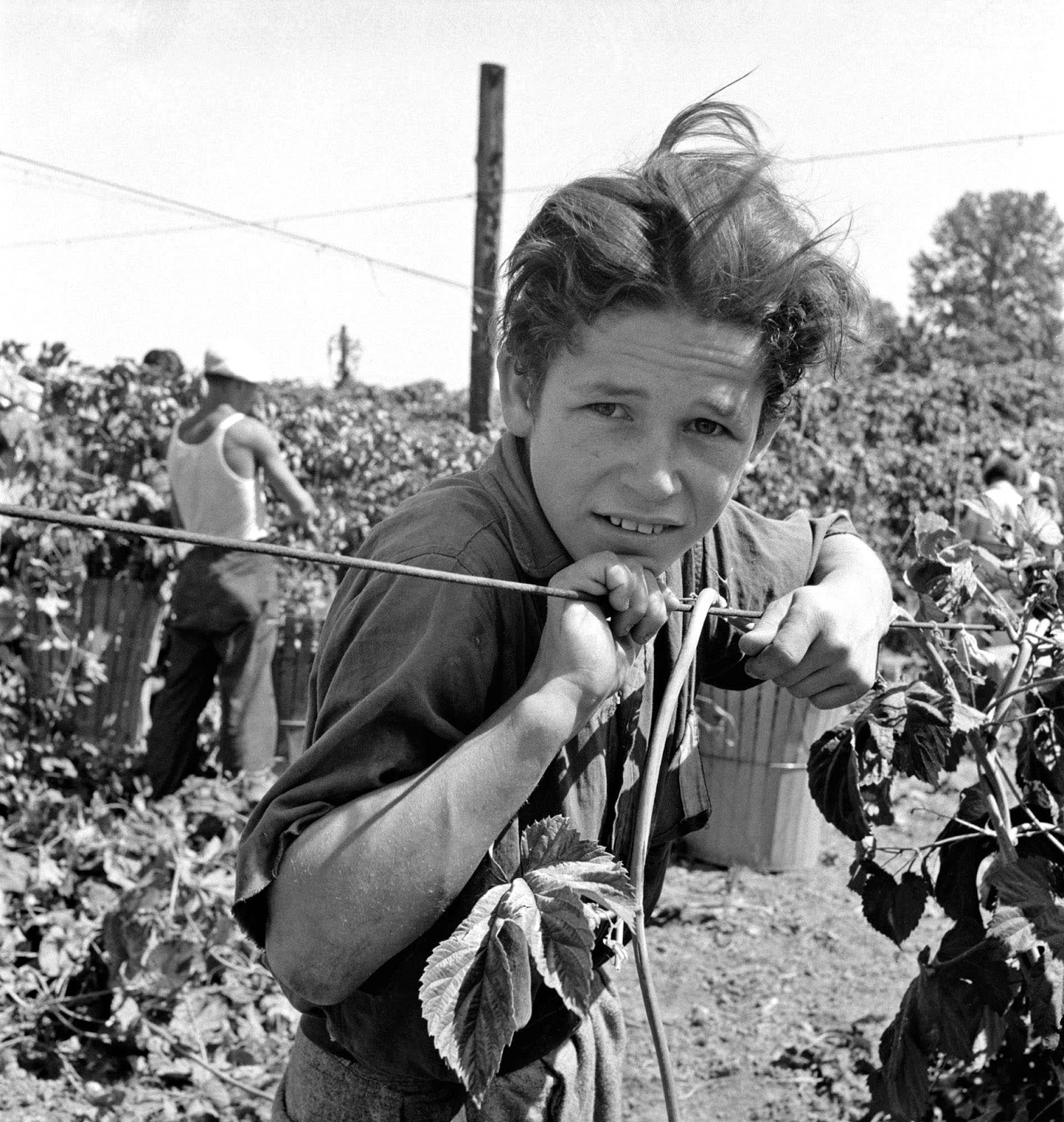
Migrant boy. D Lange 1936 NY History in Photographs 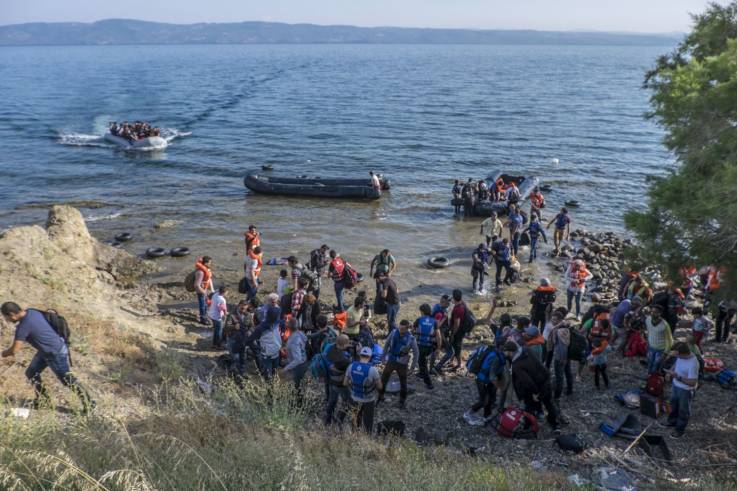
Refugees arrive at Eftalou early in the morning on the Greek island of Lesvos M Honneger 2015
In photographic terms Stieglitz created many pictorial photos such as his photo of (13)“Winter” in New York. Dorothea Lange showed people in the fields in her work (14)“Migrants”. The landscape is populated with people struggling to fit in, in a new country. Bringing it right up to the present Michael S. Honneger shows the plight of Syrian refugees in his work for Amnesty International (15)“Refugees arrive at Eftalou early in the morning on the Greek island of Lesvos”, shown in Newsweek magazine. The last two landscapes have a political message which is strengthened by showing the portrait in its environment.
References
Boucher, F. The Bath of Venus. 1751. Oil on Canvas. Washington Gallery of Art USA.
Caspar David, Friedrich. The Sea of Ice. 1823. Oil on Canvas. Kunstehalle Hamburg Germany.
Constable, John. Salisbury Cathedral. 1823. Oil on Canvas. V&A Museum London.
Gainsborough. Mr and Mrs Andrews. 1780. Oil on Canvas. National Portrait Gallery London.
Honneger, M. Refugees Arrive at Eftalou Early in the Morning on the Greek Island of Lesvos. 2015. Digital Colour Photograph.
JMW, Turner. Rain, Steam and Speed. 1844. Oil on Canvas. National Gallery London.
Kaufman, A. The Sorrow of Telemachus. 1783. Oil on Canvas. NY Met.
Lange, Dorothea. Migrant Boy. 1936. Photograph.
Monet, Claude. Impression, Sunrise. 1873. Oil on Canvas. Museum of Art Paris France.
Munch, E. Starry Night. 1893. Oil on Canvas. Getty Museum USA.
Reynolds, John. Commodore the Honourable Augustus Keppel. 1749. Oil on Canvas. National Portrait Gallery London.
Stieglitz, Alfred. Winter-Fifth Avenue. 1893. Silver Gelatin. Public Domain.
Vincent, Van Gogh. Wheat Field with Crows. 1890. Oil on Canvas.
Wilson, Richard. The Destruction of the Children of Niobe. 1760. Oil on Canvas. Yale Centre of British Art. Wright,
J. Vesuvius Erupting from Portici. 1775. Oil on Canvas. The Huntington Museum USA..
 Michael Green Landscape Studies