Landscape was a route to levels of emotion which were acceptable without being too nationalistic. These words sum up for me how we are in England fiercely proud without wanting to offend.

CFG Masteman wrote “looking down on England” in which he looks at landscape from the medieval jungle through the renaissance to the black blots of the industrial revolution. He uses a clever vehicle “the Mutoscope” for looking down on the landscape to see the changes in historic periods like a sped up film.
In 1940 the threat of invasion came from across the North Sea and Germany.
“Unconquered for a thousand years” is a phrase I find interesting as Germany talked about the Reich lasting a thousand years. We looked back they looked forward.
Patriotic propaganda talked about community in the village led by the Squire bringing people close to the past and nature. The inhabitants removed signposts and addresses from the scene to aid confusion to the enemy.
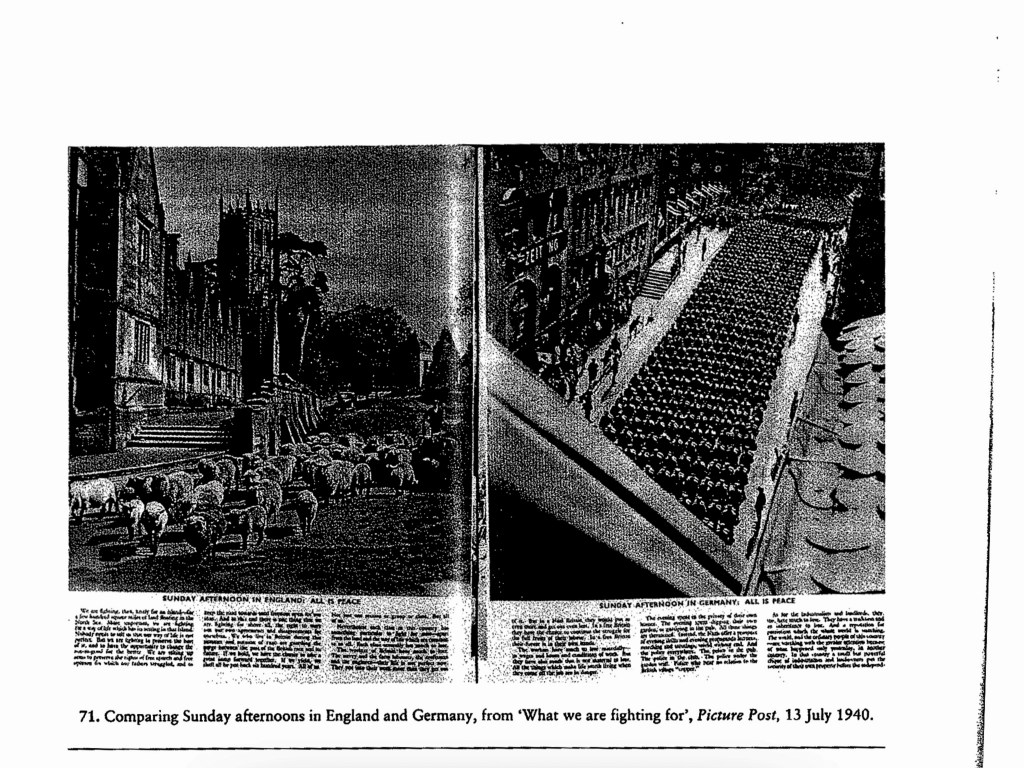
The landscape became travelled through rather than enjoyed. Publishers such as the Pilgrim Library published books showing the idyll of previous landscape to remind people what they were were fighting for.
Picture Post juxtaposed photos showing a boy playing cricket in one then a young German boy in Hitler Youth uniform. Democracy against Militarianism. Another shows a half timbered cottage with the caption “England: Where a mans home becomes his castle”, all hint at what is being fought for.
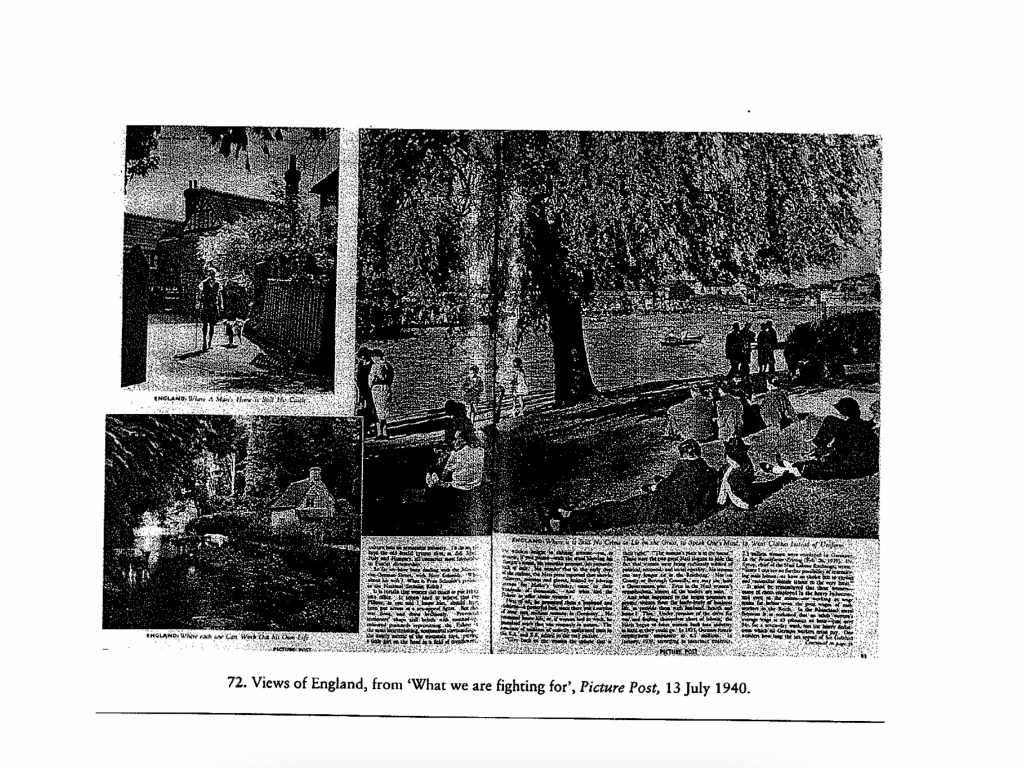
Civilians being bombed were shown with upturned faces showing their bravery and hinting at a brighter future once the turmoil had been endured.
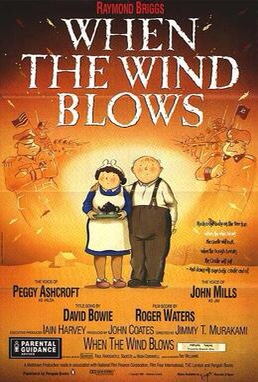
Completing this made me think of the illustrated book by Raymond Briggs called “When the wind blows”. The same emotions were used to show how a nuclear attack would effect our grandparents who were from a simpler time. This made me want to absolutely defend them.
 Michael Green Landscape Studies