Uncategorized
Tutor Feedback for Assignment 5
Tutor feedback for Assignment 4
Tutor Feedback for Assignment 3
Tutor Feedback for Assignment 2
Tutor Feedback Assignment 1
Critique of Assignment 6 Transitions.
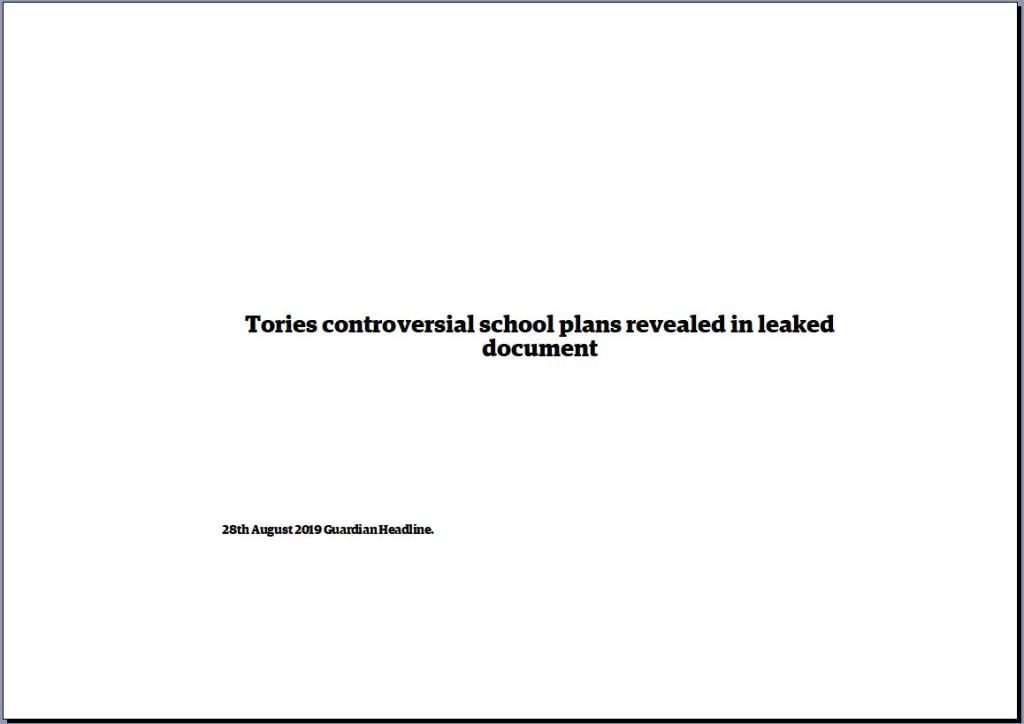
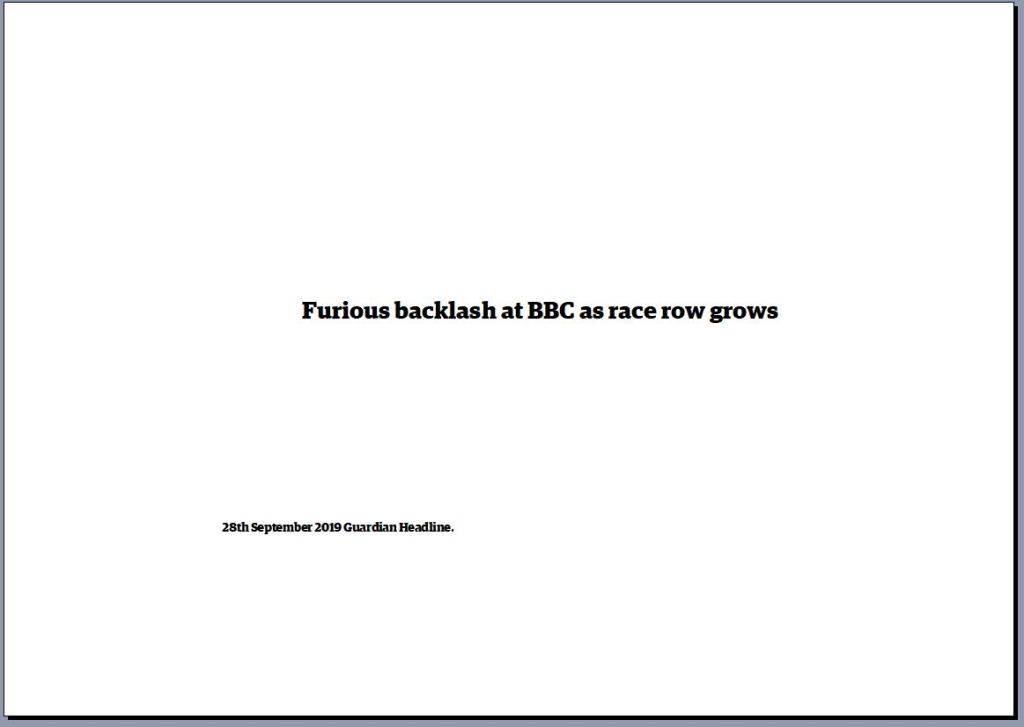
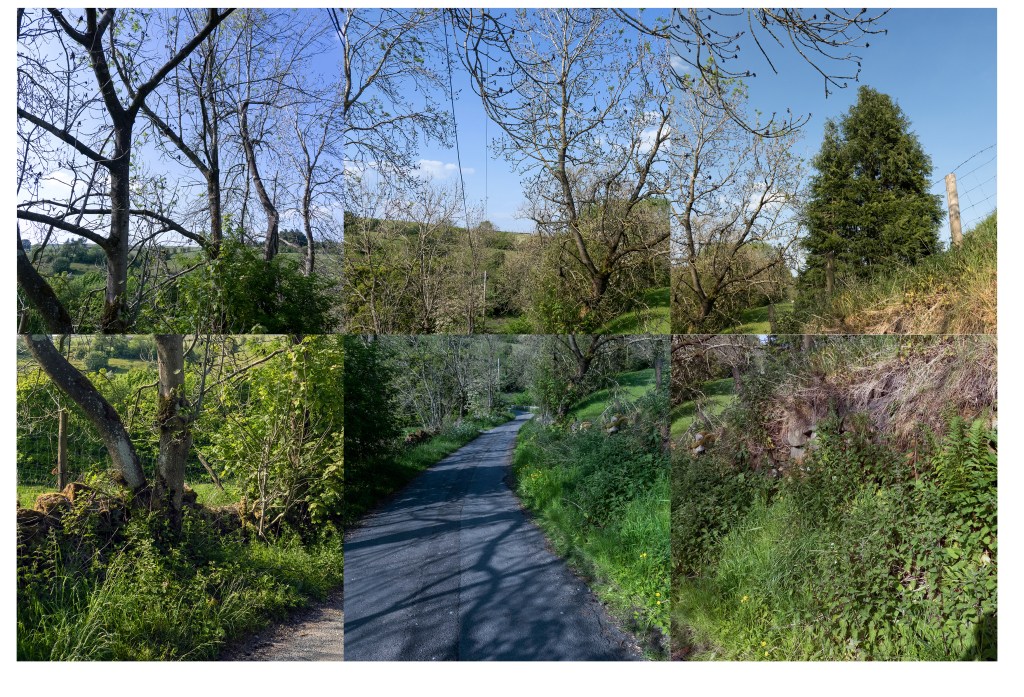
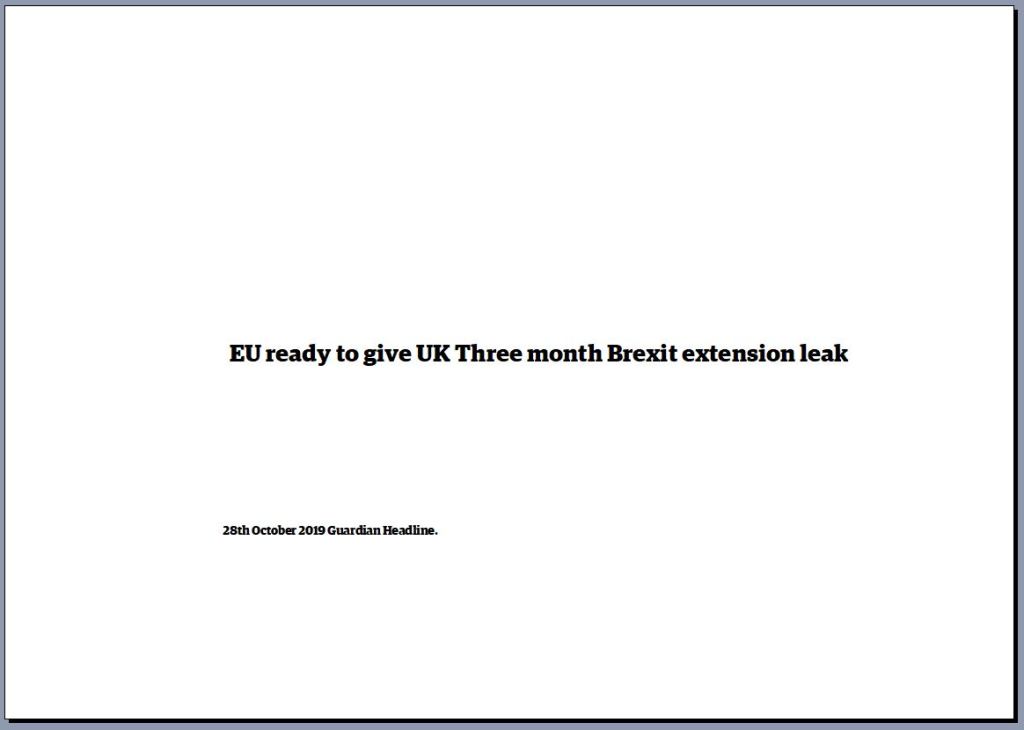
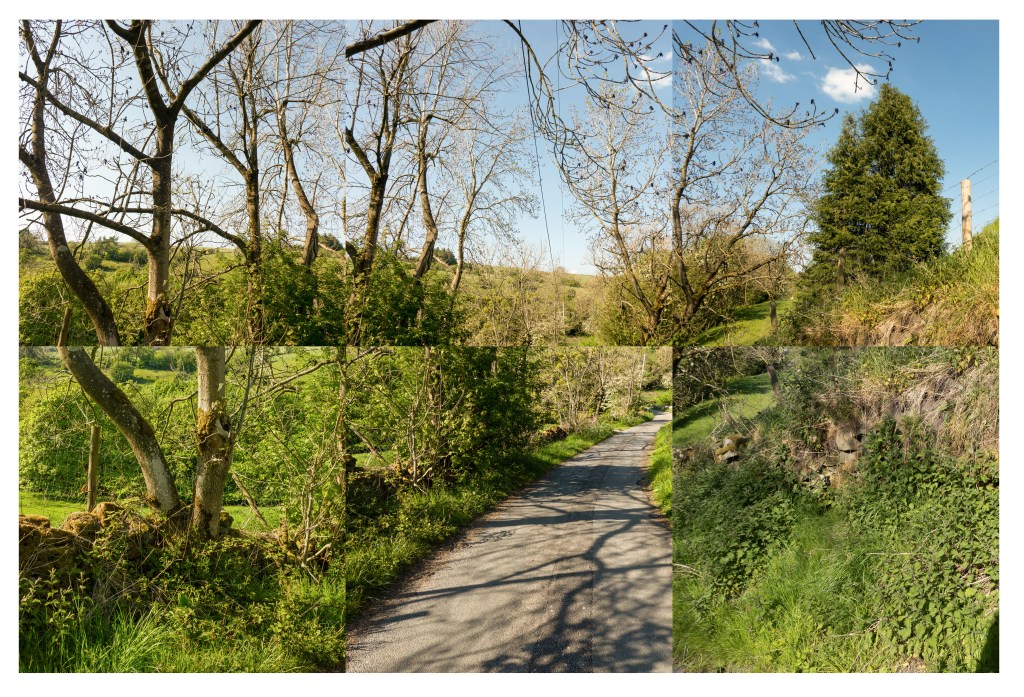
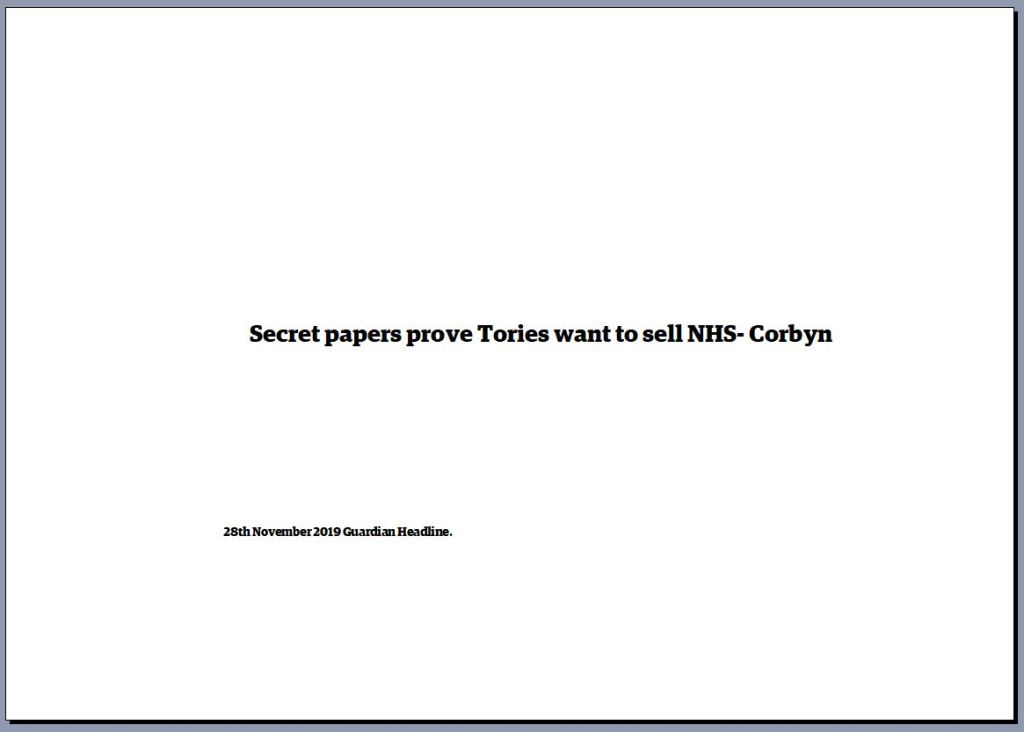
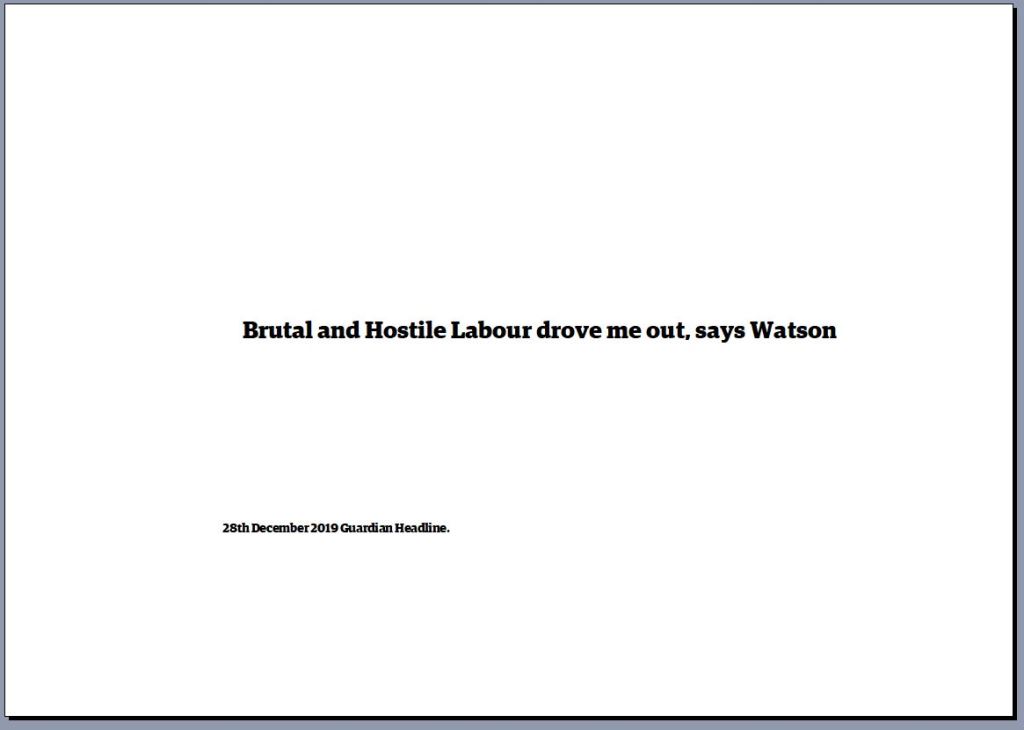
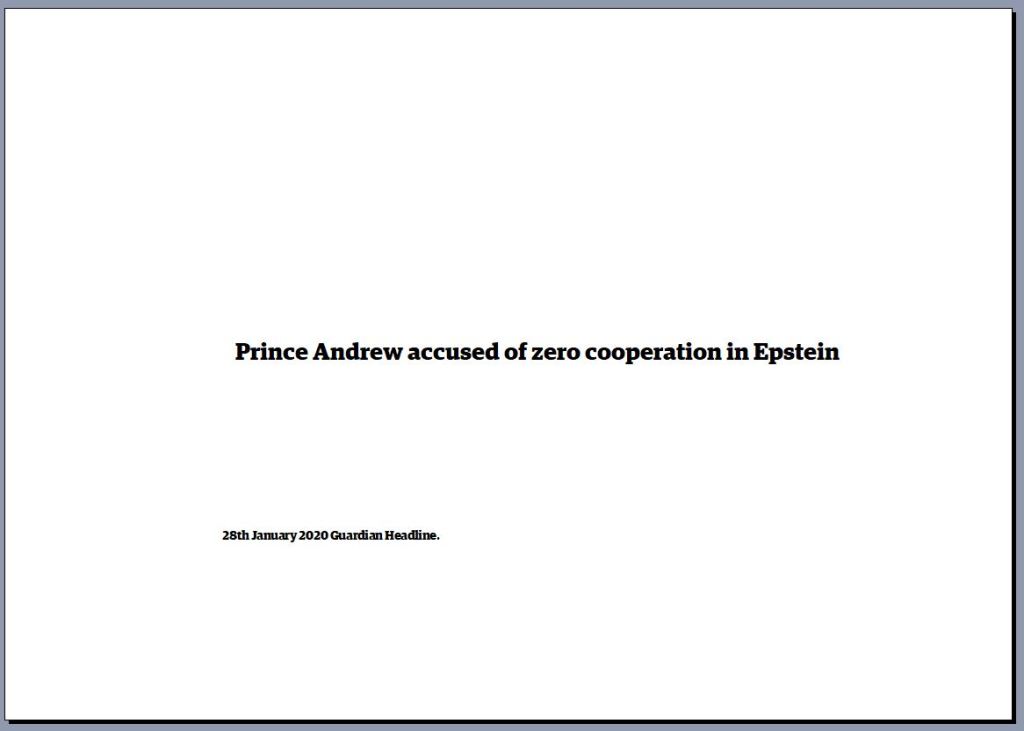
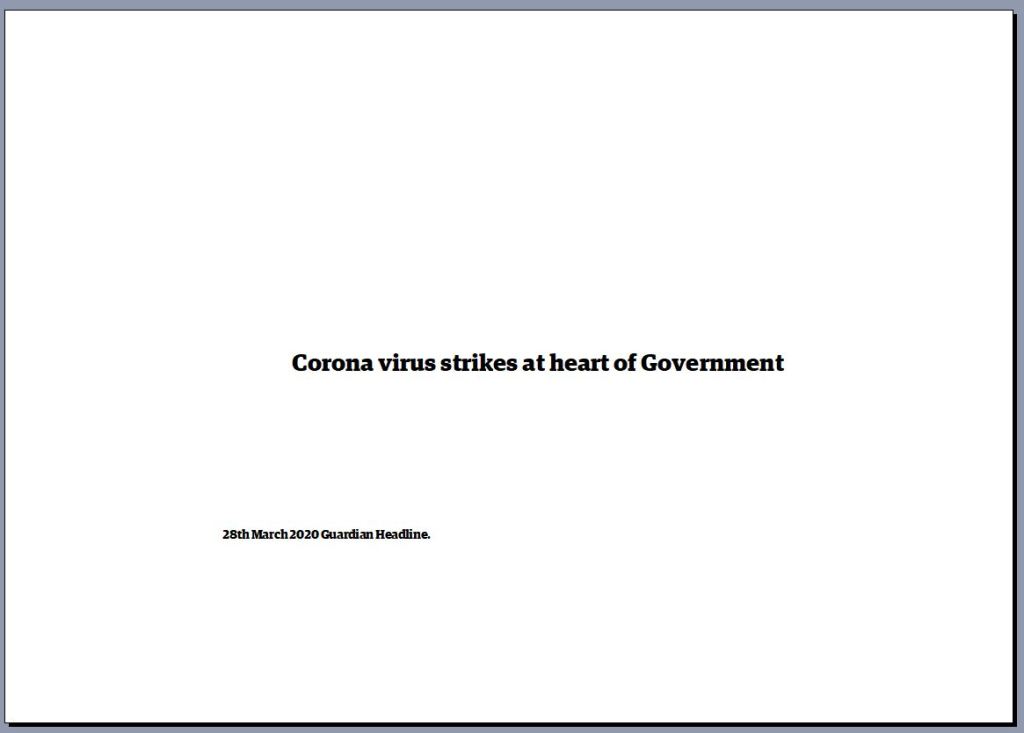
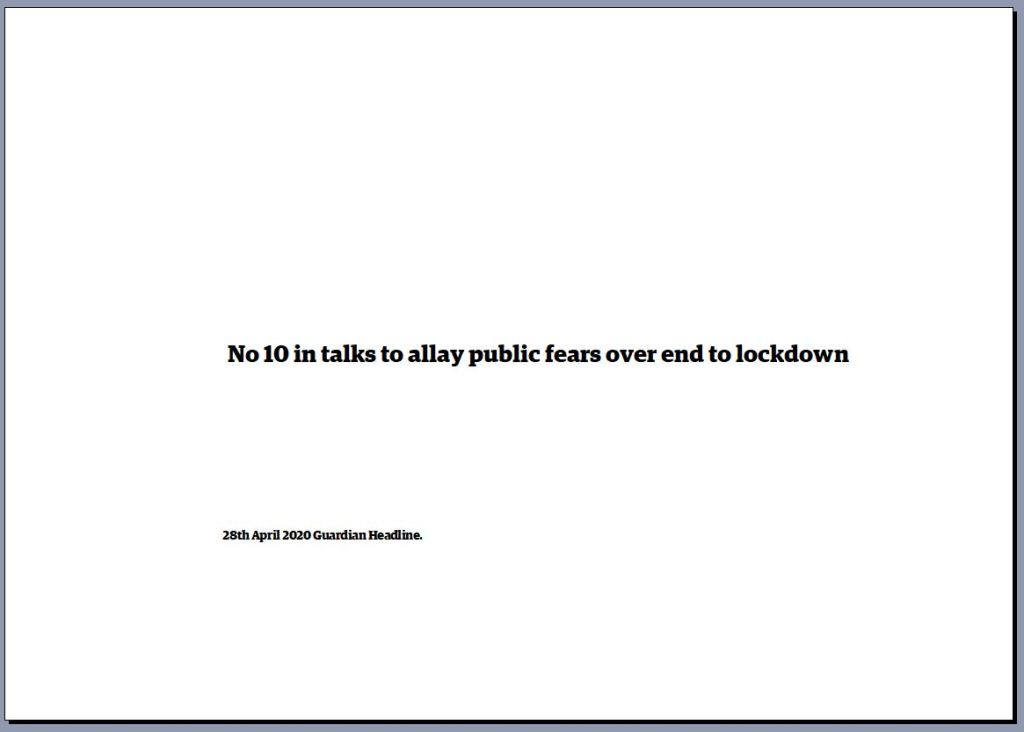
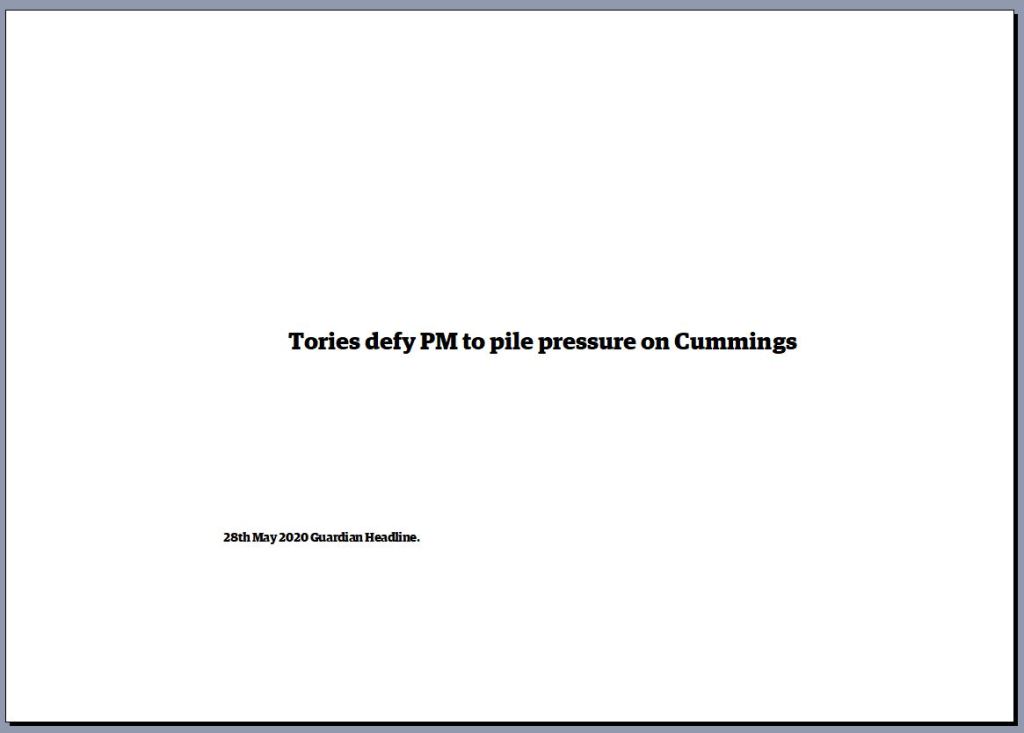
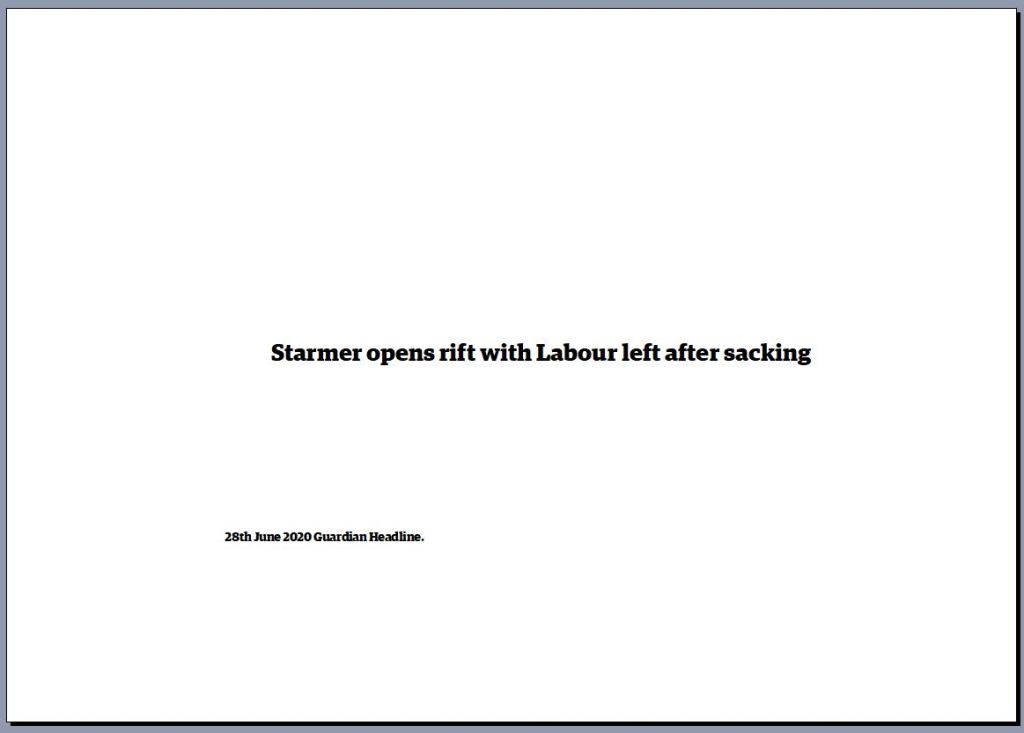
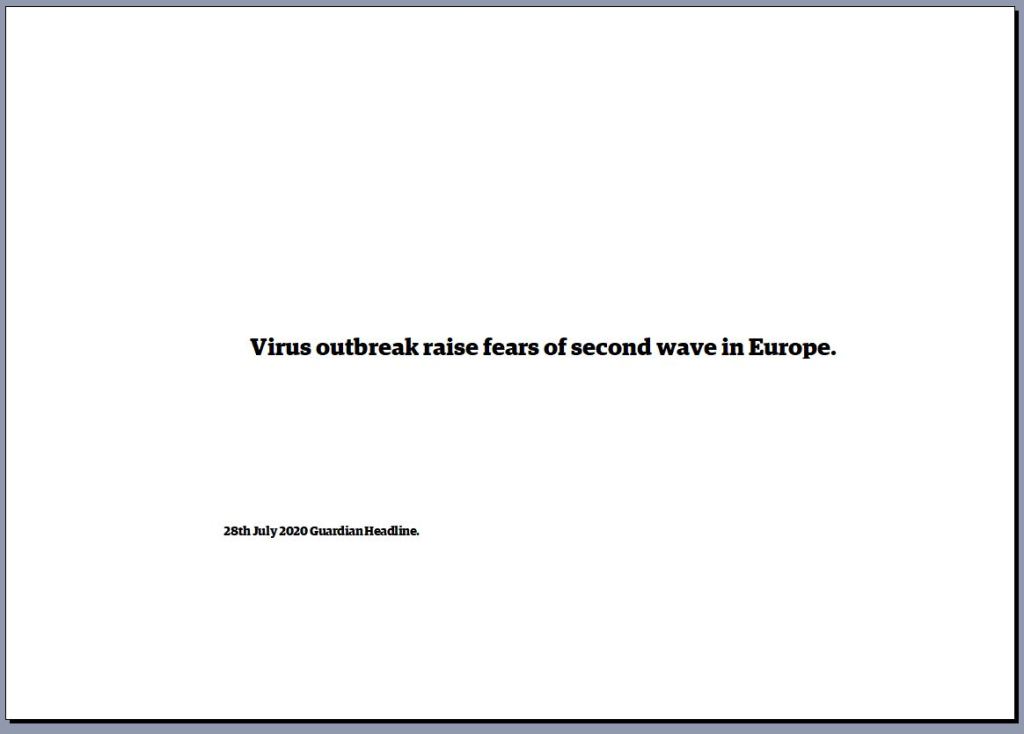
I wonder if any viewer would look at this series and understand its message. That is why I included the headlines to help the viewer see my intent. This intent was to show that our landscape should be seen as stalwart in our lives. Whatever the media discusses our landscape, a landscape we create is a constant. There to nurture and succour in good times and bad.
Each individual image has little impact alone although some do more than others. The series however has impact as you see the dynamic elements of the landscape change through the year. Whilst I didn’t quite hit the bull’s eye in every image the overall project hits the mark.
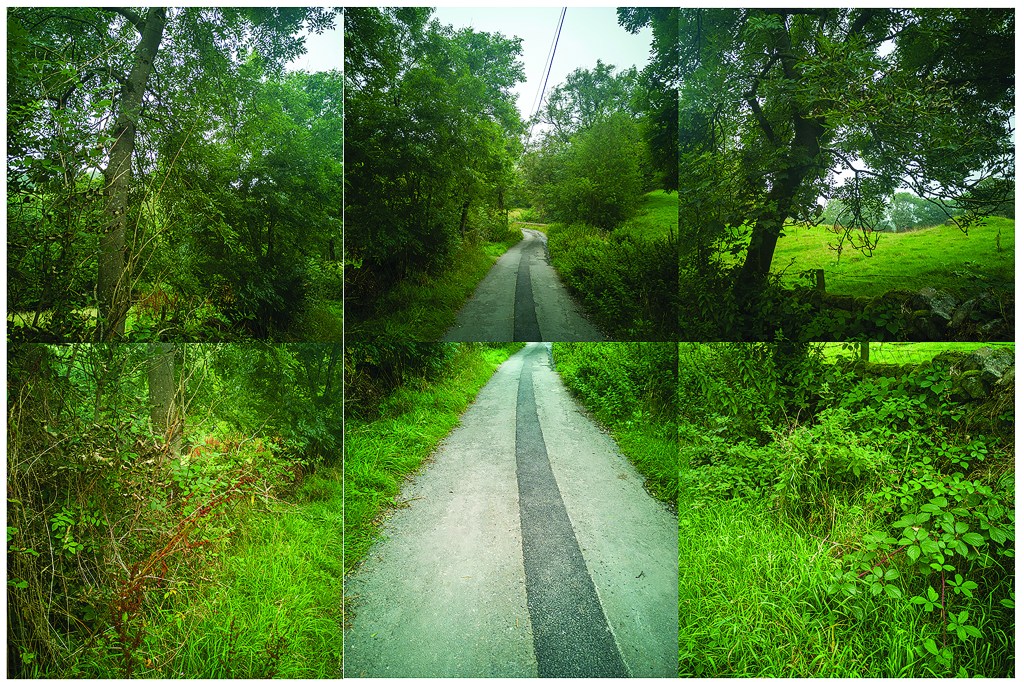
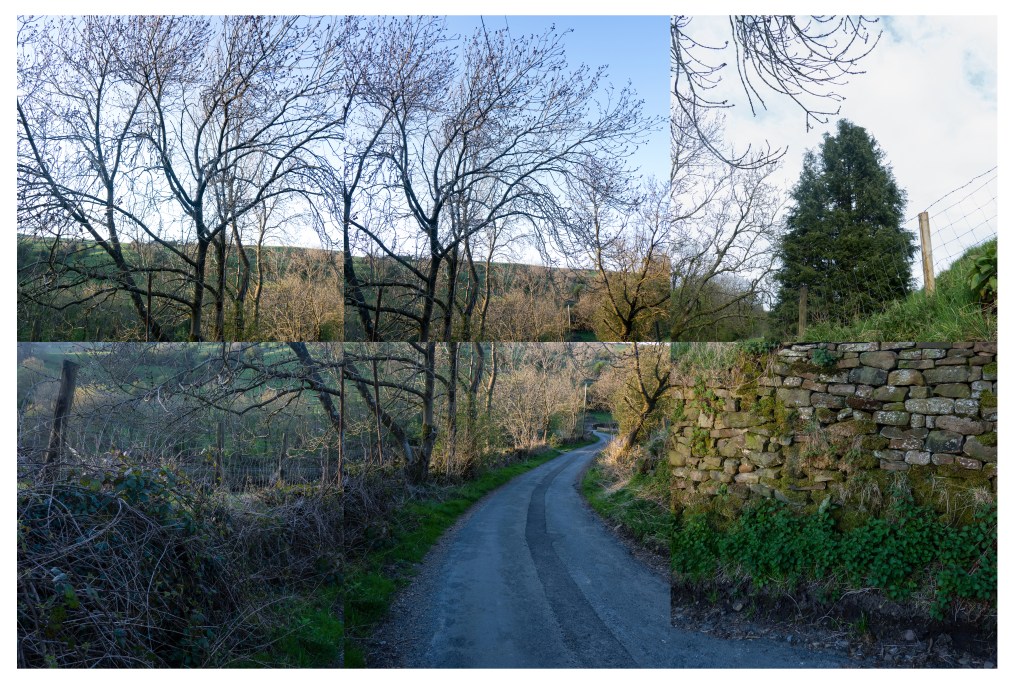
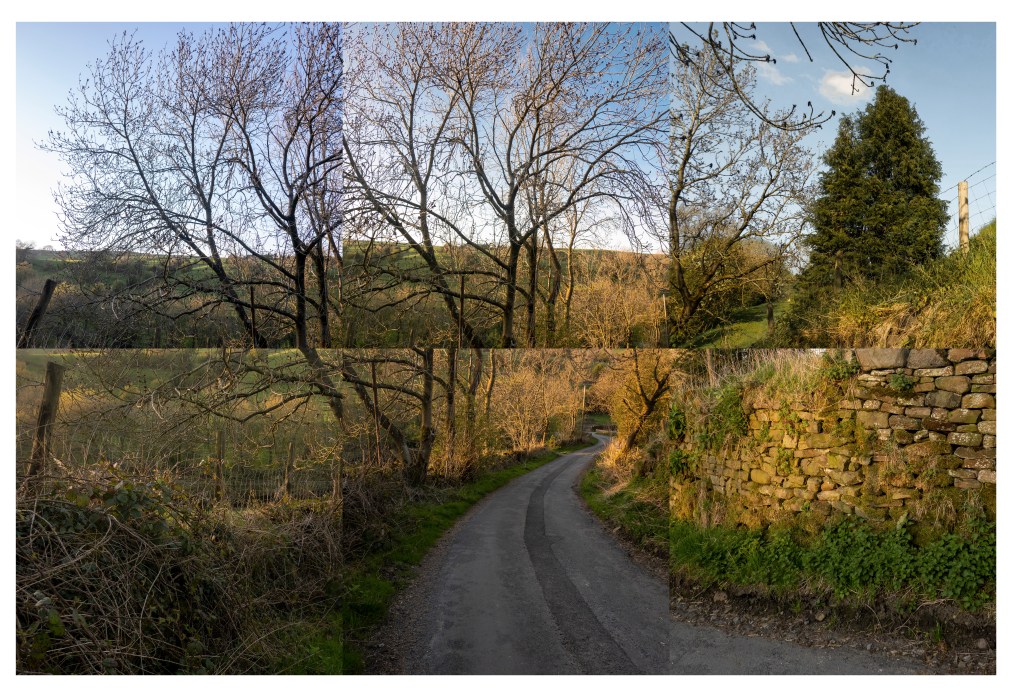
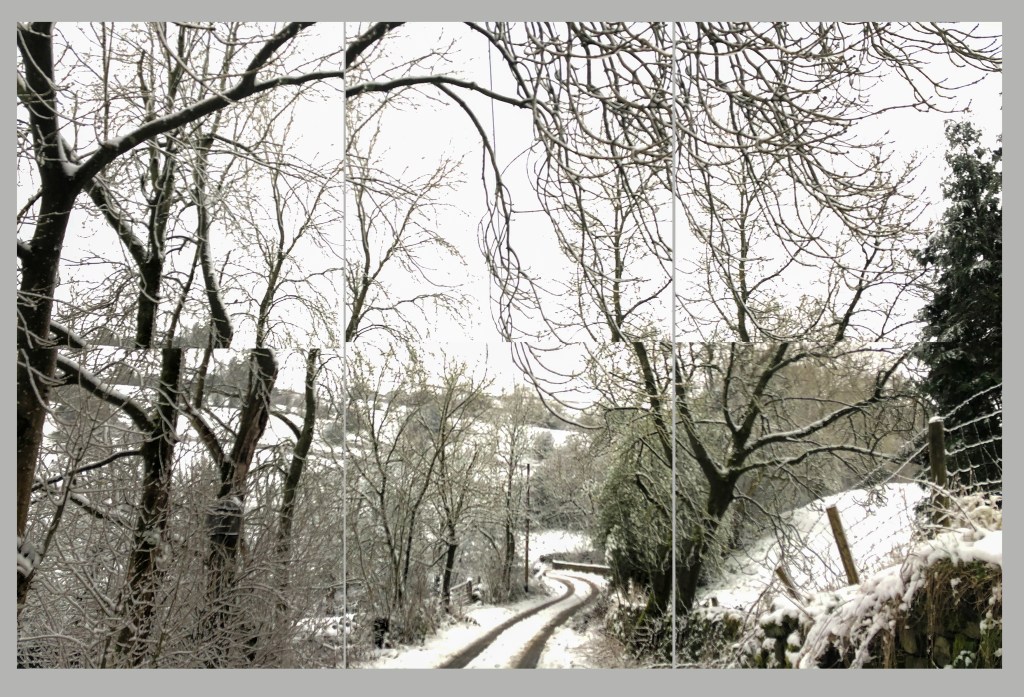
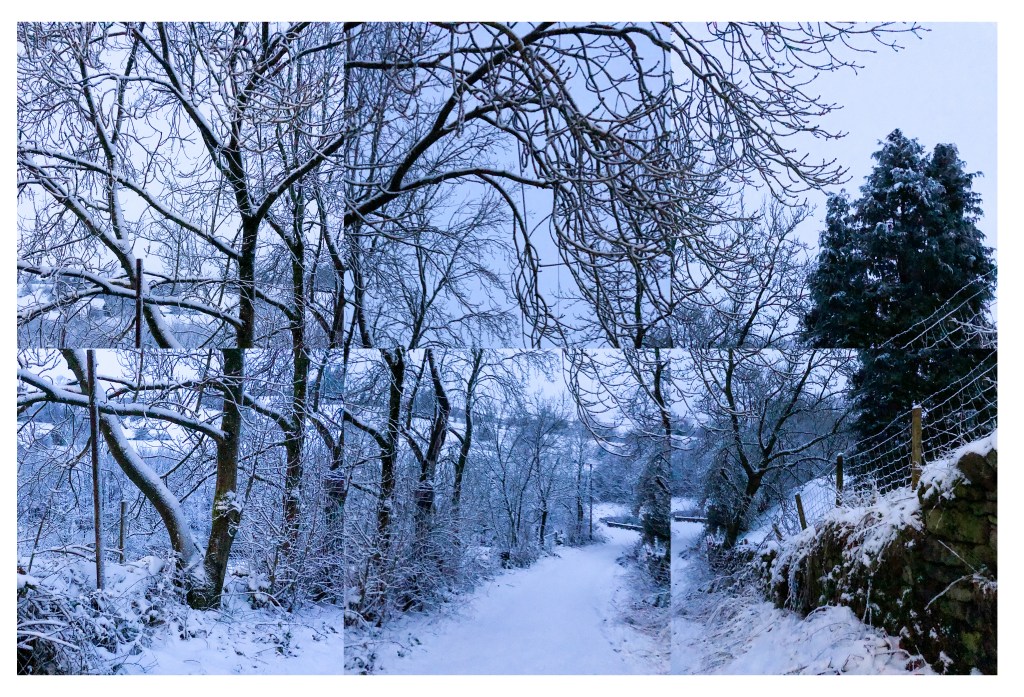
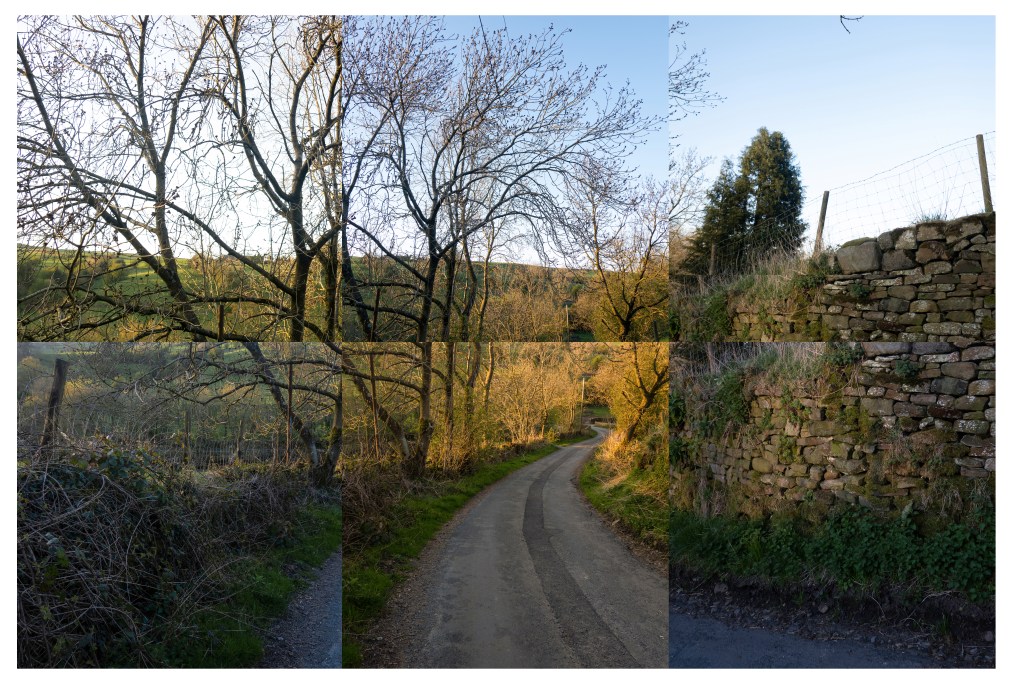
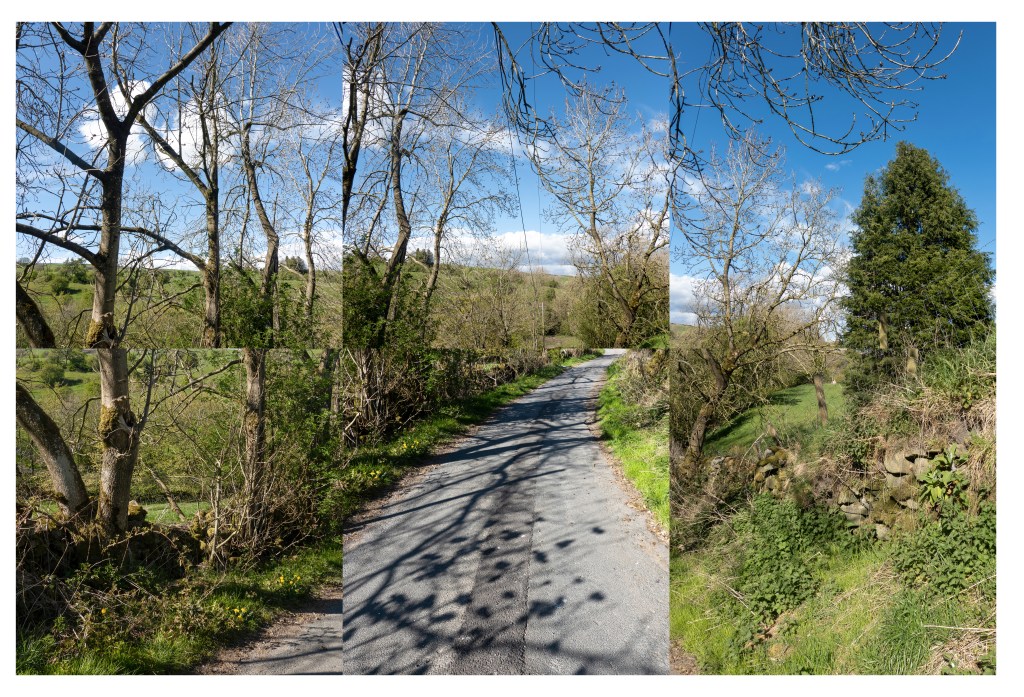
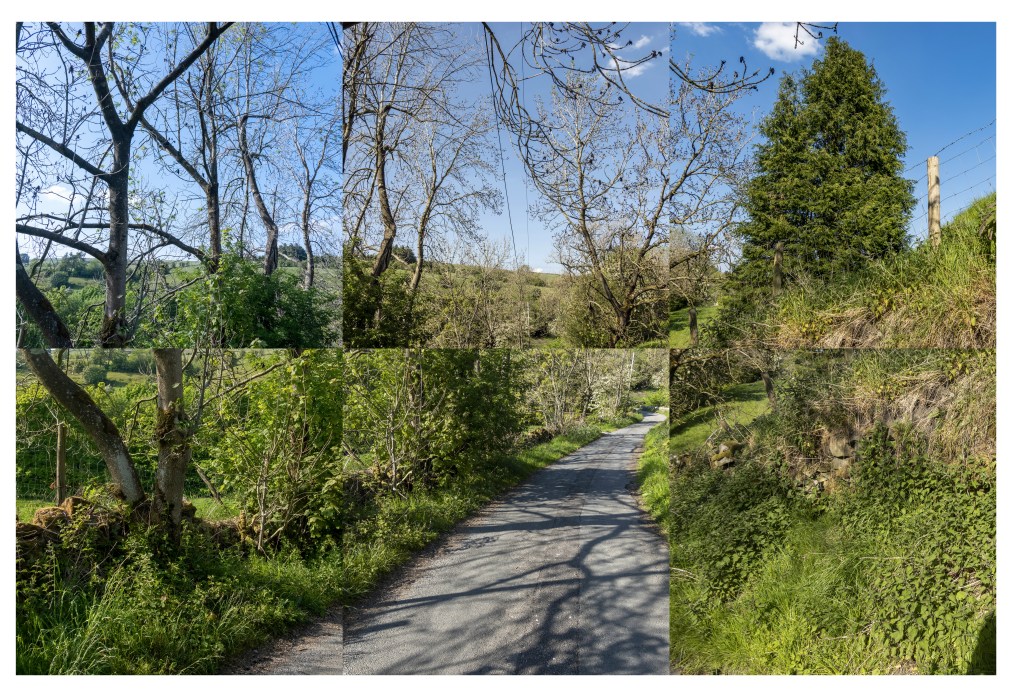
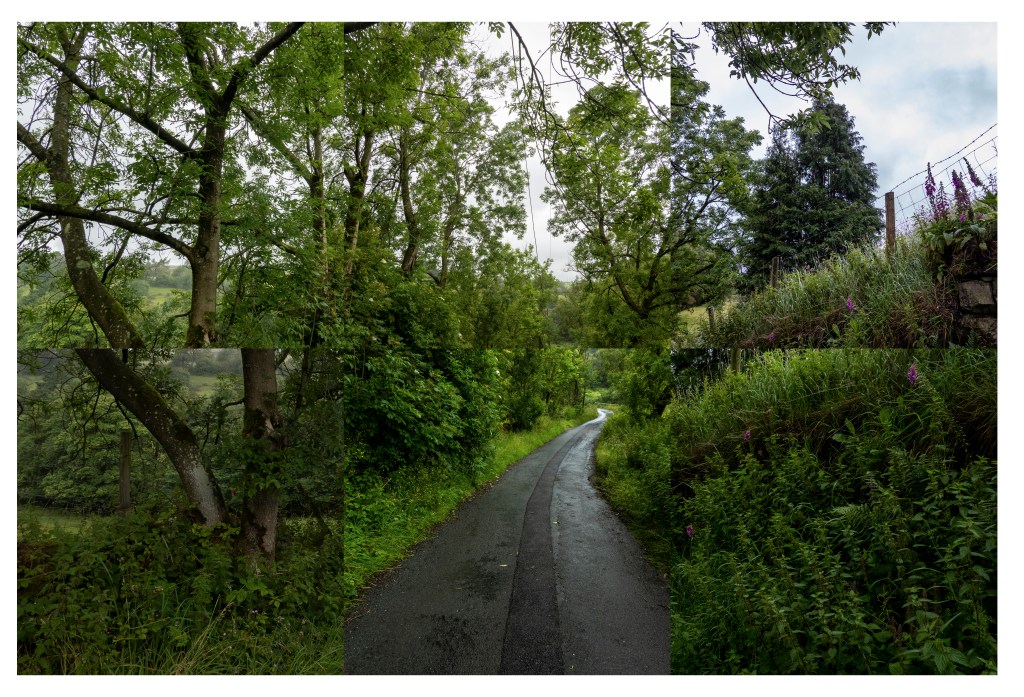
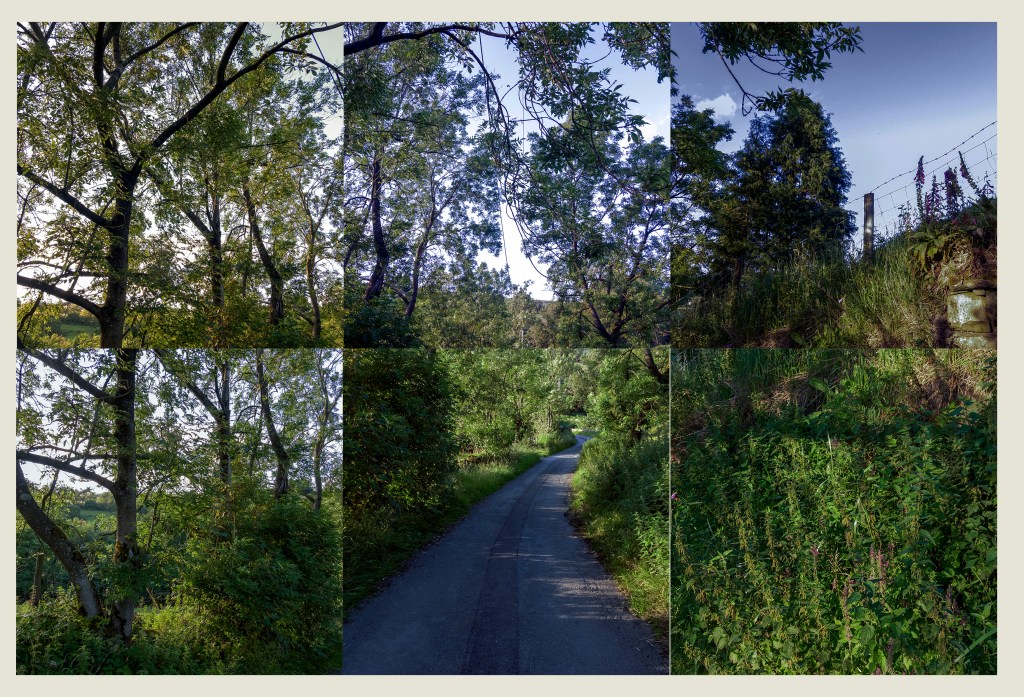
In making the 12 composite images that make Transitions I was keen to have consistency in each image. So I ensured I was in the same place for every one. Whilst I didn’t want the images to stitched panoramas they needed to show the same image.
I think I achieved this with accuracy.
I ensured the light was coming from the left hand side as we in the west expect to see it from this direction. Then perspective of the road takes the eye into the picture taking you past the changes in the landscape. Contrast and Colour also show the eye these changes, from stark leaves to full bloom.
My voice shows through the images I could have made straight 4:3 images but thinking of David Hockneys work “Four Seasons” (Hockney, 2017) made me adapt my work to get and series of images that emphasise areas of the scene and make my eye work as I look around the images. I like the way your eye sees separate images but your brain makes a composition from what is on show. To me it makes the story a challenge to get to.
Using the rule of 1/3rds and the road for leading lines allowed the basic frame of the photo. This helped make the twelve images follow a standard composition even though each image is slightly different it makes the series consistent.
I chose to use manual settings as I knew that auto would alter the settings and so the photos too much making each series too varied. Doing this allowed me to finish with consistency of exposure, contrast and detail. I could have used a reflector to direct light into the shadow. This would have been difficult to keep aligned across the twelve images.
My first thoughts around presentation were to create a book of large images. Covid 19 means no sending in of physical work. This has meant a rethink and I have created a slideshow of the work. I like the fact I can control the amount of time each image is visible. The viewer can loupe the video if they want to see the images again. Also the music adds to the project helping with the flow.
I have enjoyed this project and will be carrying it on as a long term project.
Link to the work.
Work Citied
Hockney , David Four Seasons Video Installation Royal Academy of the Arts London.
Feedback on Assignment 6 Transitions.
Research. Gordon Parks FSA Photographer
Whilst researching the Farming Security Adminstration (FSA) led by Roy Stryker for Assignment 4, I came across the name Gordon Parks a name I had never seen before. Below I document some of his work within photography but I hasten to add only a small part of Gordon Parks life as he had a full and varied time.
Gordon Parks was born into an African American family on the 30th of November 1912 in Fort Scott Kansas. He was the youngest of 15 children. At the age of 15 he was thrown onto the street. He supported himself playing piano and working in the bars and brothels of his home town. He also did a smaller amount of singing in the bordellos too.
Age 25 he bought an $8 camera and taught himself photography. Eventually he took some photos at a Harlem fashion event and the wife Boxer Joe Louis saw Parks work. She was so impressed she invited Gordon Parks to move to Chicago where she helped him set up a portrait studio. He documented African American life. This work led to a Jules Rosenwald Fellowship which paid him $200 per month to help support his family.
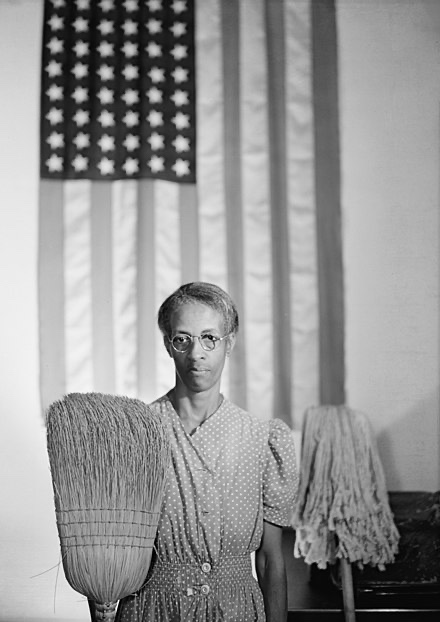
Parks work ended up presented to Roy Stryker the director of the FSA, who employed him and took him under his wing to ensure the organisation got the best from Parks skills. On his first lone assignment Stryker instructed him to go and photograph a cleaning woman of African American origin. Parks knew of just such a woman in the FSA building The ladies name was Ella Watson he saw and placed her in front of the Stars and Stripes flag in the entrance to the building. And called the photo “American Gothic Washington” (1942). This image shows a lady who is the back bone of the United States, unseen, stoic and determined. Much like the earlier painting by Grant Woods which I must mention now entitiled American Gothic (1930).
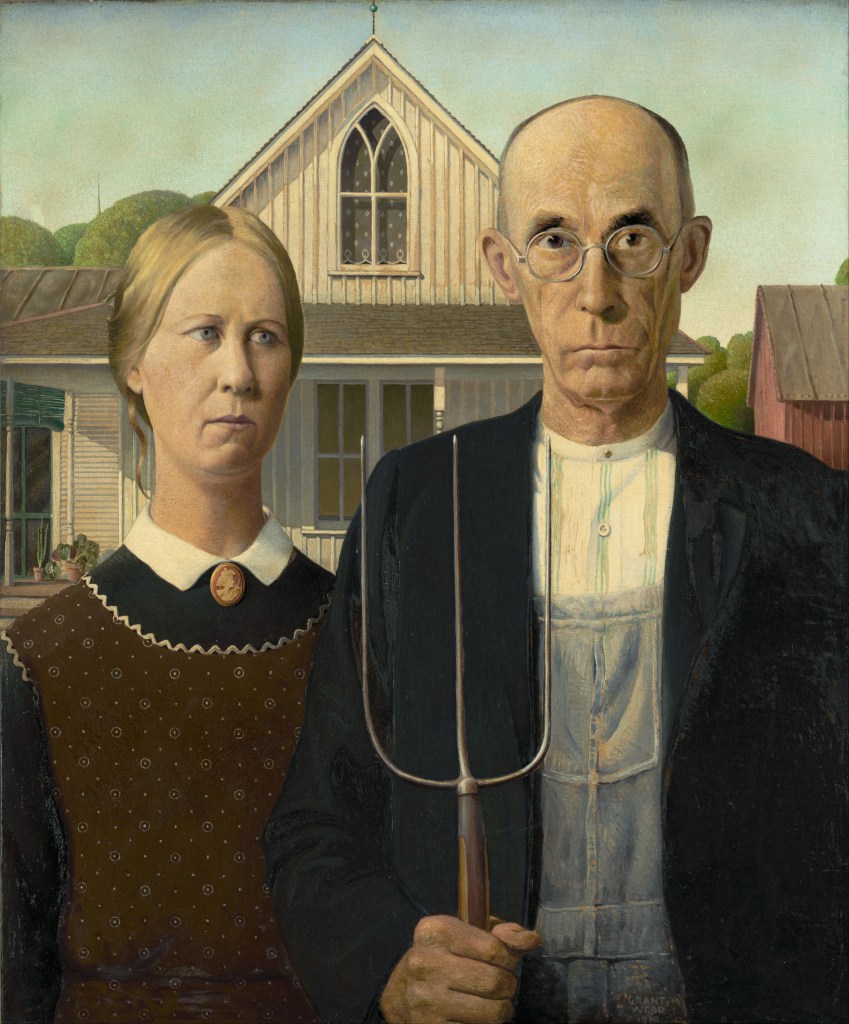
Grant Woods was a painter in Eldon Iowa. He looked around his town for inspiration and saw the Dibble house. He was inspired by the American Gothic window in the upstairs of the house. Woods biographer Darrell Garwood (1944) writes “Wood thought it a form of absurdity to include a Gothic window in such a structure”. The building forms the background of the painting whilst the main subjects are Woods own daughter and his Dentist. It is interpreted as either a depiction of the stoic pioneers of the west or a reference to the loss of his father at an early age. Much as Parks wanted to show in his image later. They both have a strong message by a subtle humour.
Parks took many more images depicting mainly African American life for the FSA. He even took other images of Ella Watson. The FSA was wound up and Stryker went to work for Standard Oil Photography Project. Stryker asked for Parks to join such was their friendship and respect for one another. Stryker was told he could not employ Parks so Stryker resigned. The powers that be relented and Parks and Stryker worked together on the project at Standard Oil for several years.
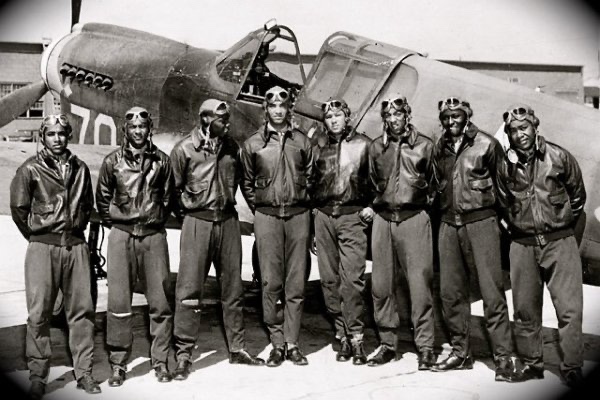
During the war Parks was embedded with the 332nd Fighter Squadron (1942, US National Park) where he took many photos documenting this all African American fighter squadron. This helped to show the segregation even in times of war but more importantly to me shows the joint effort and suffering endured to gain an eventual victory for a promised better future.
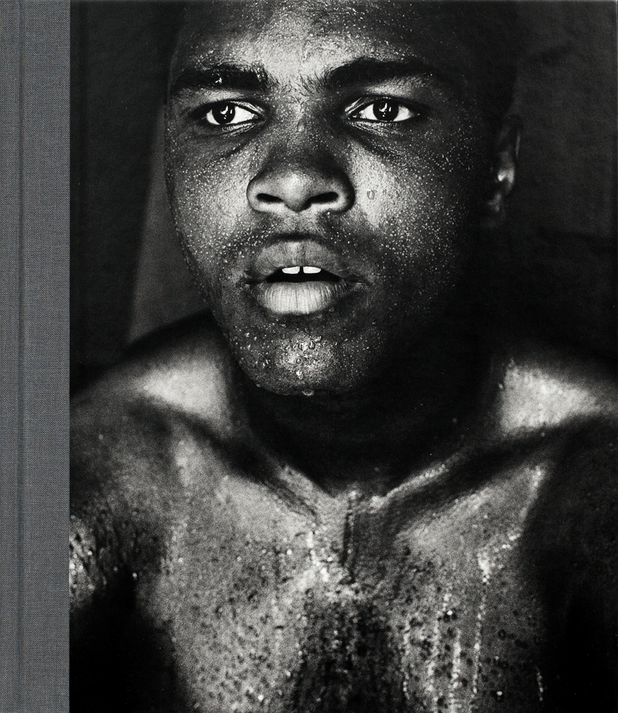
He worked for Vogue Magazine he drew on his past experiences gained in the Portrait studio to capture striking shots of his models. He then worked for Life magazine where he shot Barbara Streisand, Stokely Carmichael, Malcolm X and Mohammed Ali capturing the essence of all who came before his lens.
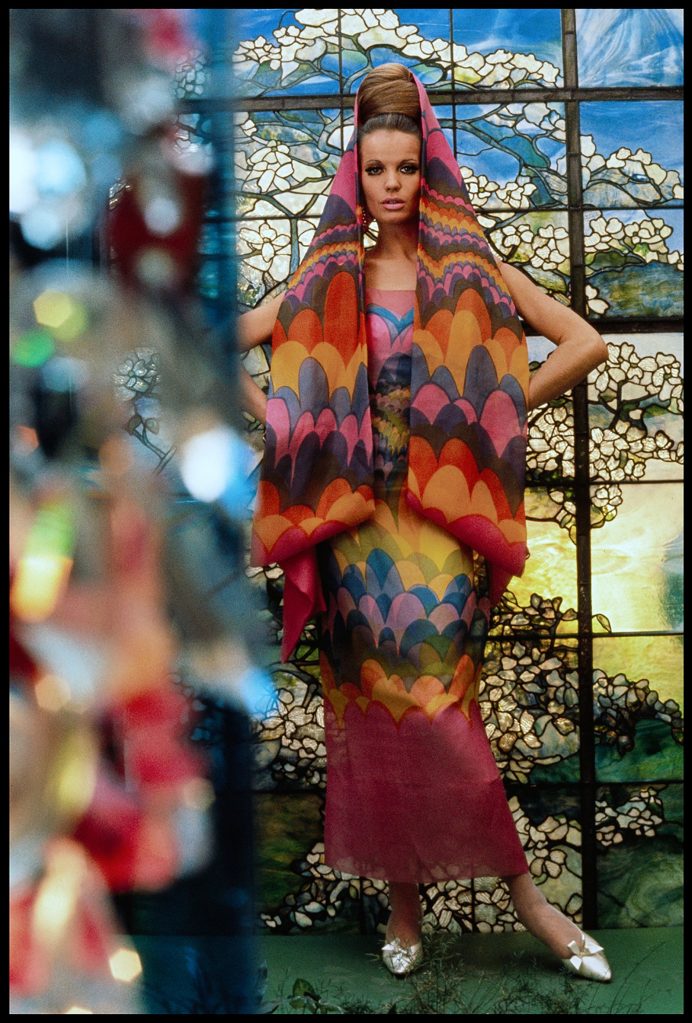
One writer said of him “He became one of the most provocative and celebrated photographers in the United States”. (Baker, 1992). Parks was made Photographer of the year by the American Society of Magazine Photographers. An Accolade that meant very much to Parks.
In the early 1960s her worked directing a stylish police film called “Shaft”, and recently he made a cameo in the sequel sat playing chess in the background of a bar scene. He never lost his love for music and in 1963 so around the same time as he worked on the above film he wrote the music for a ballet entitled “Martin”, the subject of this ballet is Martin Luther King who was assassinated earlier in the same year.
Gordon Parks died on the 7th of July 2006 he was and is a truly inspirational person. He took life by the scruff of the neck and made magic with whatever he decided to do be it with Music or Photography he threw himself it each with equal aplomb.
Why have I never heard of him before?
Works Cited
Baker, Lee D. “Transforming Anthropology.” 13, July 1, 2008.
Craven, William. American Art History and Culture. One. McGraw-Hill Education, 1993.
Garwood, Darrell. Artist In Iowa A Life of Grant Wood. W.W. Norton & Co Inc New York, 1944. https://archive.org/details/in.ernet.dli.2015.89523/page/n131/mode/2up.
Gordon Parks. American Gothic Washington. 1942. Silver Gelatin Photograph, 11 13/16 x8 7/`6 Inches. https://collections.artsmia.org/art/100557/american-gothic-washington-d-c-gordon-parks.
Parks, Gordon. “Veruschka.” Vogue Magazine March 1965, 2965.
US National Parks. “Afican Americans in WW11.” US National Parks, 1942. Office of the War Department. https://archive.org/details/in.ernet.dli.2015.89523/page/n131/mode/2up.
Woods, Grant. American Gothic. 1930. Oil on Board. Art institute of Chicago.
Assignment 6 Transitions.
Transitions is a good title for this piece of work as I feel there have been many transitions in the months I have spent creating this work. Here I will think about some of these transitions, both in me and the landscape I chose to show. I would like to begin by writing about the reasons I chose Shop Lane for the work I completed.
Shop Lane is about a quarter of a mile from home so easily reachable from home. I walk along it almost every day and I see the changes on a daily basis. It has many features which would allow me to work from the same perspective for each exposure. It is part of a dynamic system both naturally and shows its position in a man made environment which nature alters. Shop Lane has existed through all the traumas man has made since it was built in the mid 1800s but remains as a constant. This was the main reason I chose it, it says to me whatever the world is experiencing this road is present, constant and reassuring.
First the transition within the landscape. At the outset I had visions of showing the four seasons our nation is renowned for. Whilst my photos show the dynamic changes within the landscape they are not the four equal and distinct seasons I was expecting to capture. The weather was mild through the Autumn even into December, the leaves fell from the trees and blew away but the foliage in the undergrowth took advantage of the mild weather and stayed around. We had two spells of cold weather in January and February but not the prolonged spells I remember as a boy. This set of images shows just one year it is not enough time to make any conclusions so it may be interesting to continue this project for several years.
Next the transition within me. I have changed a lot throughout the period of time I have spent on transitions. The biggest change has to be the way I now write. I knew I would struggle with Assignment 4. I used a lot of time reading and practising writing and referencing. There is still room for me to improve and I will be working hard to do so. I read Umberto Eco, How to write a thesis, Eco, “How to Write a Thesis”. and Cite them rite, Pears, “Cite them Rite”, whilst spending time reading and practising writing with the Royal Literary Fund Unknown, “Royal Literary Fund”, an informative website for learning and practising writing.
Finally the transition in the political world evidenced by the headlines I took from the Guardian newspaper Unknown, “The Guardian”, on the 28th of each month or if the 28th was a Sunday I show the headline from the previous Friday. When I started out I expected the main topic in the headlines to be Brexit with the odd curve ball such as a scandal or a disaster. It is no surprise that Covid 19 has been the main headline. In fact Brexit is only mentioned in one Headline with scandals in the Houses of Parliament and another announcing Prince Andrew not co-operating in the Epstein enquiry. The world is enduring a huge transition which I could not have foreseen at the begining. However the reassurance that places like shop lane endure, and all will return to equilibrium eventually is visible to me looking at the landscape all around
Taking these photographs has taught me to think how I can portray a message differently. A photograph iS a snapshot of time. Limited by the space in the frame.Taking the images monthly allowed me to show this dynamic system and how it changes. Using multiple views allows more space to be shown. With the outcome being this work shows the superficial change however my main message of reassurance is also their reinforced by the headlines. A single image would have been more difficult to show this message. I feel these images have allowed me to show the viewer time and space. Altering the perspective of both.
https://michaelgreenlevel2landscapeblog.photo.blog/2019/08/26/exercise-1-5-visualise-transitions/
My description of my initial thoughts and influences can be found here.
Work Cited.
Eco, Umberto. How to Write a Thesis. Second. MIT Press Translation Edition, 2015.
Pears, Richard. Cite Them Rite. 6th ed. Pear Tree Books, 2005.

Unknown. “Royal Literary Fund.” Academic. Royal Literary Fund, 2020. https://www.rlf.org.uk/resources/academic-writing/.
———. “The Guardian.” The Guardian. 28th of each month.
 Michael Green Landscape Studies