David Bates essay (Bates, 2010) “The memory of photography” discusses lots of different aspects of memory aides from the written word on a notepad to the way we use technology to help us store memories. We tend to mimic our body parts to enhance our bodys functions, we mimic the eye with glasses or cameras and our ears with ear trumpets and hearing aids. Recent technology that allows us to store the vast numbers of images are hard disks and memory chips which mimic part of our brains function.
He catogorizes this in two way Natural Memory the brains natural capacity to remember and artificial memory any device developed to aide our memory.
This could be a page in a notepad about which he says “In that case the surface upon which the note is preserved the pocket-book or sheet of paper, is as it were a materialized portion of my mnemic apparatus, which I otherwise carry about with me invisibly. I have only to bear in mind the place where this “memory” has been deposited and I can then “reproduce” it at any time I like, with the certainty that it will have remained unaltered and so have escaped the possible distortions to which it might have been subjected in my actual memory.”
(Freud, 1925).
Throughout the essay he references Freud and his ideas around childhood memories effecting us throughout our lives. But he starts with Freuds ideas around the way humans try to improve on their body parts saying (Freud, 1925) “With every tool man [sic] is perfecting his own organs”. Using motors to enhance muscles lenses to improve sight and hearing devices to analyse sounds differently.
Talking about the cultures that employ photography Freud wonders how using these memory aides will effect our Phsychy “
Derida wonders if our internal memory (Brain) will be short circuited by all the new technology. (4)”Because of the upheavals in progress affected the very structures of the psychic apparatus, for example in their spatial architecture and in their economy of speed, in their spacing and of temporalization, it would be a question no longer of simple continuous progress in representation, in the representative value of the model, but rather of an entirely different logic.”
Once we create these technologies and begin to store images on them then a new problem arises. Just putting images on a hard drive creates an archive it is then up to us how organised this archive becomes. How do we organize? It has always been the most difficult part of photography for me. Derrida wonders (Derrida, 1995) “If these external sources are matched by the inside memory” or how we can make the two match in the future.
When we archive things we create Libraries, Museums and Galleries this creates a new issue. We must be careful how and what we show or we will influence our viewers thoughts.
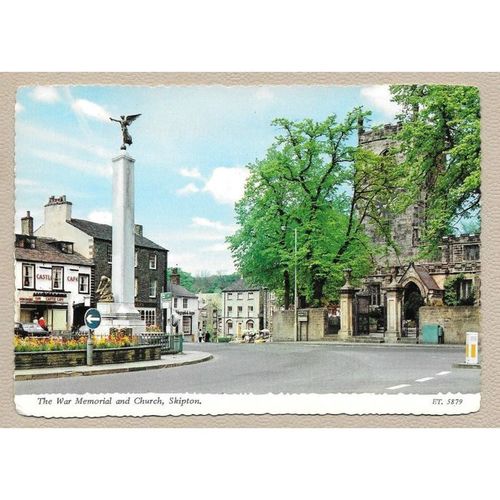
Le Goff argues (Le Goff, 1992)Commemoration finds new means: coins, medals, postage stamps multiply. From about the middle of the nineteenth century, a new wave of statuary, a new civilization of inscriptions (monuments, street signs, commemorative plaques on the houses of famous people) floods Europe.
He then thinks about our family albums and says “The portrait gallery has become democratic, and each family has in the person of its head, its official portrait-maker. To photograph one’s children is to make oneself the historiographer of their childhood, and to create for them, as a sort of inheritance, the image of what they have been . . .
We can apply this thought to all manner of photography be it public, state, scientific or from any social group. We are creating archives of what has been then deciding how it is shown and therefore remembered.
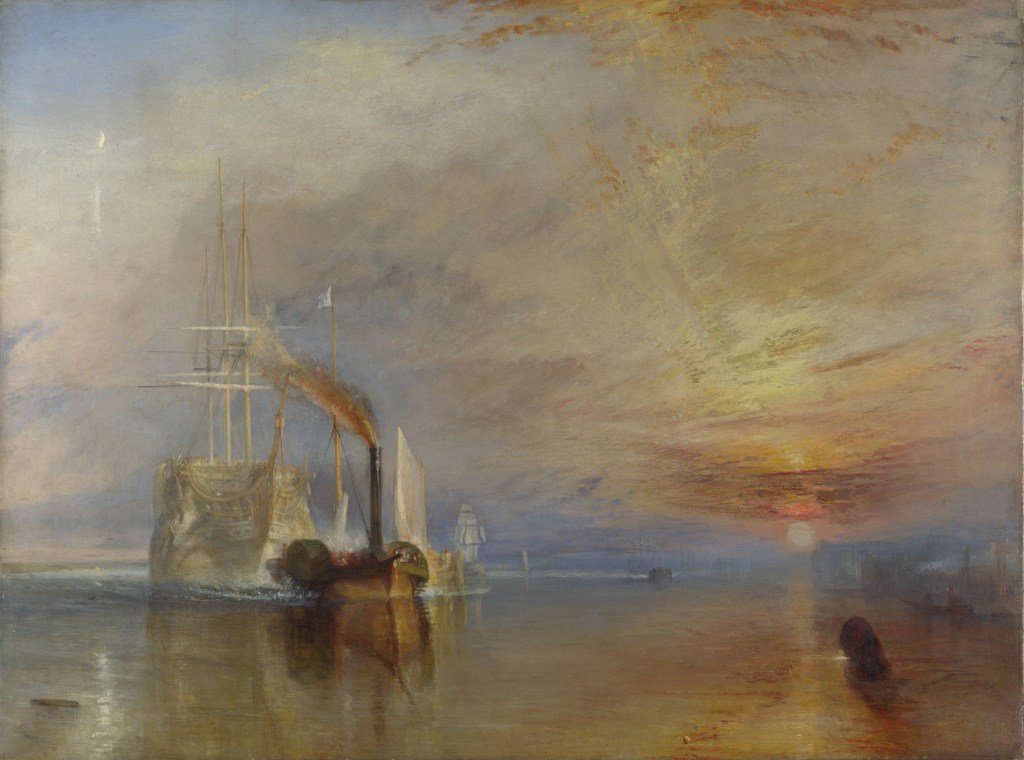
Bates then discusses Mnemic memories and looks at one photo imparticular this photo is by Fox Talbot and is of Trafalgar Square being constructed Bates states it appears in a book he remembers called (Talbot, 1844) “The Pencil of Nature”. He chose it as it shows Le Goffs principle of memorializing people and incidents and the photograph itself being a memory device. He links it to a childhood memory of living in Portsmouth and visiting Nelsons flagship victory. It is interesting to learn later that the photograph doesn’t appear in the book at all.
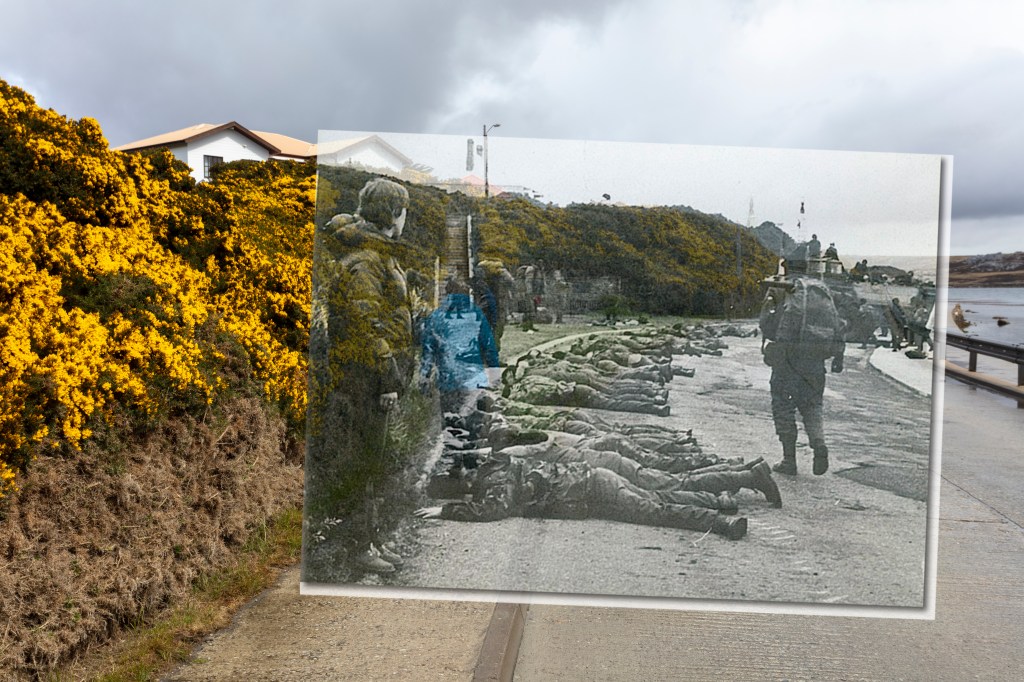
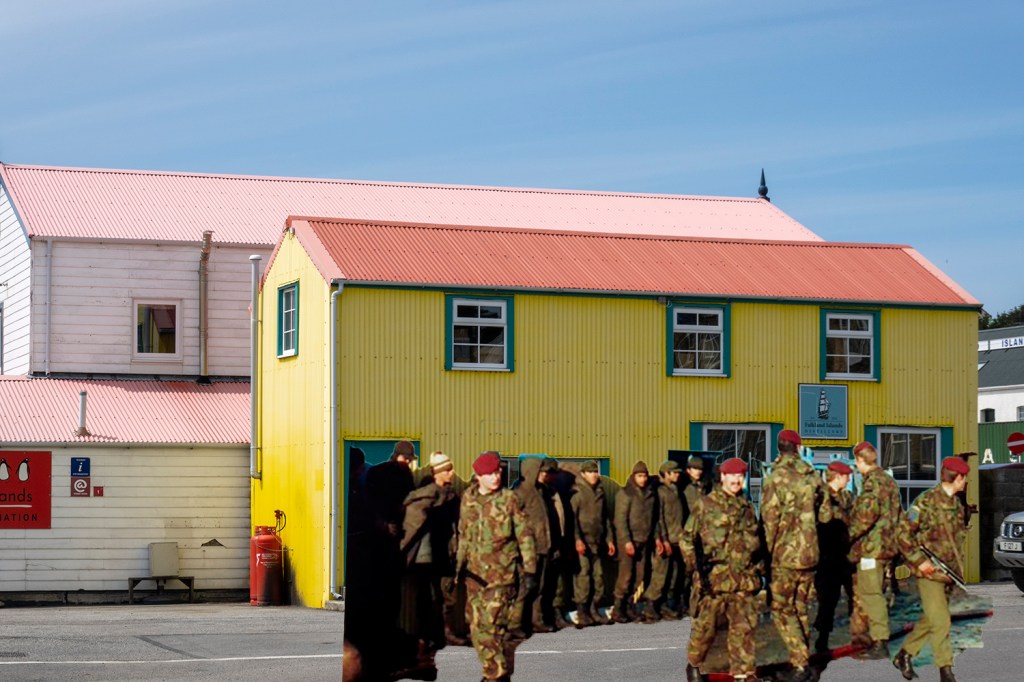
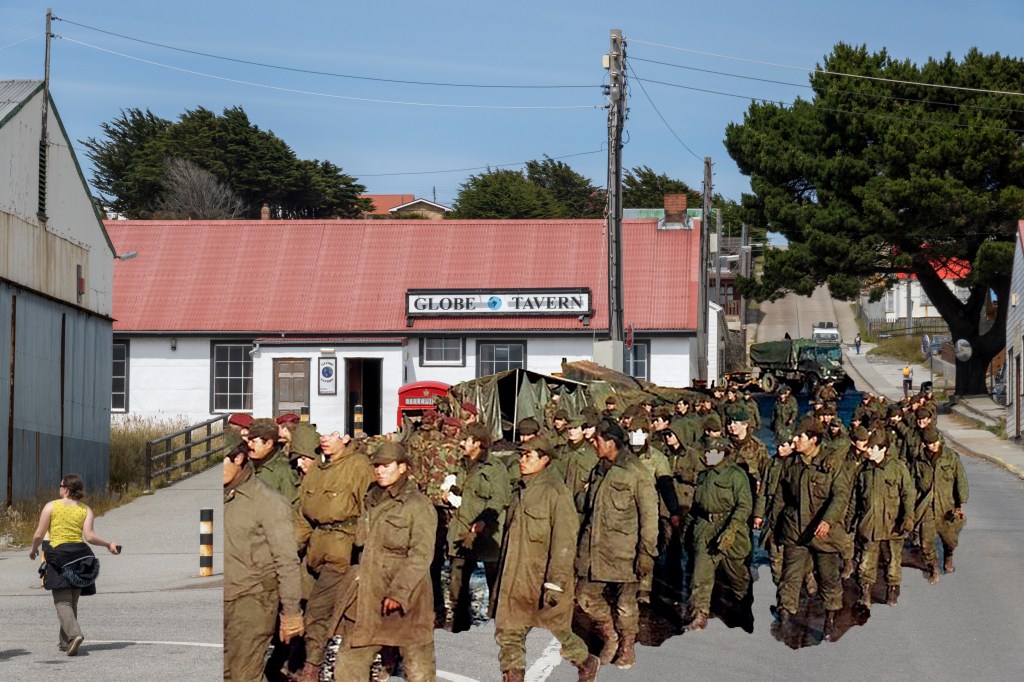
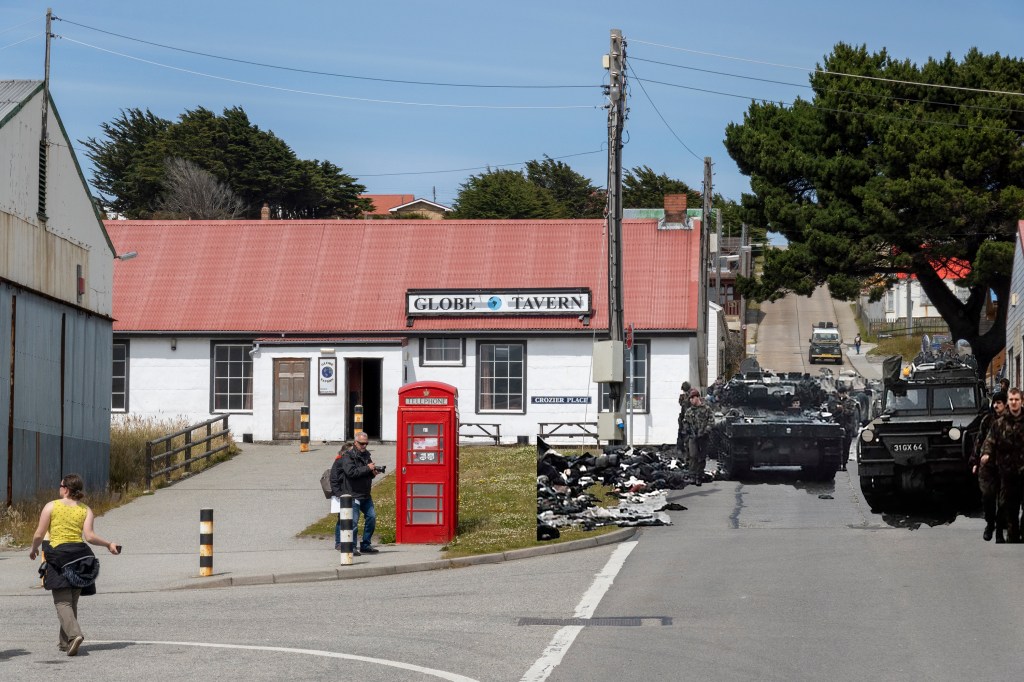
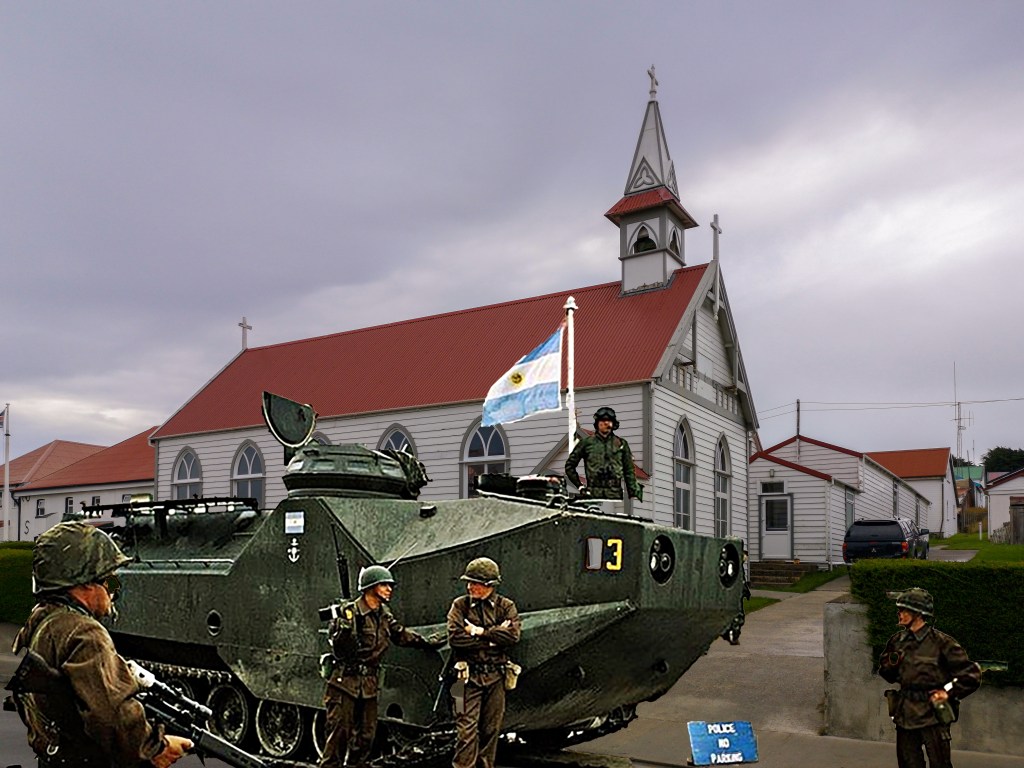
On my recent visit to Port Stanley I walked to the memorial for the naval battle in world war one. I remembered it from my time there in 1982. As I walked along I had a memory of a photo of the marines lying on the ground having surrendered. I took a snapshot and was amazed to find how accurately my mind had positioned the shot not seen for thirty years. My memory knew I was in the right place.
On a subsequent visit the Gorse had been on fire and whilst destroying part of the house just visible the greatest danger was from exploding ordinance left by an Argentinian anti aircraft gun where the gorse now grows. Once more man makes a mess and doesn’t cleanup after they have finished.
Works Cited.
Bates, David. “The memory of photography.” Photographies 3:2, 2010: 243-257,.
Derida, Jaques. Archive Fever A Freudian Impression. Chicago and London: Chicago and London Press, 1995.
Freud, Siegmund. “The Mystic Writing Pad.” 1925: 429.
Goff, Jaques Le. History and Memory. London: Oxford, 1992.
Talbot, William Fox. The Pencil of Nature. London: Longman, Brown, Green and Longmans, 1844..


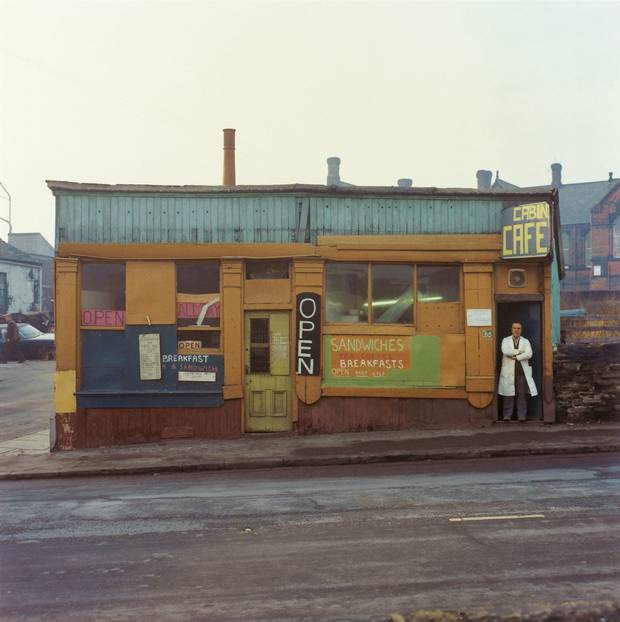
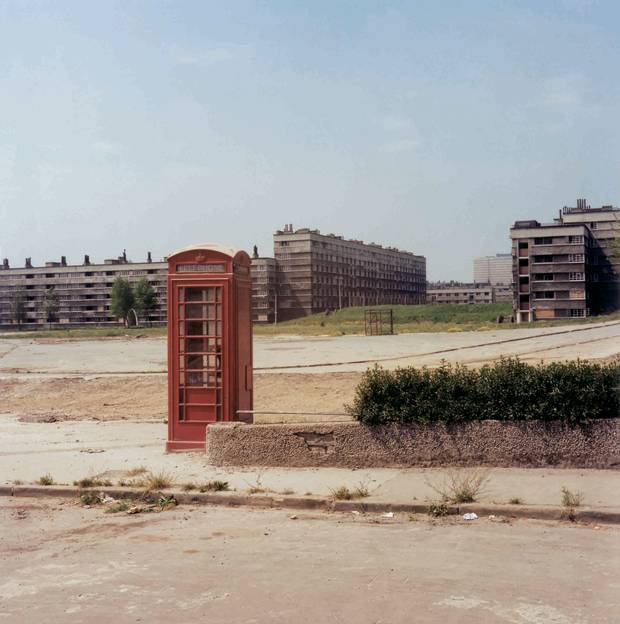




 Michael Green Landscape Studies