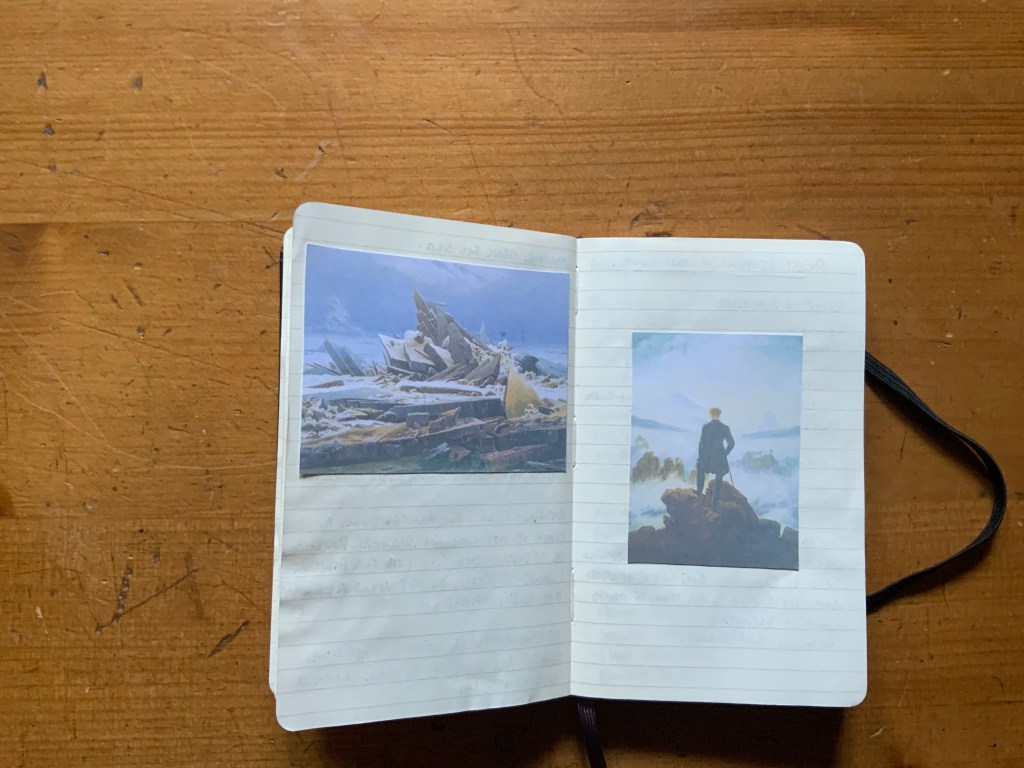
David Caspar Friedrichs painting “Wanderer above a sea of Ice” (1818) is the inspiration for this assessment. I like the relationships shown in the painting me with the landscape, me with the person and the person with landscape all in one scene.
I wanted to show the reaction people have when they see the landscape in Antarctica not all will get to see this wonderful place. So I think it is important to show this reaction so people may comprehend how special this place is.
This critique is in two parts one part working in the field and then creating the method to present it as a finished piece of work.
The fieldwork went well I knew how to set myself up to get the perspective I wanted to show the subject in the landscape. I had to work fast as I wanted to show a reaction that lasted a fraction of a moment. This meant I missed some shots and so had to take many to get these 12 exposures that make the book. The work sits well together as a series and in my opinion shows what I set out to show the way the scenery effects people who see it. I captured the three way relationship shown in Friedrichs painting.
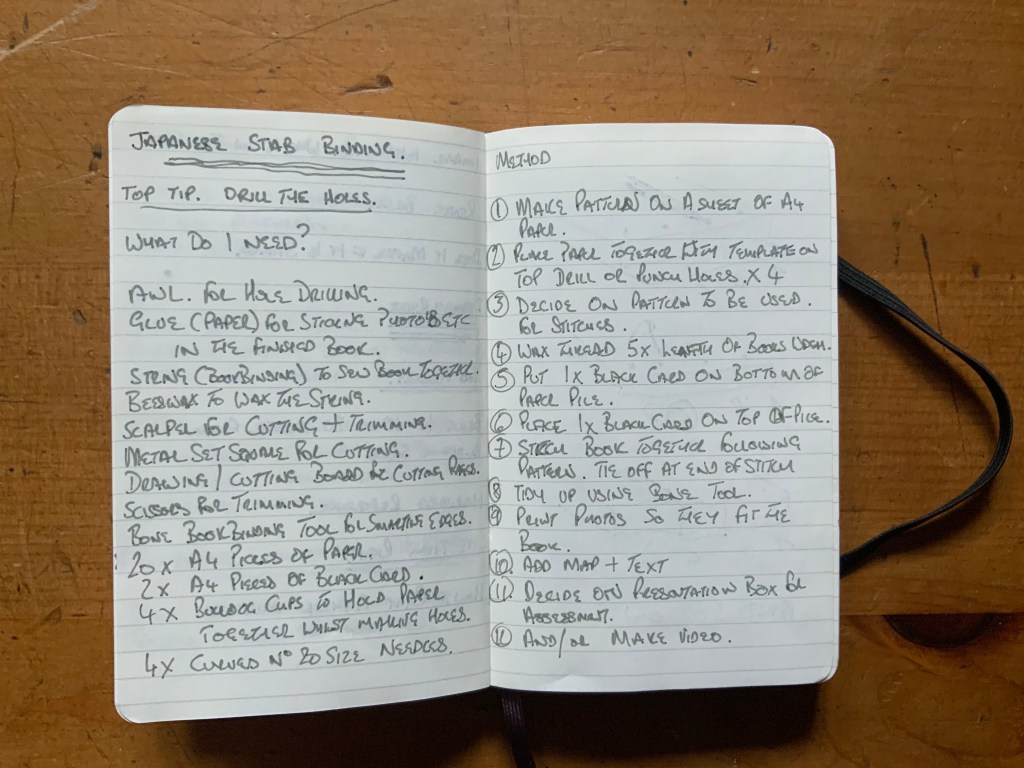
The second part of the critique is of the book itself. Here I had to learn a new skill Japanese Stab Binding was suggested by my tutor. I enjoyed the process of making this book immensely. The finished piece of work is extremely professional and shows the work very well. I was pleased I took the time to make a window for the cover but I could have improved it if I had shown Friedrichs painting in the format he meant it to be shown.
I believe this is the best piece of work I have created within this course.
Work Cited
David Caspar, Friedrich. Wanderer above a Sea of Fog. 1818. Oil on Canvas. Kunst Museum.
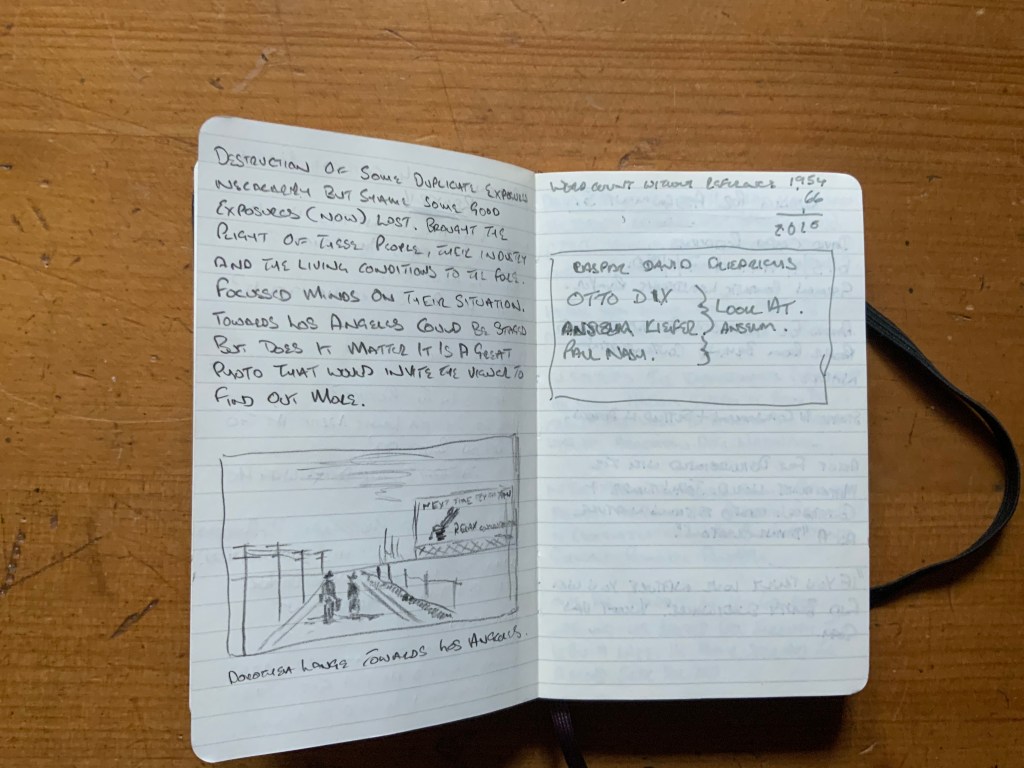
This piece of work was always going to be the biggest challenge for me. I haven’t written any kind of essay since leaving college in 1979. My tutor advised me to pick a topic with a small focus so I chose one photograph taken by Dorothea Lange entitled “Towards Los Angeles”.
I completed research into the photo and Dorothea Lange which led to Roy Stryker and the FSA. The research was primarily into the photograph.
When I got the initial feedback from my first effort and my tutor said I had produced a good blog post I felt deflated and went to read my post again. After doing so I agreed with my tutor and felt disappointed in my self. I revisited the work following the annotations my tutor had sent to me. On re-reading this I still felt I could do better. So I stayed up all night reading how to write an academic piece of work.
Also I realised I had to do more research into the background of the photo and also Roy Stryker. This research gave me the data to write an essay and the work I did reading the website of the “Royal Literary Fund” (2020) meant I could start again. My tutor was great going the extra mile allowing me to resubmit and re-reading and re-assessing this work.
In the first piece I wrote, the vocabulary was sloppy, not academic at all, in fact bloglike. Also I had only focussed on the photograph I needed to expand the work to look at the whole picture. The second piece was much better and although I realise I need to carry on the improvement I am happy with this second piece of work.
In previous course I had referenced the work I had read and was surprised to be told I had been doing it wrong. I read “Cite them right” (2005), a book by Pears and Shield which corrected my referencing to the Harvard method of reference.
I feel in the end I created a good piece of writing about a great photograph and its context. However more importantly I realised my inadequacies and have started the journey to putting things right. However I realise there are many more miles to put in to keep the improvement moving forward.
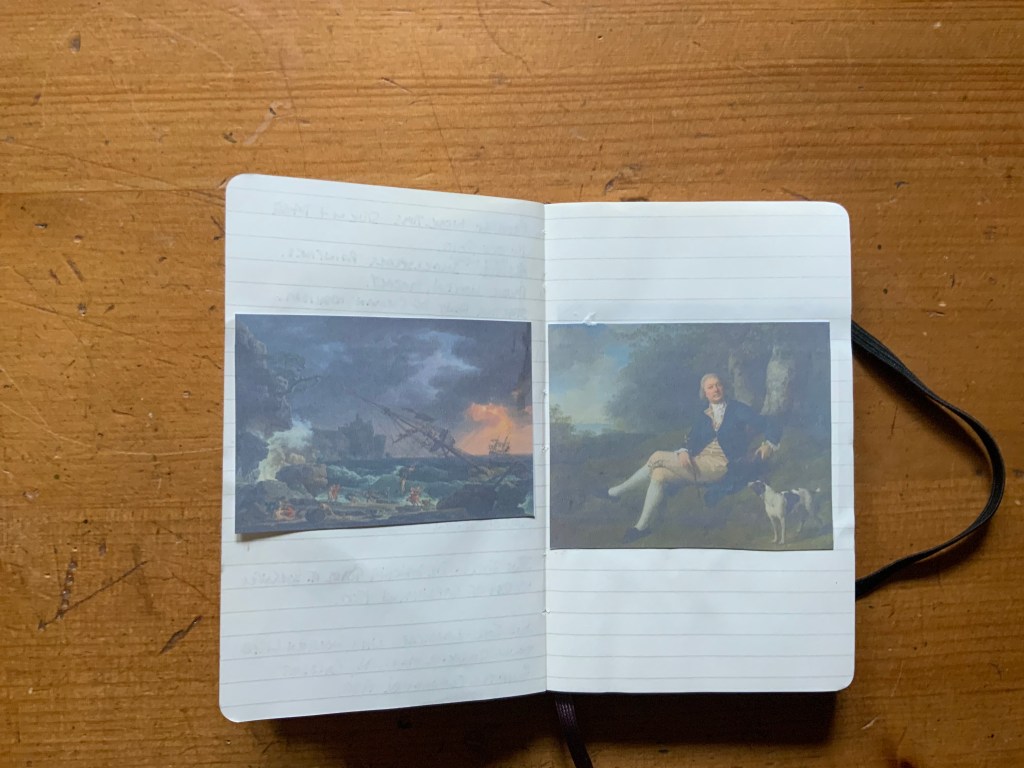
Considering assignment 3 A space that becomes a place work I made earlier this year has to begin by discussing how it came about. I had attended a lecture about seascapes and had listened to a description of Peter Breugel the elders “Landscape with the fall of Icarus”.
As I started make images I wanted to make the point Breugel had in regard to mans folly, both technologically and politically. I thought the Poem written by William Carlos (1962) would be an appropriate accompaniment. Near completion of the work a Chilean Navy C130 aircraft crashed ten miles in front of our vessel taking 38 maintenance engineers and crew with it. This changed the whole context of my work instantly.
I fought with the ethical position of the work but decided it was fitting to carry on after all we think we have over come nature every time we fly in an aircraft. So I continued.
My camera was set with a quick shutter speed to freeze the water and the Albatross, even the snow would add to the image. To get the correct image I chose a bird and followed it panning with it until it was in position in regard to a wave. The project is made of 12 images accompanied by the words of the poem. I feel the work shows exactly what I set out to capture, in fact what happened strengthens the purpose.
The images are strong and clear showing the different aspects of the sea. I like the varied colour and the varied moods of the ocean. The bird adds a second element with its fragility in before the elements.
I could have captured a bird on the water to finish the project but wasn’t lucky enough to see this so could not capture this. I am pleased I resisted using a zoom to get detail the wider images show space and hint at the precarious nature of these birds and this place.
In Breugel`s painting he clearly shows the indifference of man to the suffering of others. This tragedy in the frigid water was all but ignored by the worlds press. It took me hours to find any information when I got back home. So these souls and their plight were ignored just like Icarus.
Overall I am pleased with this project and how it was constructed I dedicate it to the lost people from the aircraft.
Breugel, Peter. Landscape with the Fall of Icarus. 1560. Oil on Wood, 73.5 by 112 centimetres. Royal Museums of Fine Arts of Belgium, Brussels, Belgium.
Carlos, William. Landscape with the Fall of Icarus, 1962.
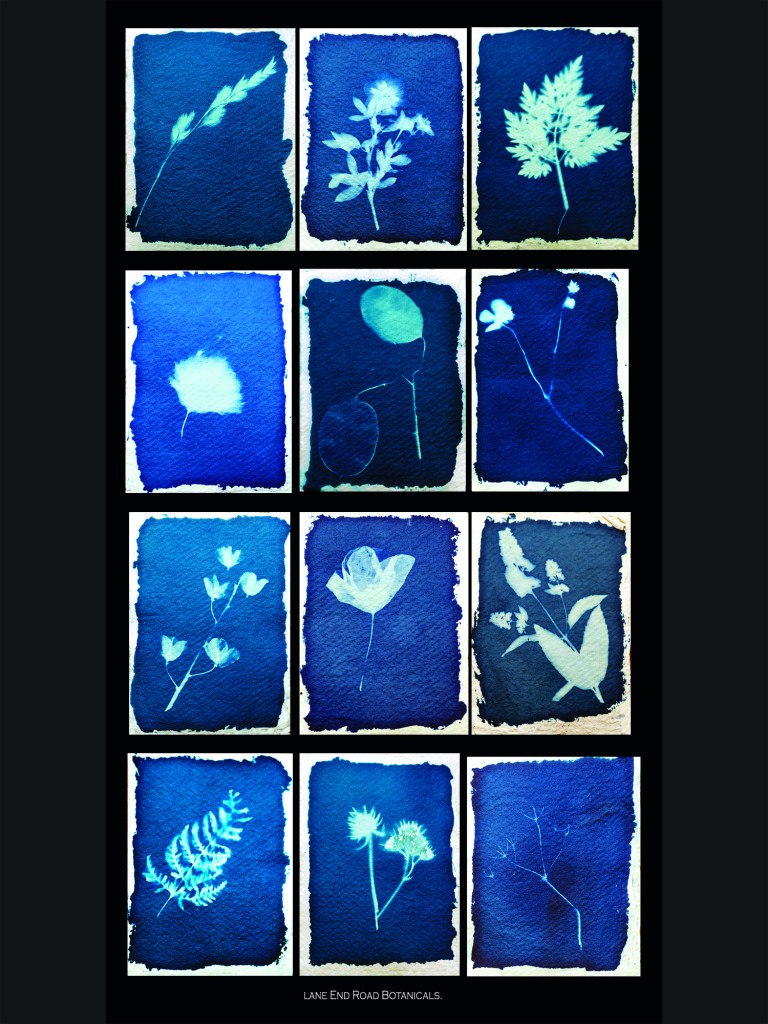
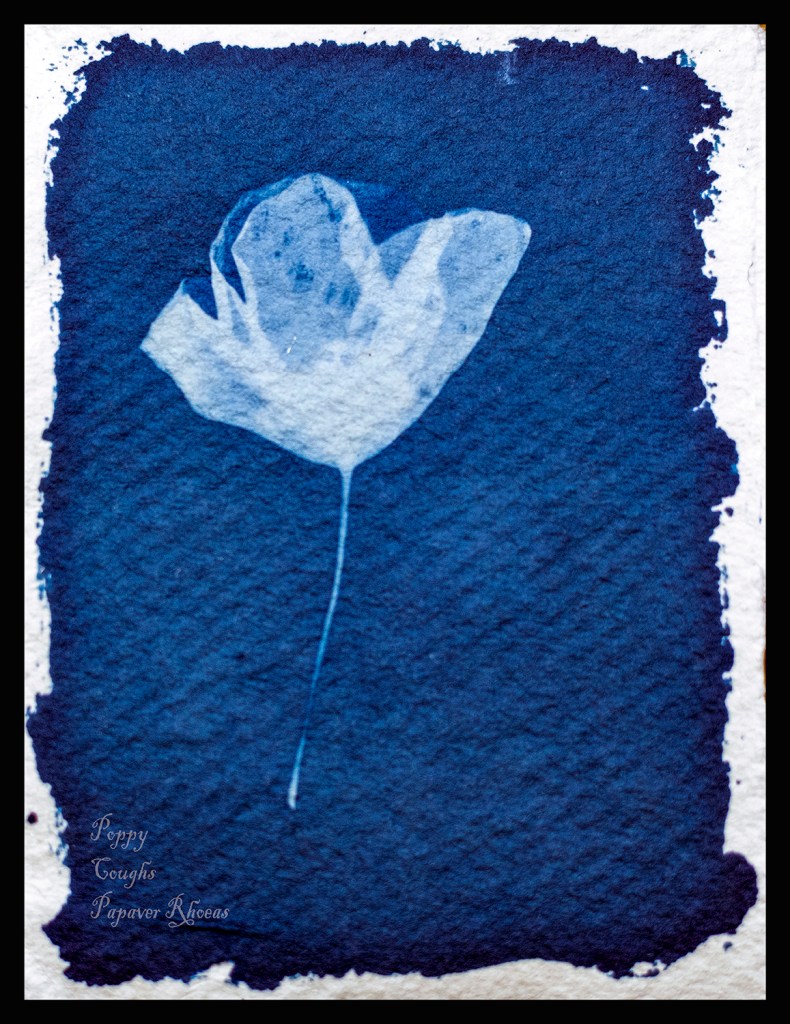
My aim at the start of this project was to explore the landscape in a different way, looking at the detail rather than the whole. Then I had to teach myself a new process. The process I chose was influenced by the work of Anna Atkins and her book “Photographs of British Algae, Cyanotype impressions” (1843). The ultimate goal for the work was to highlight we walk past lost knowledge every time we visit our local paths and hedgerows.
To complete this work I had to learn how to make cotton rag paper, it had to be strong enough to survive the washing process needed to fix the image. Next I learnt the technique of mixing the chemicals to paint onto the paper to capture sunlight or draw with light the literal meaning of photograph. I read the book “Experimental Photography” (2015) to learn the technique.
In the initial work I sent for assessment I had done too much including a map and a poster. My tutor said the cyanotypes were strong enough to stand on their own. So after a rethink I included the words as Atkins had on each image. This was an important part of the work as far as I was concerned.
My initial montage of cyanotypes of the plants I collected on my walks.2nd atempt with the words on the cyanotype
The overall effect of the work is pleasing; the detail the Cyanotype process captures is amazing. However exposure using the autumn sun is difficult. Some of the exposures are overexposed but are still a good record of the plant. The set of images shows 12 of the plants that make up the hedgerows I walk past everyday and represent them well.
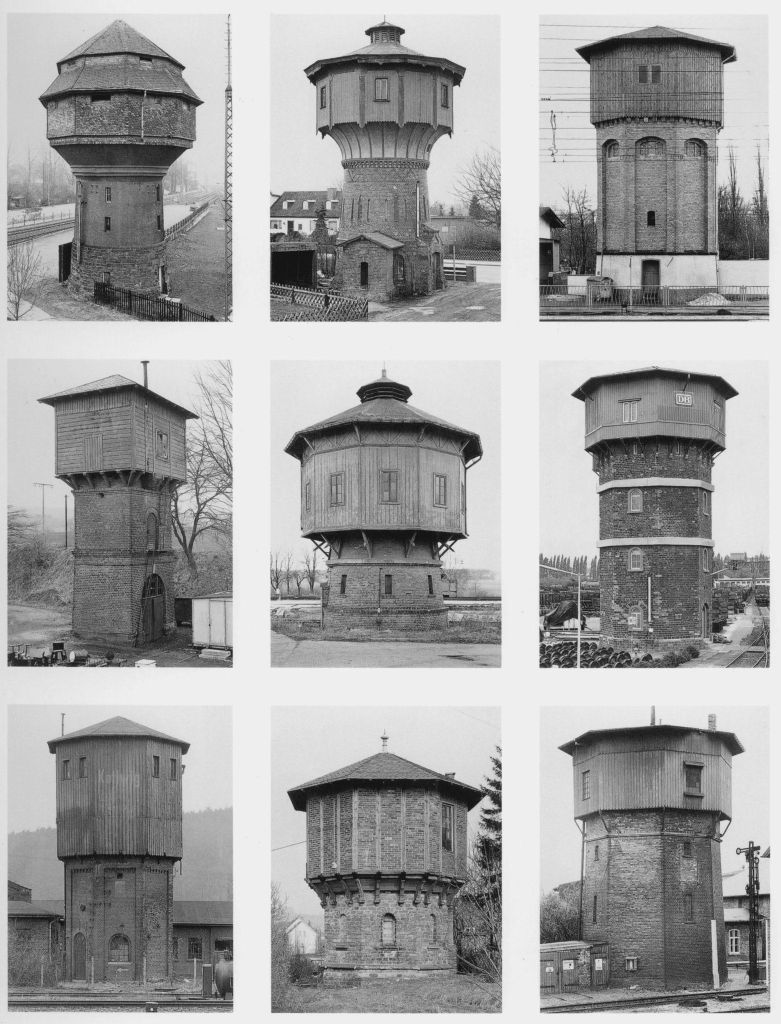
Hilda and Bernd Becher montage of water towers (1967-2010).
Initially I presented the images on one poster as the Bechers had presented water towers in their work “Typologie Wassersturme” (1967-2010). This worked well however when I added the text presentation needed to change to 12 individual pieces of work otherwise the word became lost.
When I got the exposure right the detail is almost a 3d image when I didn’t the plant is just a silhouette. I need to create a better understanding of exposure by creating exposure test strips. This will improve with experience.
I feel the project worked as it shows I see the detail and is able to learn new ways of capturing this detail. I tend to put too much into the finished project and my tutor’s advice of less is more certainly worked here. The finished images are pleasing to me.
Atkins, Anna. Photographs of British Algae, Cyanotype Impressions. 1st ed. Vol. 1. London: Steidl, 1843.
Becher, Hilda, and Bernd Becher. Typologie Wassersturme. 2010 1967. Black and White Photograph Montage, 40 × 30 cm. Konrad Fischer Gallerie.
Bendandi, Luca, and Marco Antonini. Experimental Photography. London: Thames and Hudson, 2015.
Alan Browning says on the rear cover of “Elmet” Fay Godwin book of photographs to support Ted Hughes poetry “Fay Godwin has caught the icy, brooding quality of this landscape with astonishing skill” (1979).
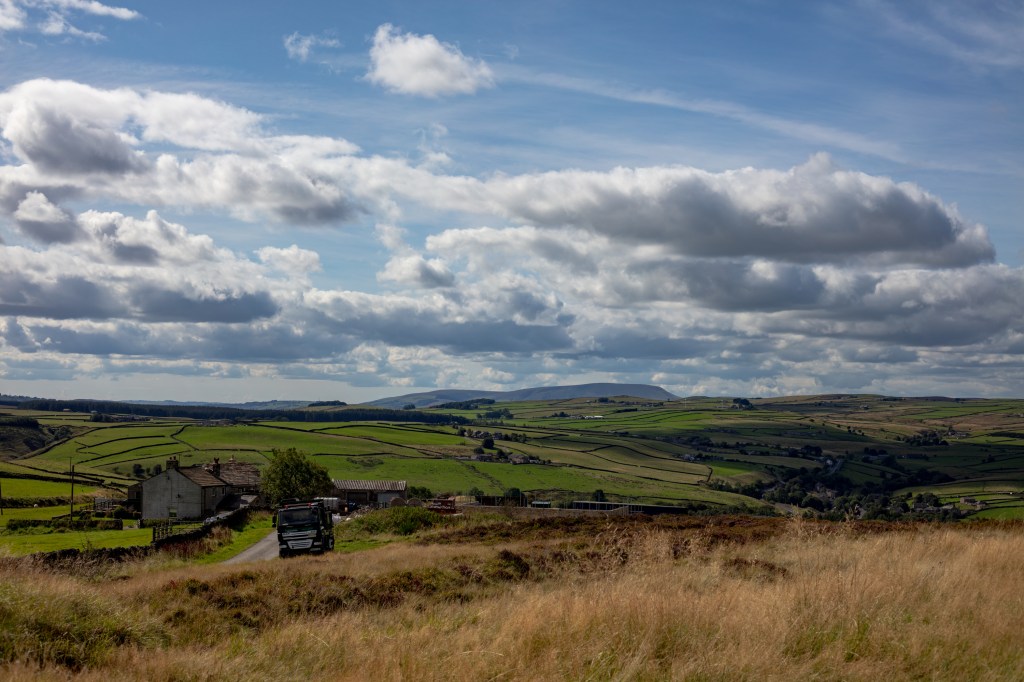
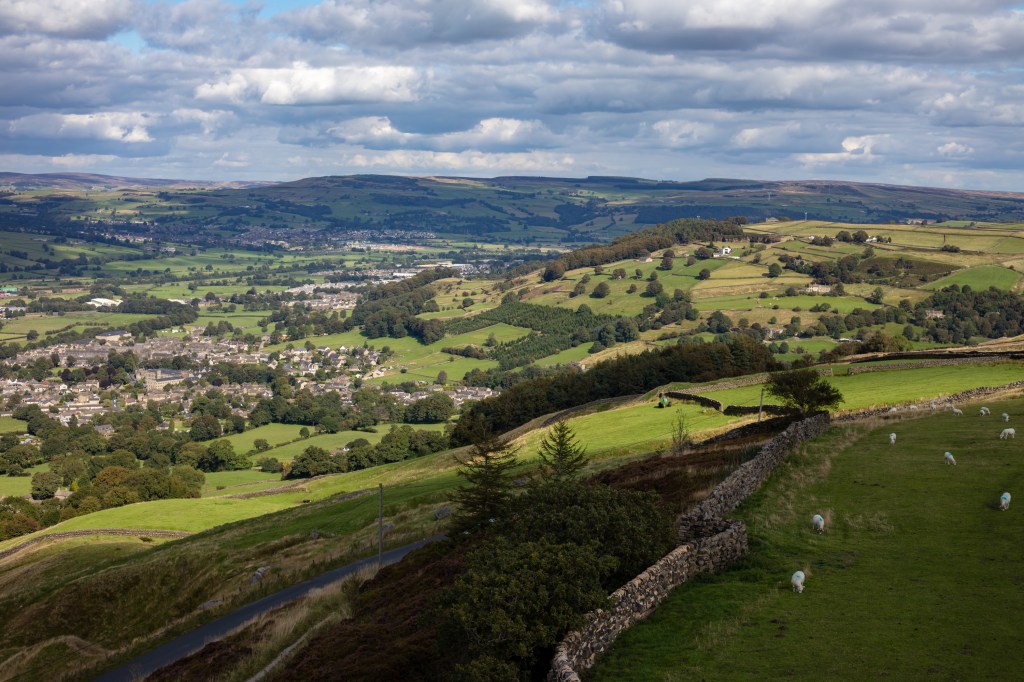
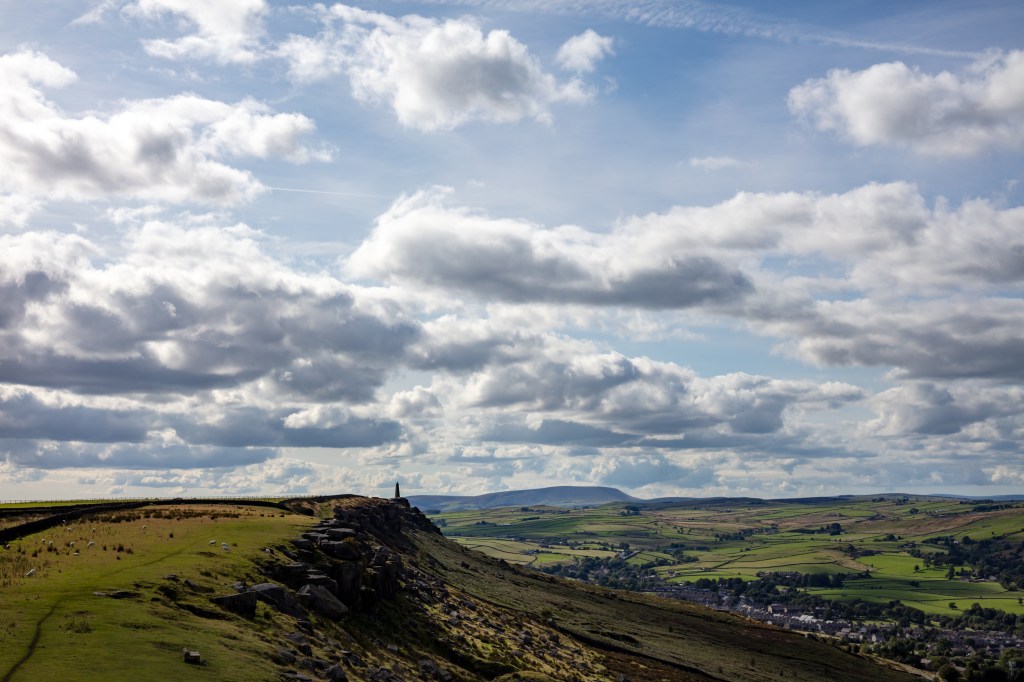
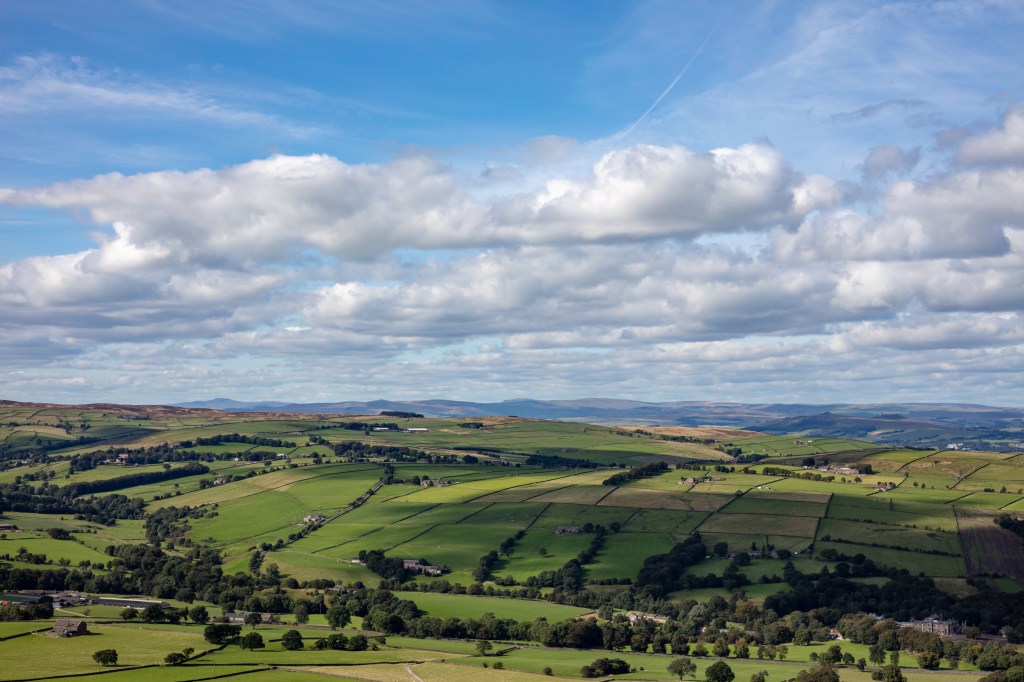
My work for this Assignment is a starting point guided by the word Sublime. I want to show the area I have recently moved into in a Sublime way. The big skies the green land and the open space from a different vantage point.
I chose to climb a pinnacle on a local hill to achieve the vantage point I wanted and to allow me an all round view. This enabled me to get up high to paint a picture of the landscape I live in.
Looking to Pendle Hill
Some of the views worked better than others but they do show where I live which has elements of the sublime. The view of Pendle Hill with the Farm and the truck is the best image to as it hints at the work and life that this place enjoys. The view of Cowling Church whilst a nice image does not work as well, the elevation of the lens is not as strong. The images do paint the picture of the dale I have moved to and certainly show the green and pleasant land. The skies whilst big and blue was not quite sublime however I captured it well demonstrating I can use the instrument of choice.
My aim was to show the landscape I have moved into I feel I achieved this but didn’t quite show the sublime. Some of the shots with strong leading lines work whilst others are a little flat with lines across the shot rather than leading into the scene.
Strong lead lines take you into the picture
This is a little flat.
The majority of the exposures capture the scene in the way I set out to achieve, the choice of day and therefore light could have been better as the brief was to capture the sublime. Some days the sky is filled with threatening clouds and amazing light if I were to do this exercise again I would wait for one of these days.
I still like this set of images and feel it does hint at the sublime place and the lives led here. This was what I wanted to achieve at the outset but could improve on it in the future.
Work Cited
Hughes, Ted, and Fay Godwin. Elmet. Faber and Faber, 1994.
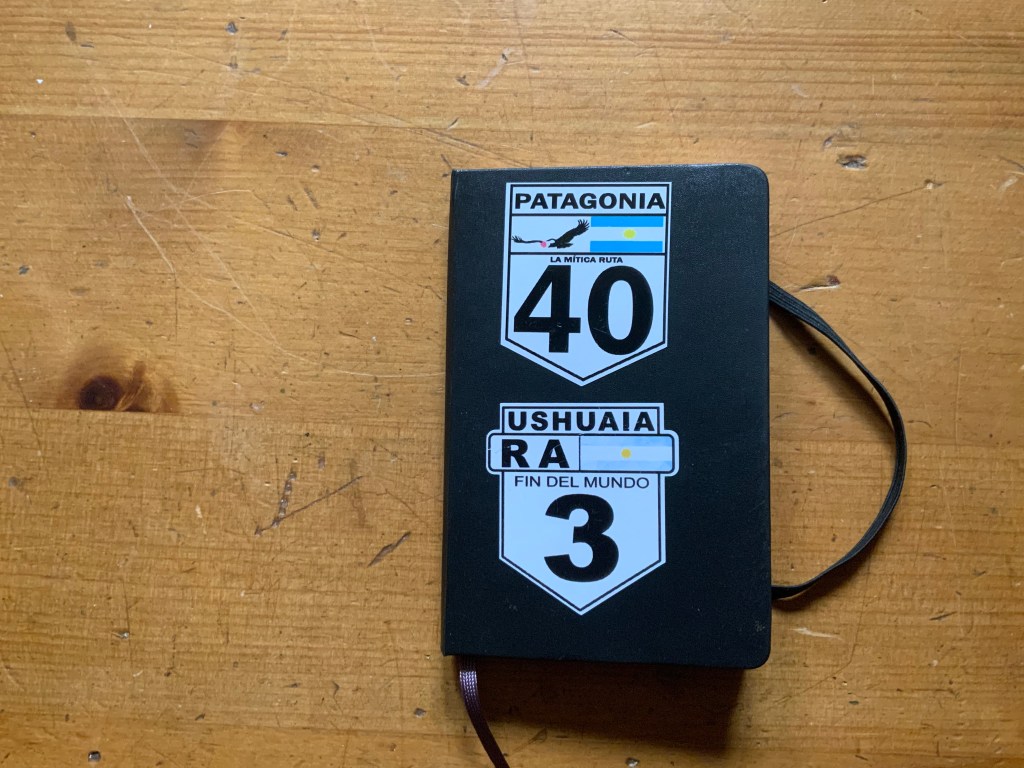
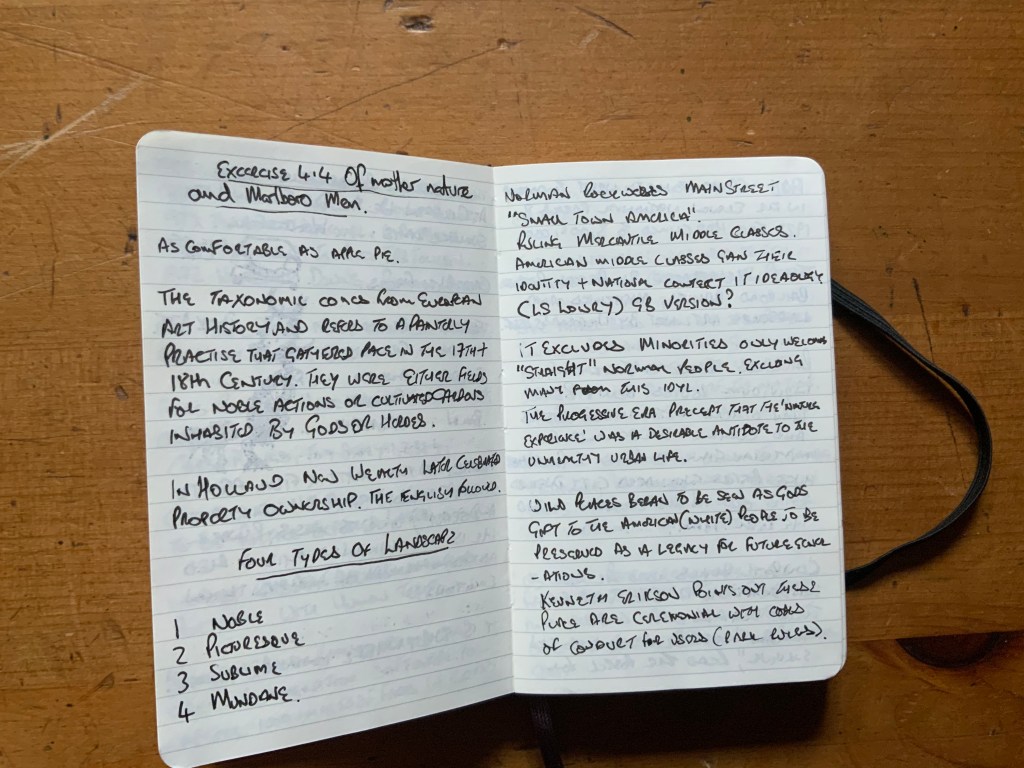
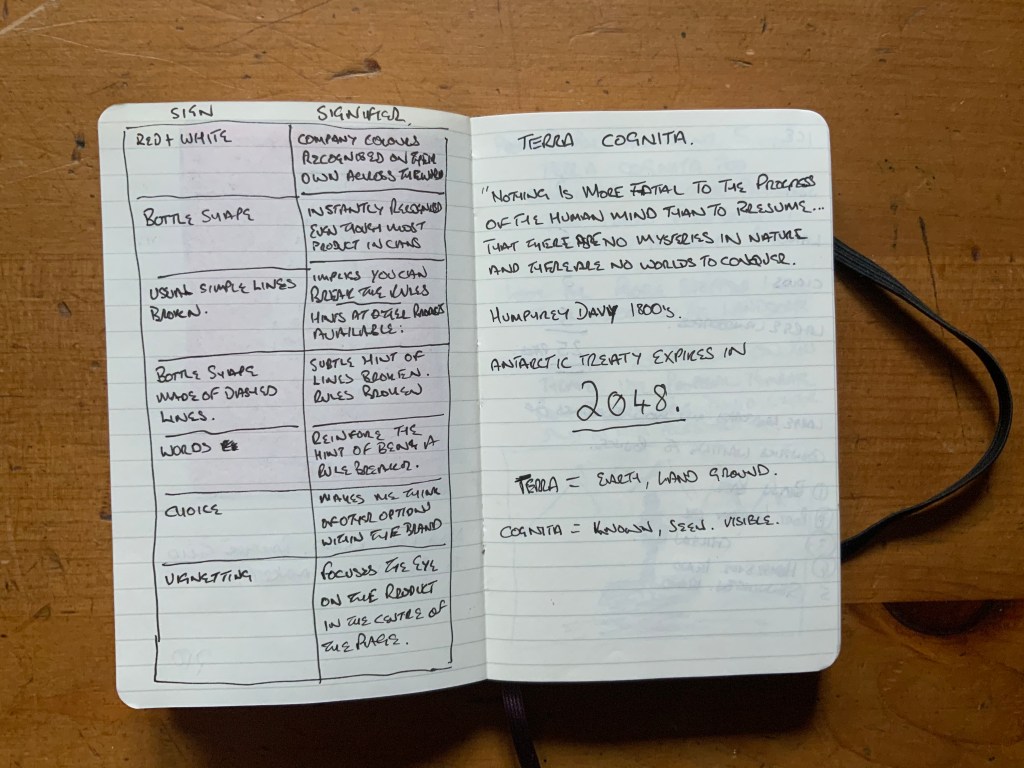
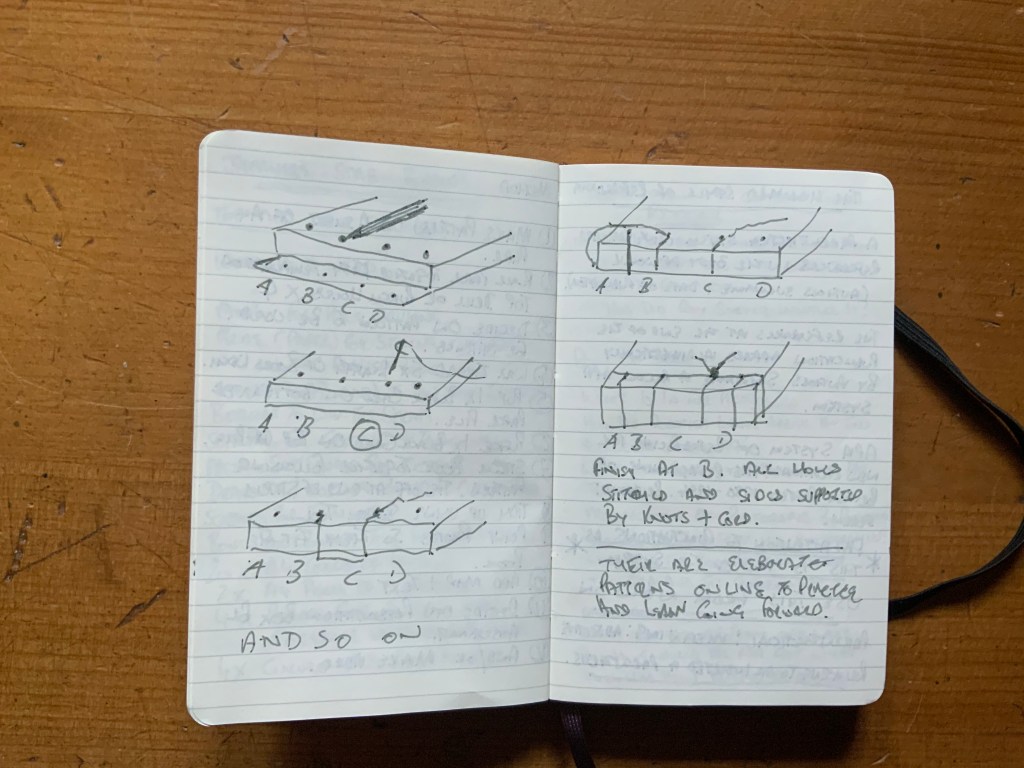
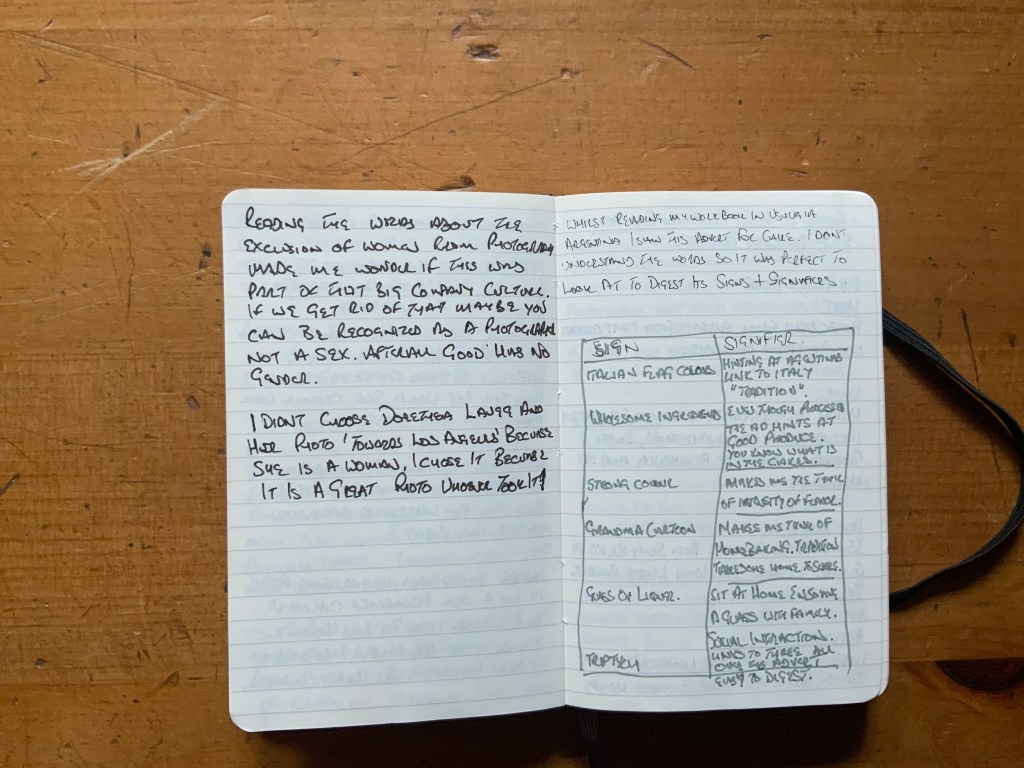
During each of my courses I could not have worked without a notepad. I keep it with me all the time (you never know when an idea will arrive).
I note everything down, some things become work others just form ideas that haven’t been produced, yet. They are all important and although scruffy it works for me.
Here is a slideshow of some of the pages from my latest notebook to show how it works for me. I recommend using one to any photographer they are great to refer to later.
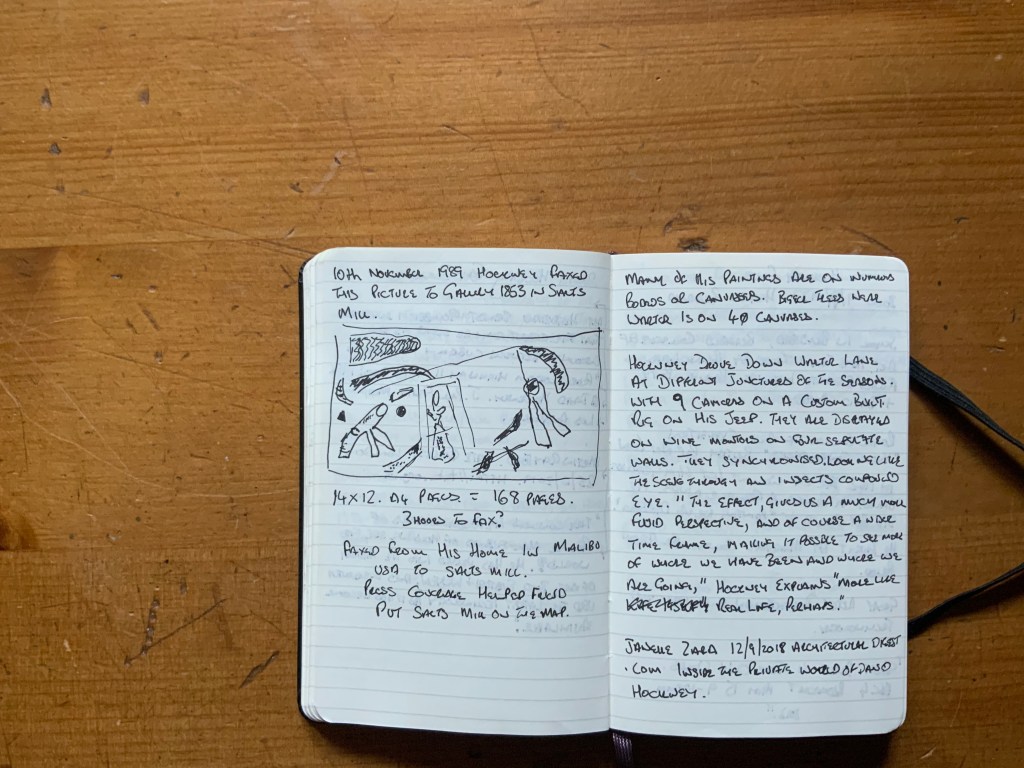
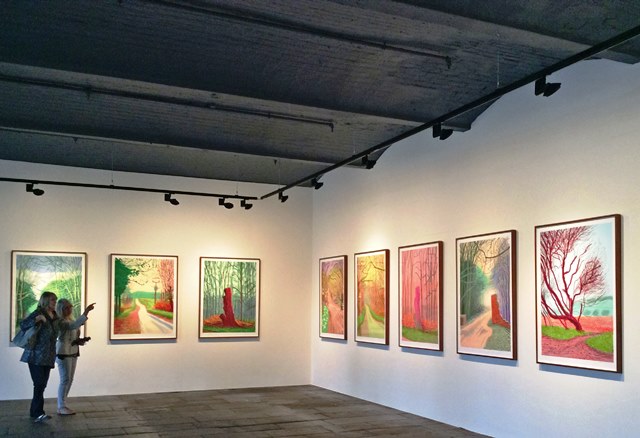
I felt it was appropriate after seeing David Hockney making Four Seasons in Warter Lane to do some research about what the work is about and how it will compare with my work.
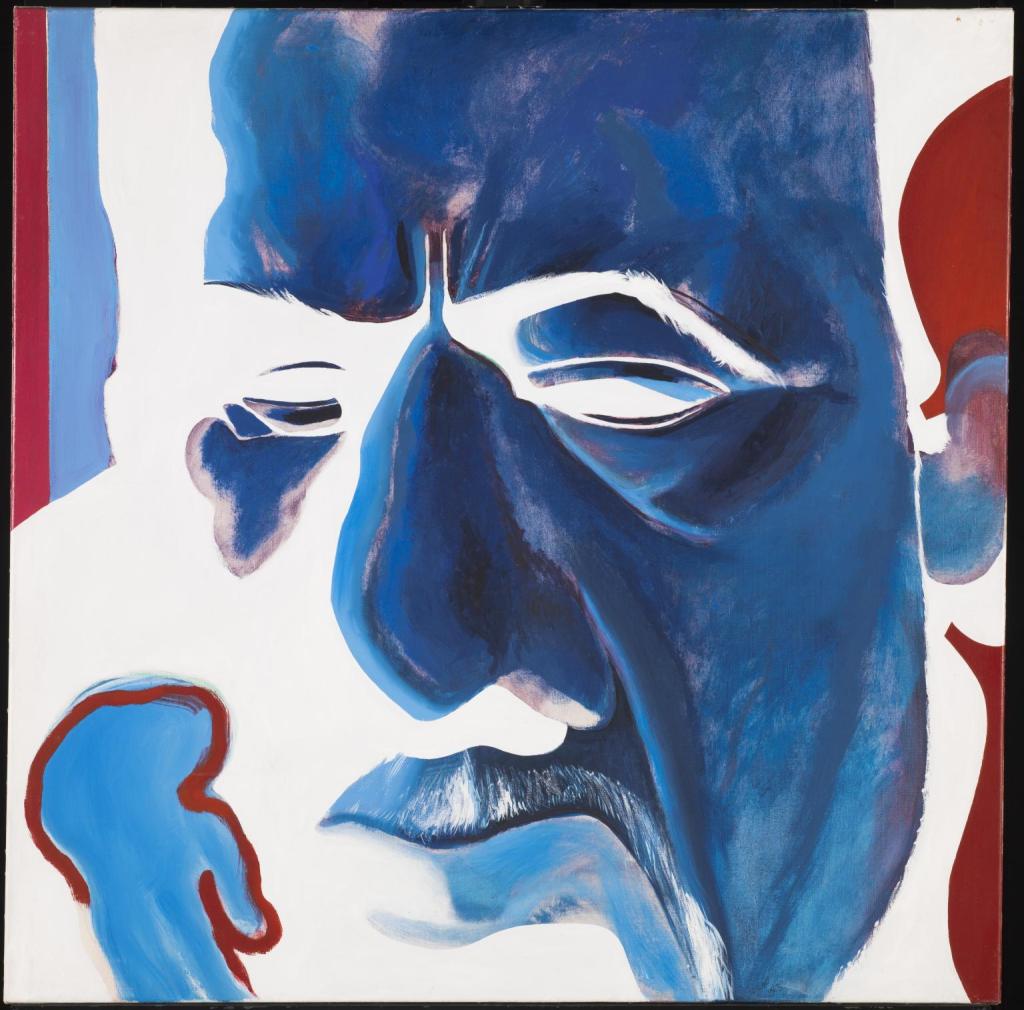
Oxtoby Mingus Deep Blue Redfern Gallery
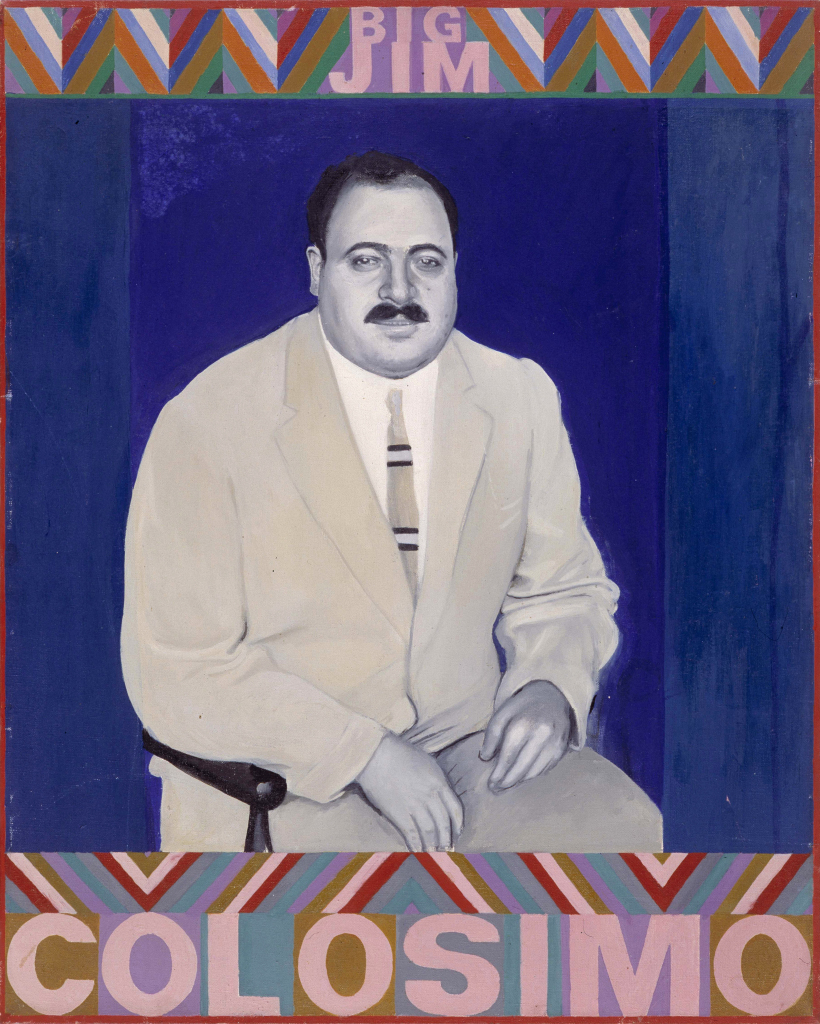
Boty Big Jim Colosimo. 1963
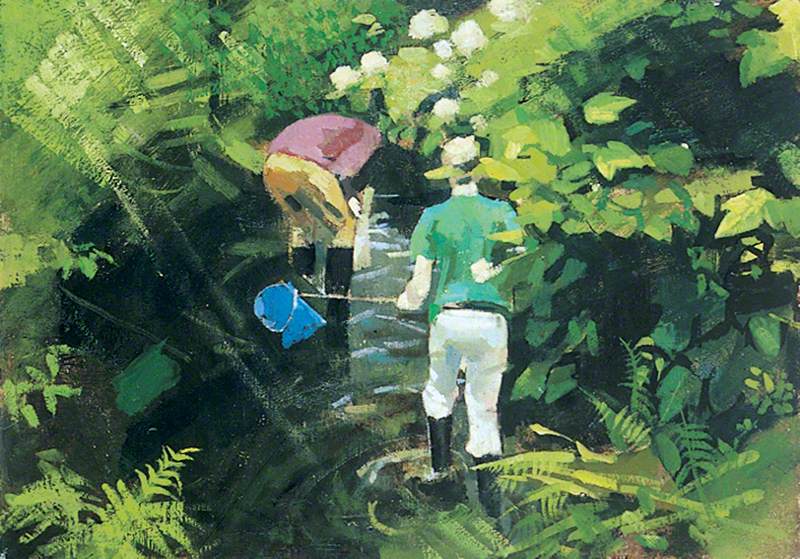
Lisle, Boys Fishing; Burton Gallery, University of Leeds.
Gallery of Works by David Hockneys fellow students at Bradford College.
David Hockney was born on July 9th 1937 in Heston Bradford. He went to Bradford Grammar School then into further education. He studied at Bradford College of Art where he was tutored by Frank Lisle his peers included Pauline Boty and David Oxtoby.
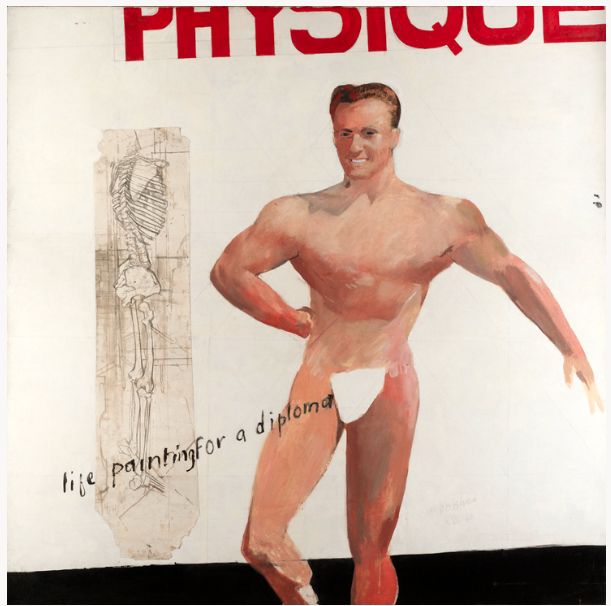
David Hockney Life Painting for a diplome Personal Collection 1962.
He progressed to the Royal Acadamy of the Arts in London. In 1962 the Royal Acadamy wouldn’t allow him to graduate until he produced a nude, life studyhe did calling it “Painting for a diploma”. Show both his rebellious side and his sense of playfulness. He proved to be an accomplished droughts man and artist with a keen interest in using new technology in his work. (BBC,2013).
He taught at Maidstone College for a short period before following his desire to be a stand alone artist. (BBC, 2013).
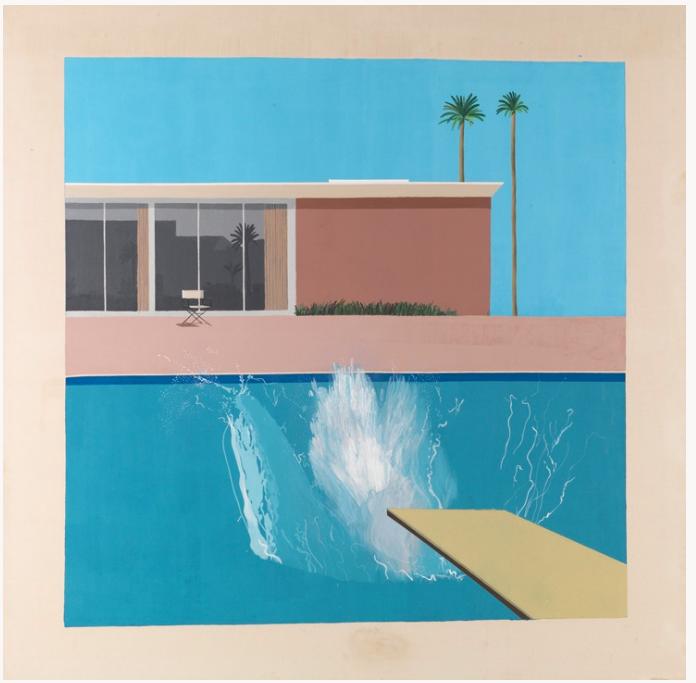
David Hockney “A Bigger Splash” 1967 Tate.
David Hockney then moved to Los Angeles and created a studio. He worked on projects including paintings, Lithographs and photographs. One of his most important works “A bigger Splash” was painted in his swimming pool. He experimented with photo collages making one of a blue balcony which subsequently led to the work Four Seasons which influenced my work for assignment 6.
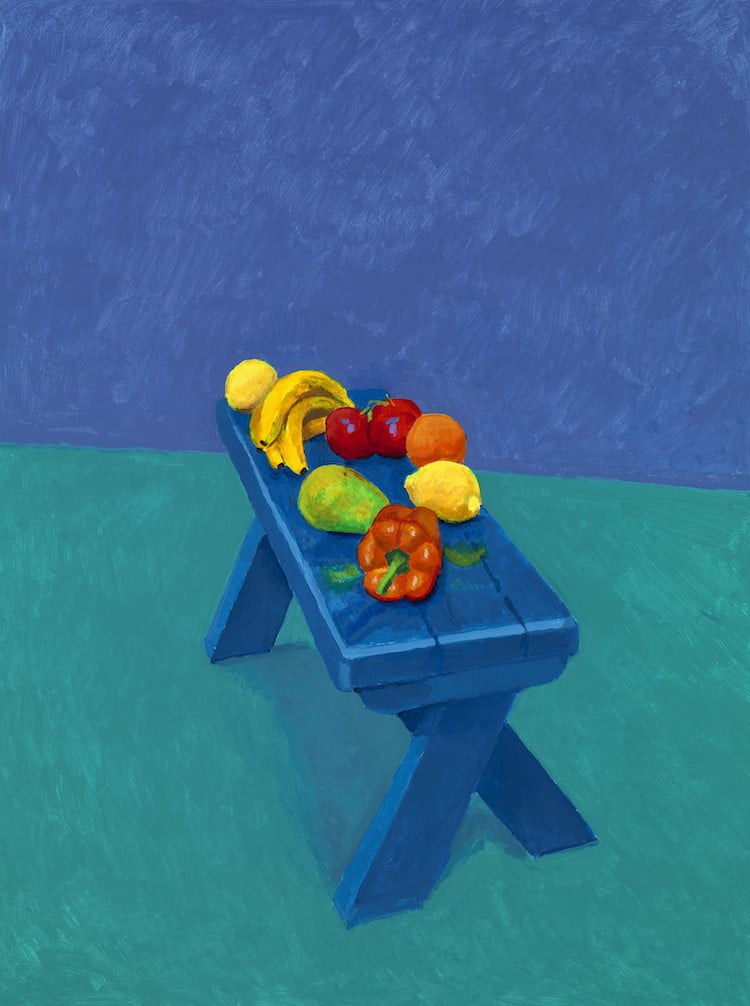
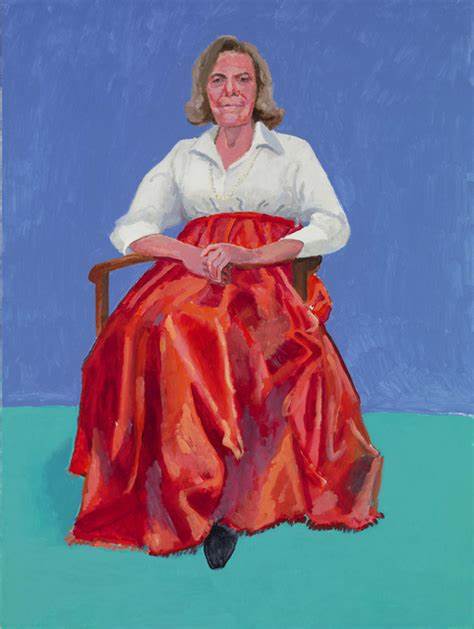
82 Portraits and 1 Still life David Hockny Royal Acadamy of the Arts.
He exhibited 82 portraits and 1 still life at the Royal Acadamy in London. These portraits are in vibrant colours and have the subjects seated. It has one still life of fruit on a bench. Each portrait had to be completed in 3 days. All have the same background and the same chair. The still life has no meaning it is in the exhibition as an after thought.
Salts Mill David Hockney Gallery 1853
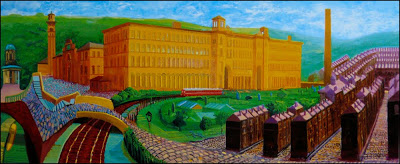
He support his friend Jonathan Silver who he had met at Grammar School to set up Gallery 1853 in Salts Mill, a building Silver saved, renovated and dedicated the Gallery to David Hockneys work. It houses one of the largest collections of his work in the UK. One being a painting of the mill in the entrance to the mill.
The Arrival of Spring at Gallery 1853 Salts Mill (Hockney).
Some of that work is David Hockneys Ipad work drawn in the Yorkshire Wolds the setting for Warter Lane the inspiration for “Four Seasons”. Also set in the Wolds are the massive paintings of the landscape entitled “The arrival of spring showing his embrace for new technologies.
Using video he uses different technology to take us into the Wolds Landscape in a different way. He didnt do it at the time but he recorded a disappearing landscape as the copse shown was to be chopped down. David Hockney tried to save it to no avail (2011).
Here is the video of hockney discussing Four Seasons.
Hockney speaks about “Four Seasons” on the Frieze website he says “Bertie says Perspective is a window, So where are you as the viewer? In a room not the landscape, lots of pictures counter act perspective putting you in the landscape not in the room, most photographs are flat, by changing the perspective this work is about time and space and more….” (Frieze, 2018).
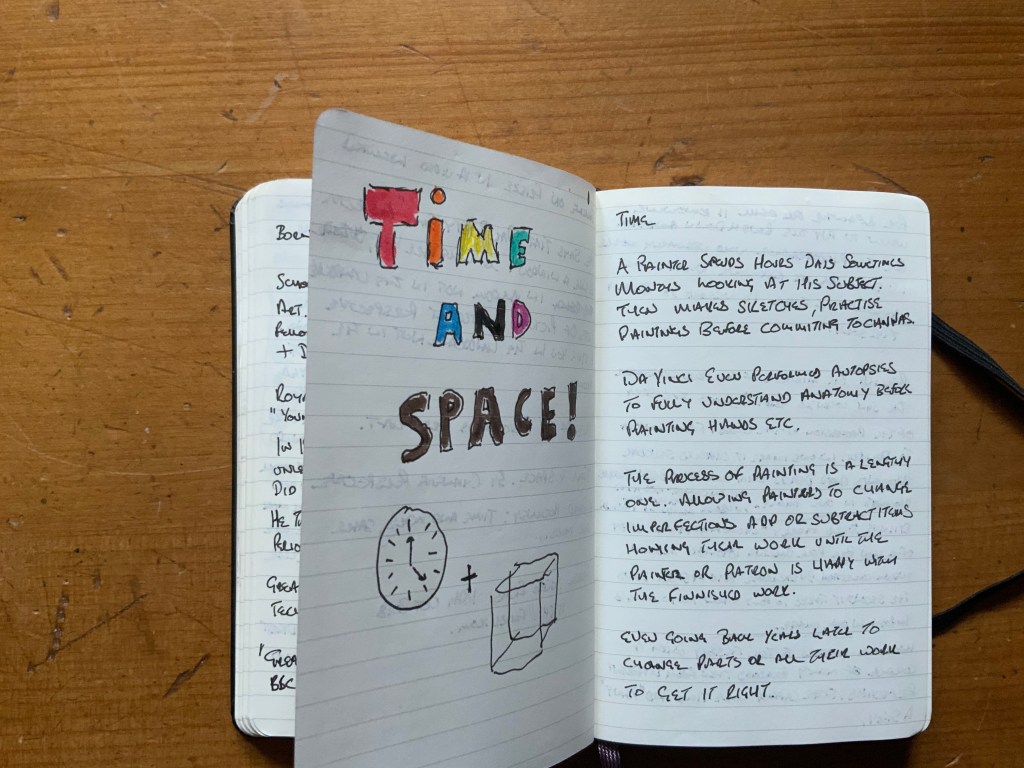
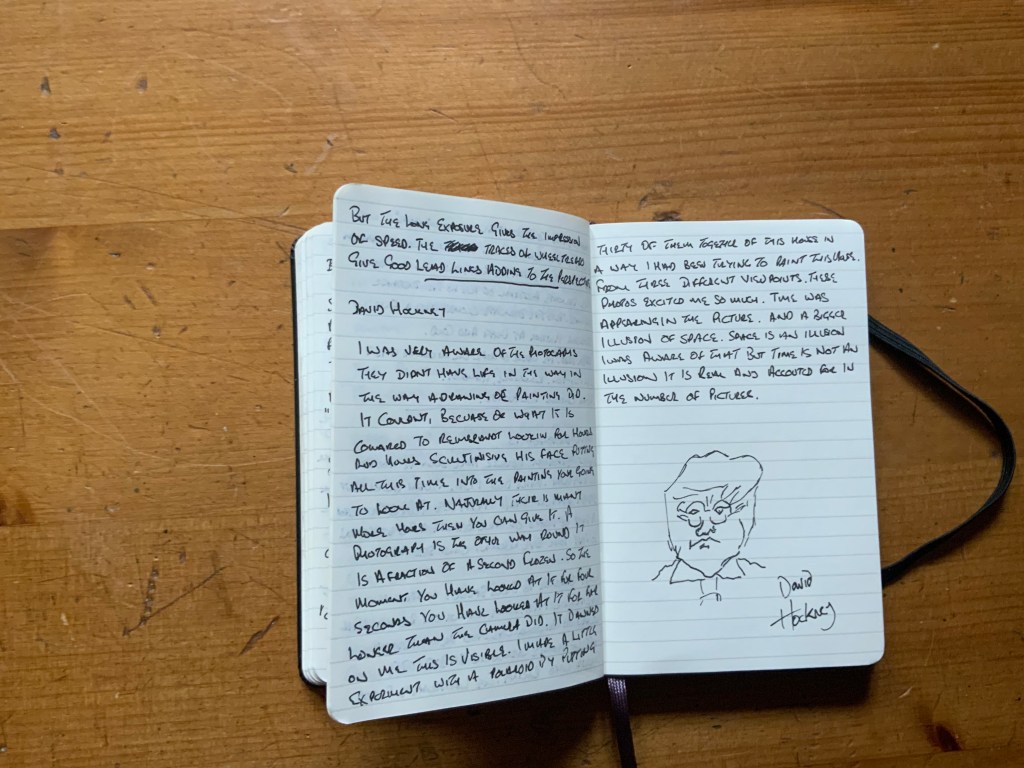
In another video he made for the Smithsonian Channel Hockney talks about “I realised a photo has no life, unlike a painting, a paint artist spends hours looking at the subject before making a picture”. He continues “A camera looks for a fraction of a second”. In the video he is discussing his collage work and the way he uses time and space to create perspective in his collages. My research on Time and Space is here.
I want my work to put you in the landscape rather than just show a flat photograph. It is a dynamic living space that is there whatever is happening in the human world. I want to use still images so will have to take more images (12) in fact 72 to cover the year. I will change perspective by shooting images that are not stitches and will not align to make the viewer work harder to see the message.
The headlines from the Guardian will make my work different to Hockneys. However it is a key part of what I want to say.
Sitting in a room with the four screens of nine is a soothing experience, more soothing than walking down Warter Lane. Being in the middle of the screens makes you feel totally immersed in this installation.
Work Cited
David, Hockney. One Still Life. 2014. Acrylic on Canvas. Royal Academy of the Arts London. Hockney, David. A Bigger Splash. 1967. Oil on Canvas, 95 1/4×96 inches. T03254. The David Hockney Collection. https://thedavidhockneyfoundation.org/chronology/1967. ———.
Four Seasons. 2017. Video Installation, 36 screens making four images. Frieze Video. ———.
During my work for Assignment 5 I found Helen Sear. She is an artist who states she was influenced by David Casper Friedrichs. I couldn’t move on until I had completed some research into Helen and her work as she was unknown to me.
Helen was born in 1955 in Worcestershire in sight of Wales. She has made her reputation from her studio in Monmouthshire, Wales. As a small girl her father used to go on long walks with her where he taught her about the countryside and nature.
She came to prominence in 1991 when her work was included in the British Council exhibition “De-Composition Constructed Photography in Britain”, this exhibition was popular in Latin America and Eastern Europe (1997).
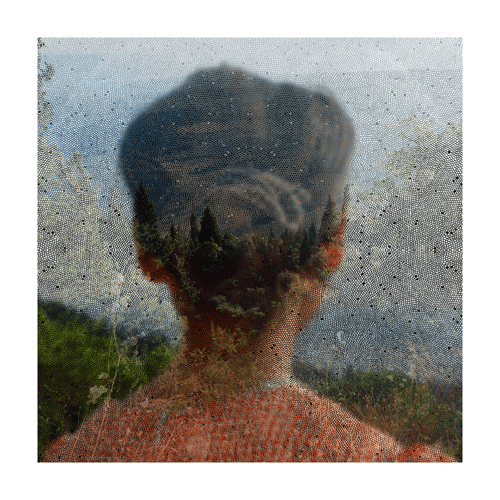
Artsy (2018) says of Sears work, “She explores her/our relationship with the natural world”. Her work “Inside out” (Sear) reminds me of Friedrichs work with the subject back to camera Helen adds elements to make the photo painterly and dreamlike.
Sear describes her work as a “Double time of image making” referring to the time between taking the initial image and the time during which she superimposes her photographic images (Artsy, 2018).
She was educated at:
1975-1979 Reading university, BA Hons.
1981-1983 Slade School London, HDFA.
2009 PhD University of Newport, Wales.
Jane Wainwright writing in says of her approach “I am trying to slow down the instantaneous of the camera” Wright continues about Sear “ She highlights the ordinary, making it extraordinary. Forcing the viewer to engage with the work and puzzle out the image”.
When Wainwright asked Sear if she had any particular artists or pictures that influenced her work she replied “I am interested in Romantic Painting particularly the work of Turner and perhaps the German romantics such as David Casper Friedrichs.
Pushed further she continues “The people who influenced me were in the end the ones who taught me at college. At the Slade artists like Tim Head and Helen Chadwick” (Wainwright, 2000).
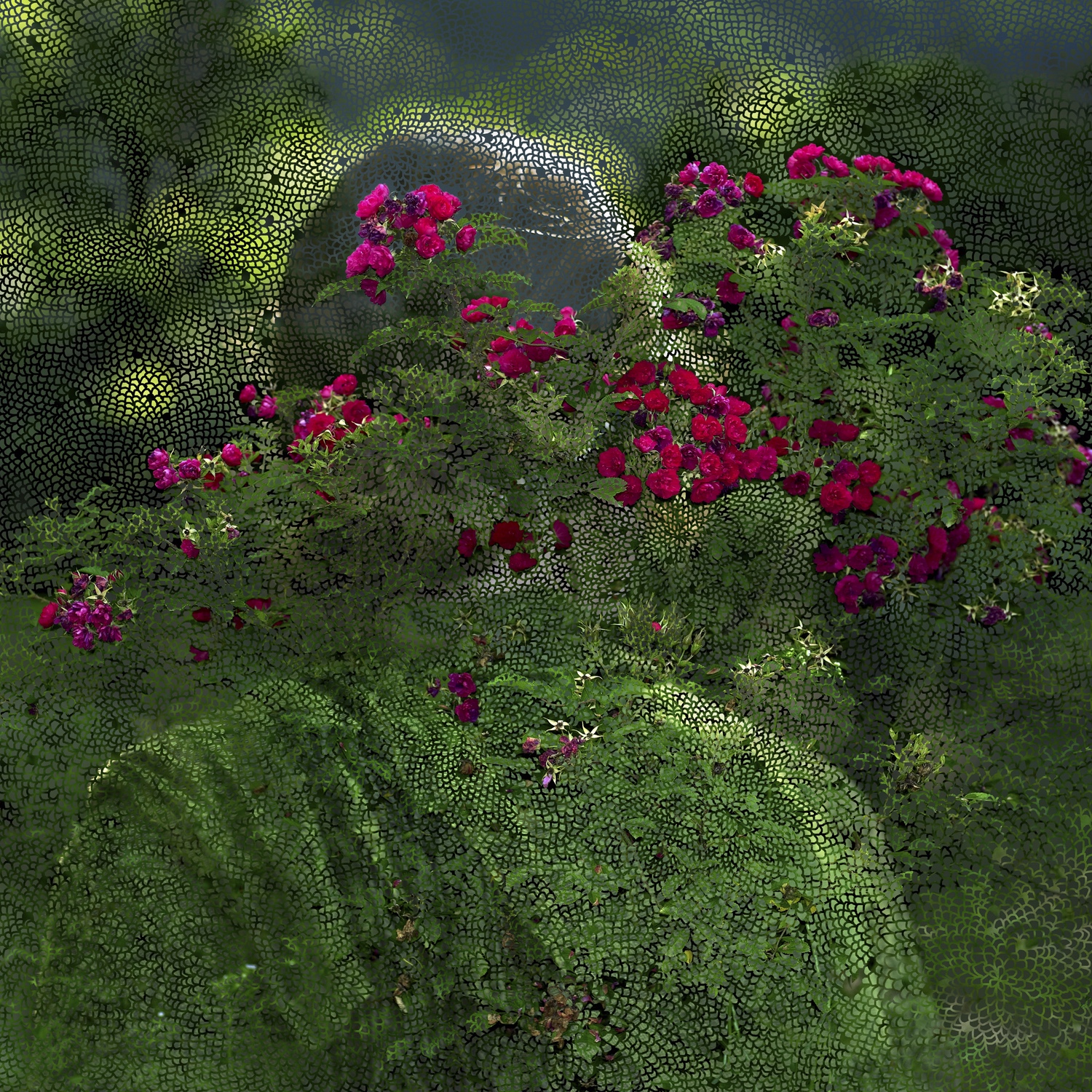
Friedrich`s “Wanderer above a sea of fog” (1818) must have influenced Sear as it did me. However I can not find any specific reference to it doing so. When I look at Sears images I see a similar message as the one I wanted to portray however Sears images have added layers where mine are straight photographs. I want to experiment with this technique and will do so before I leave this research.
Three images from Helen Sears work “Inside the view” (Sear, 1997).
Valerie Reardon wrote off Sears’s body of work, “Sear draws on the Freud’s notion of the “unheimlich” the uncanny sense that what is hidden is also somehow ghastly. Jacques Lacan reworked this notion and came up with the term extemite a blurring of the line between interiority and exteriority which points to neither but is located where they coincide and become threatening”(1998).
This paragraph was challenging to me I didn’t understand the two words unheimlich and extemite. So I had to spend some time understanding them both. The former means Uncanny/weird and the latter means the lines become blurred and thus threatening. I can see this Angst in Sear’s images at first glance they look sweet but when you look and see the layers they take on new meaning which to me are somehow dark.
David Campany compares her work with Fox Talbot’s image of lace “Talbot placed black lace directly on to sensitised paper and exposed it to the sun, The lace appears white on a dark background it doesn’t look like a negative, the flat fabric is so well rendered by the simple technique. It is stoic and removed yet the light that touches the object then touches a receptive surface” (Campany, 2005). This is talking about the single layer Sear adds more layers to create her art.
Having looked at this work I thought that at first sight it seems simple. It is not, within the square frame are complex layers. The more I look and reflect the more the work asks me to think. I like Helen Sears work very much and I think I will have to explore the artists who influenced her.
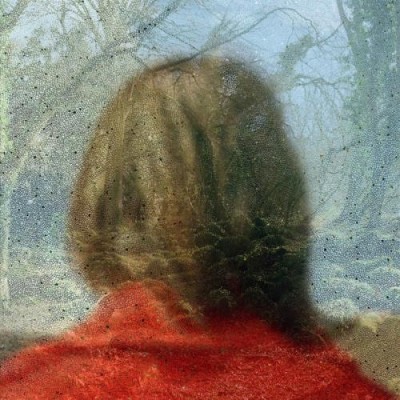
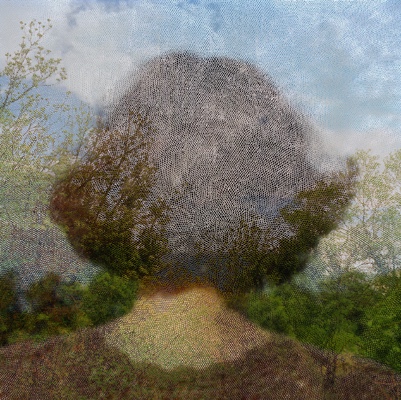
Earlier I said I would experiment with how I see Sears’s images and here is that work.
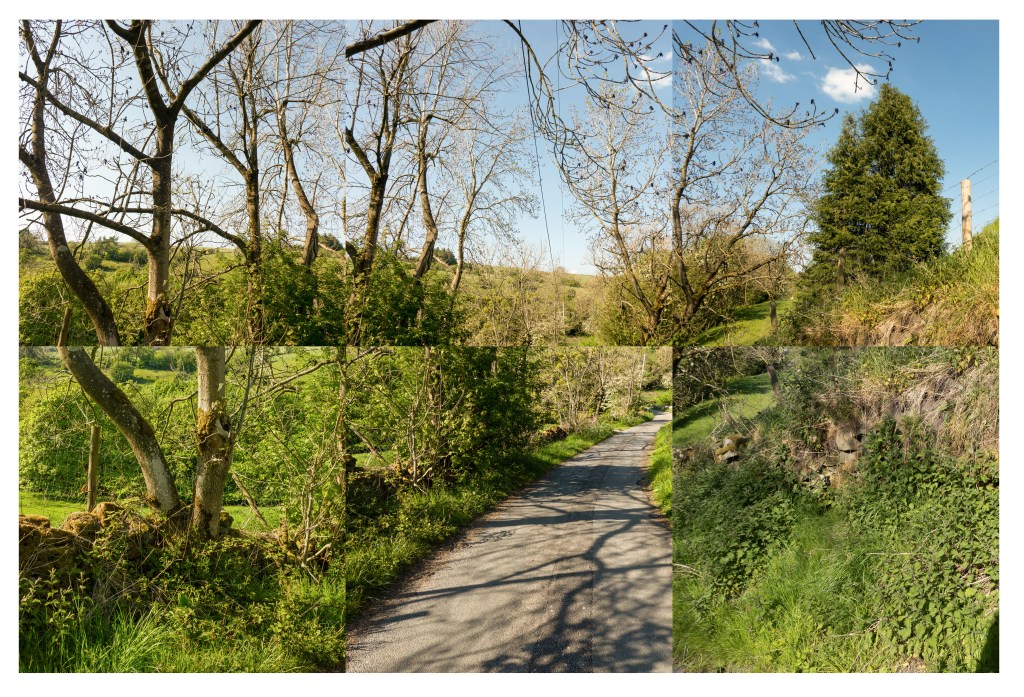
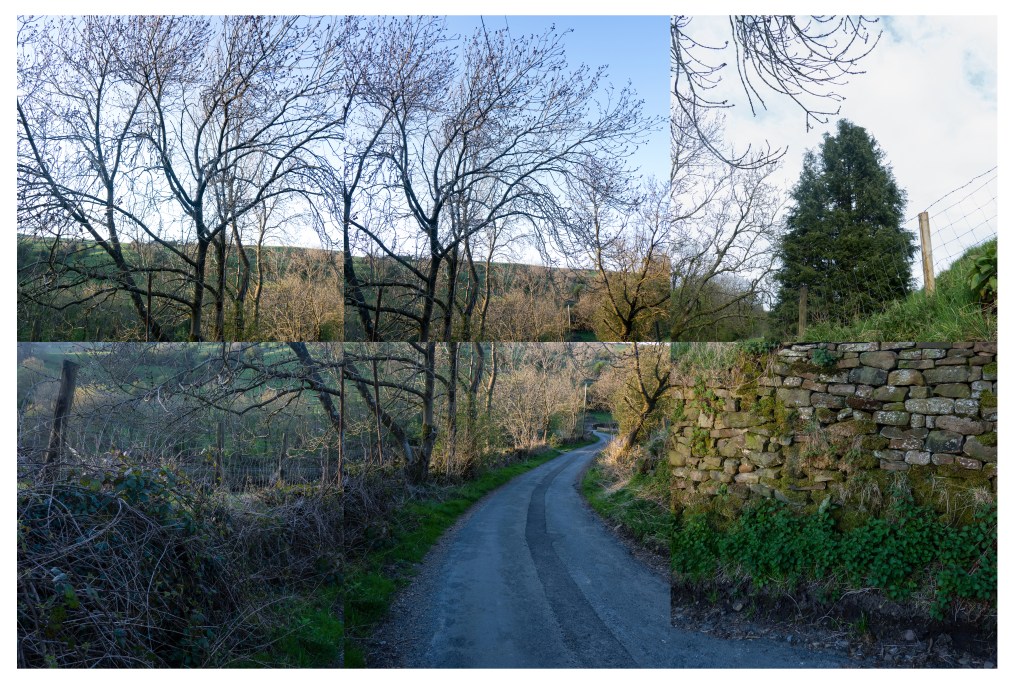
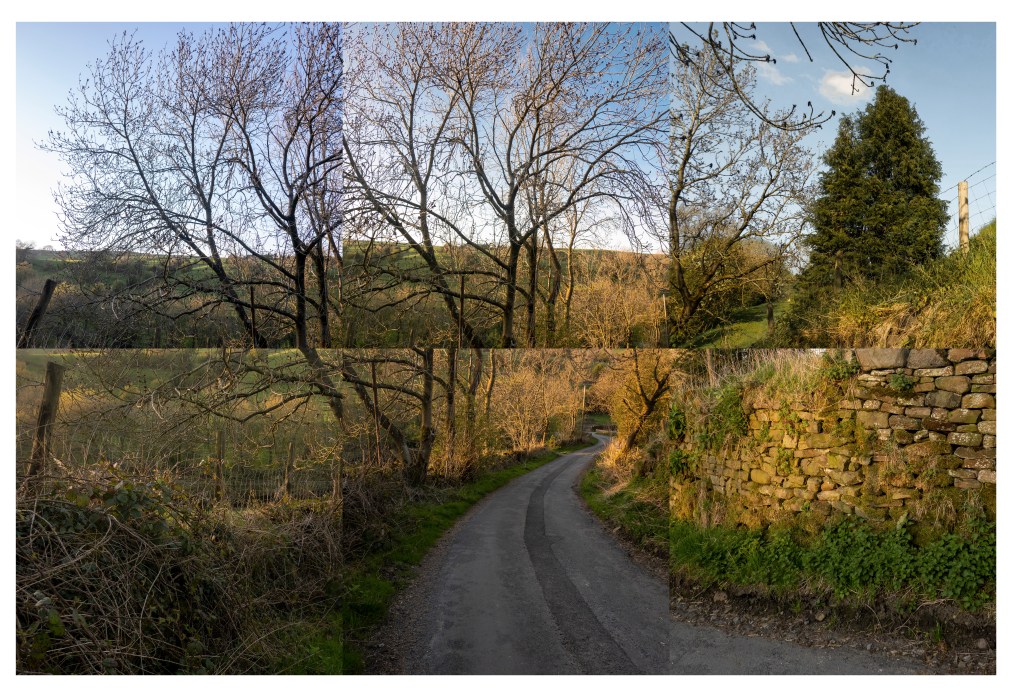
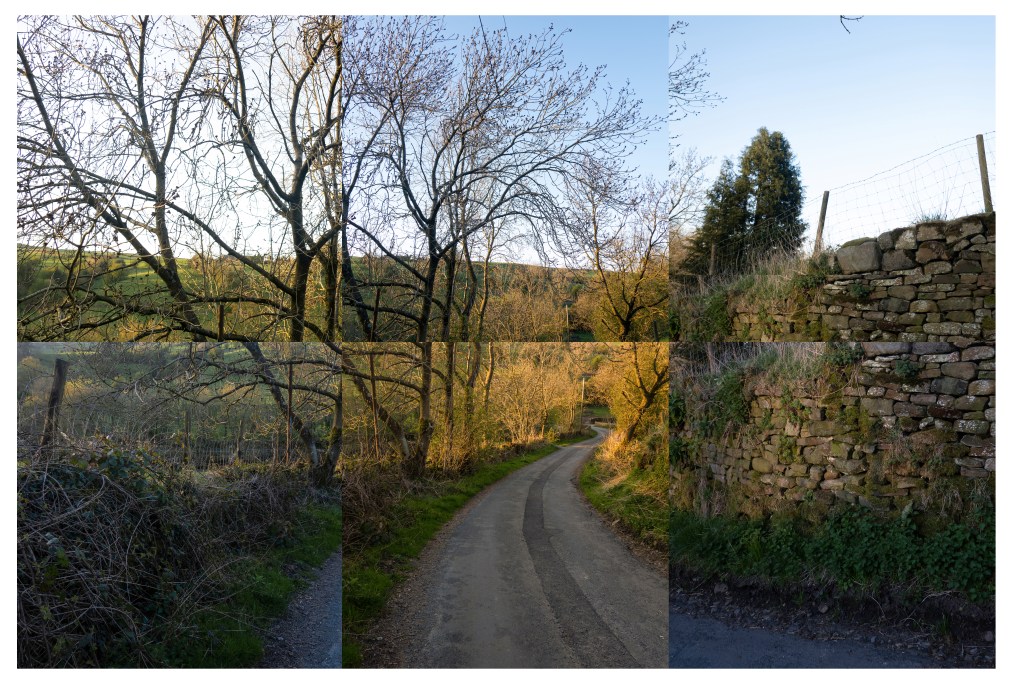
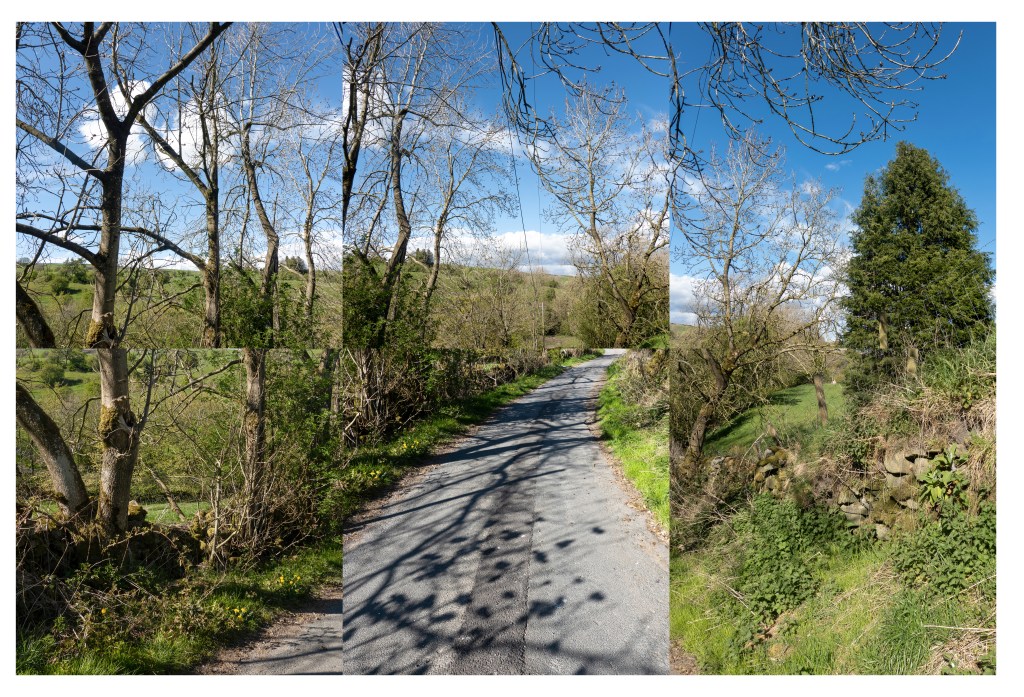
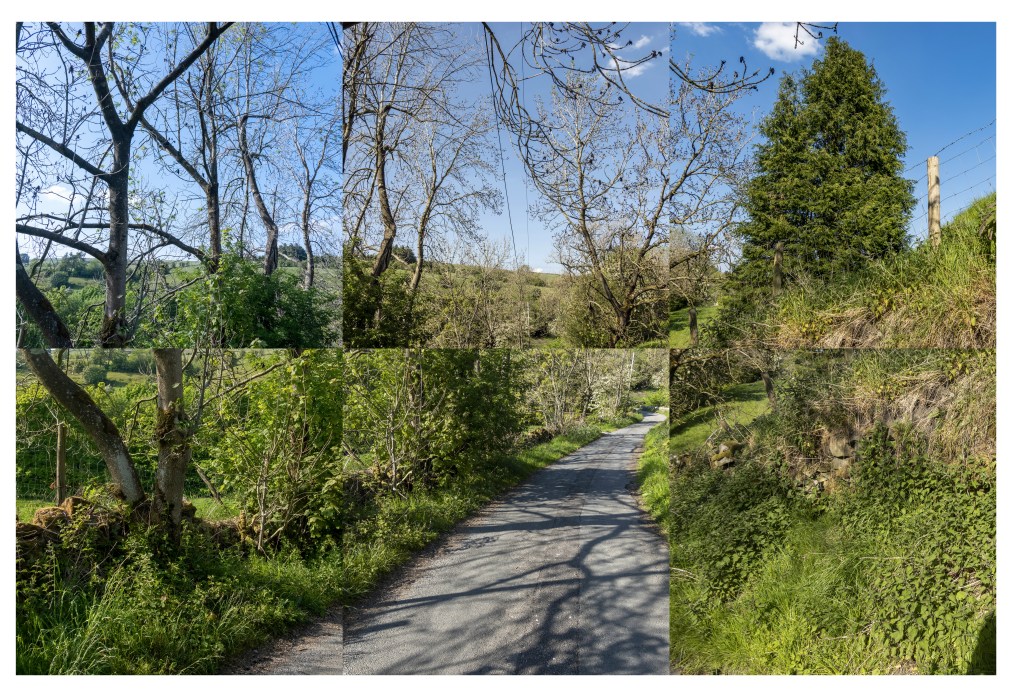
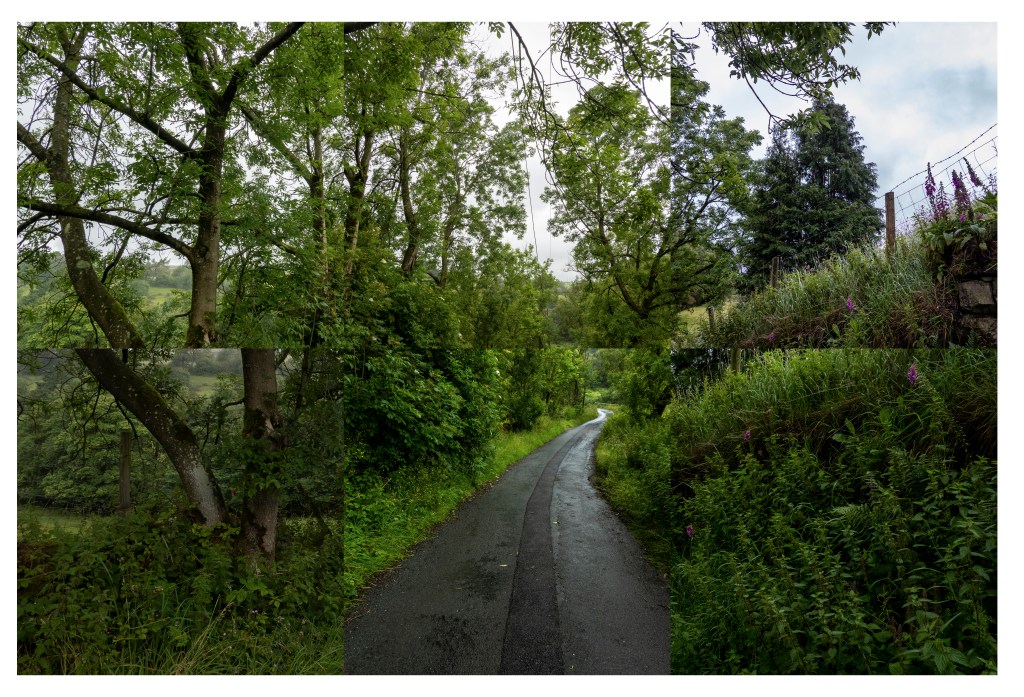
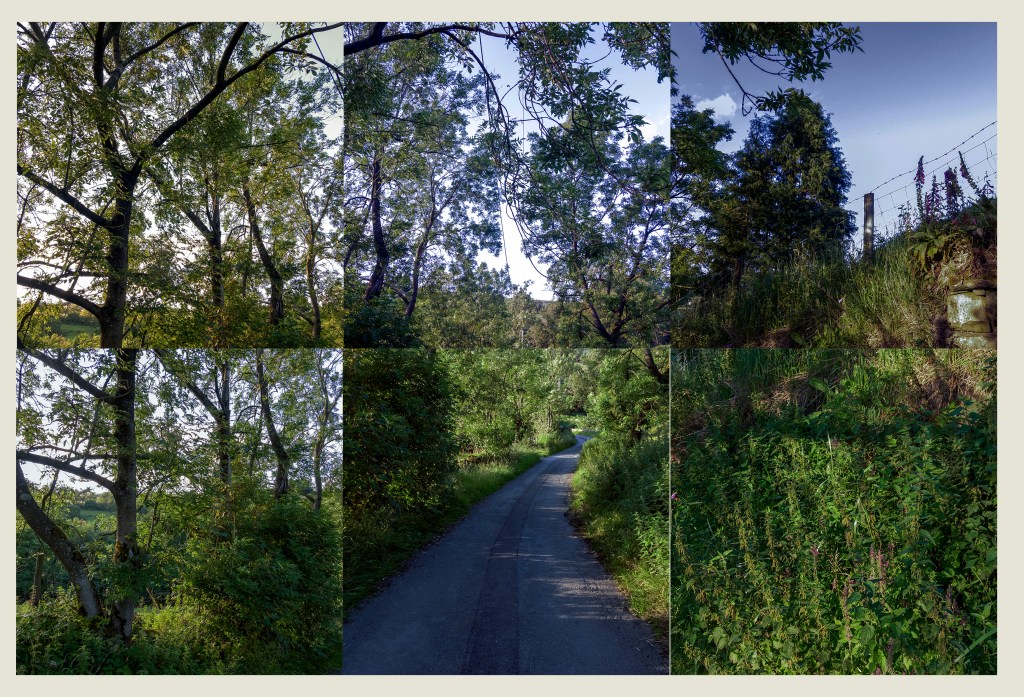
Transitions is a good title for this piece of work as I feel there have been many transitions in the months I have spent creating this work. Here I will think about some of these transitions, both in me and the landscape I chose to show. I would like to begin by writing about the reasons I chose Shop Lane for the work I completed.
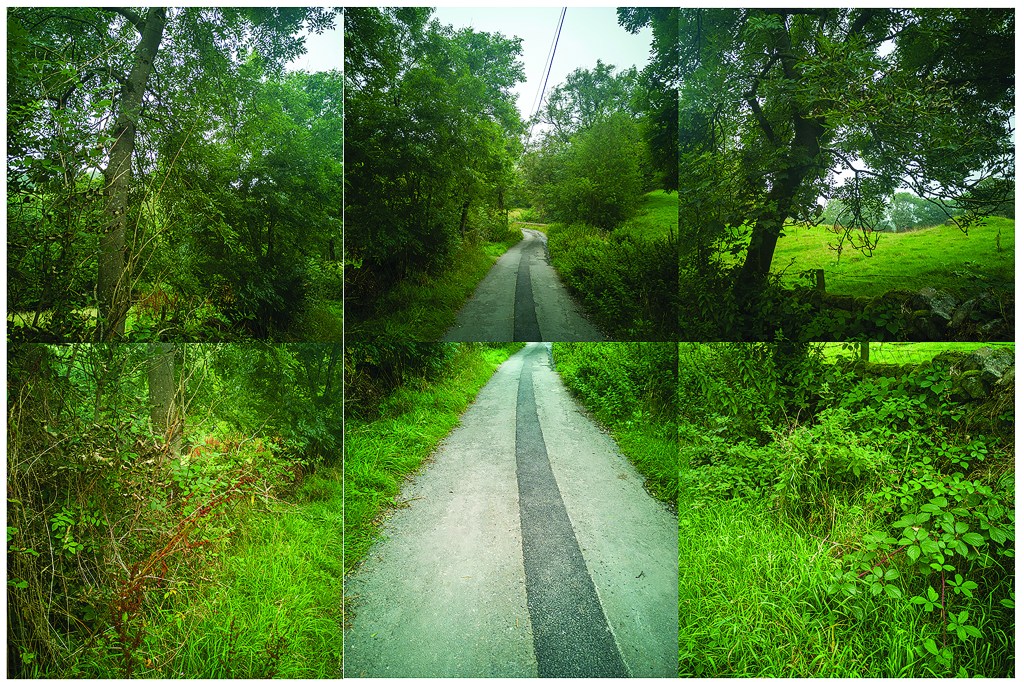
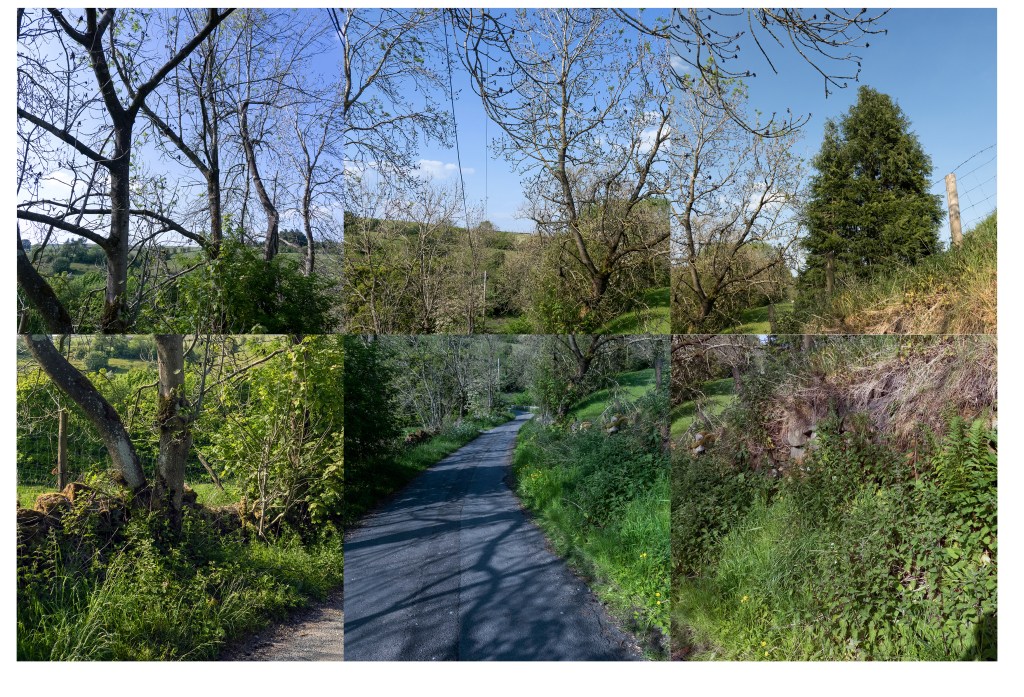
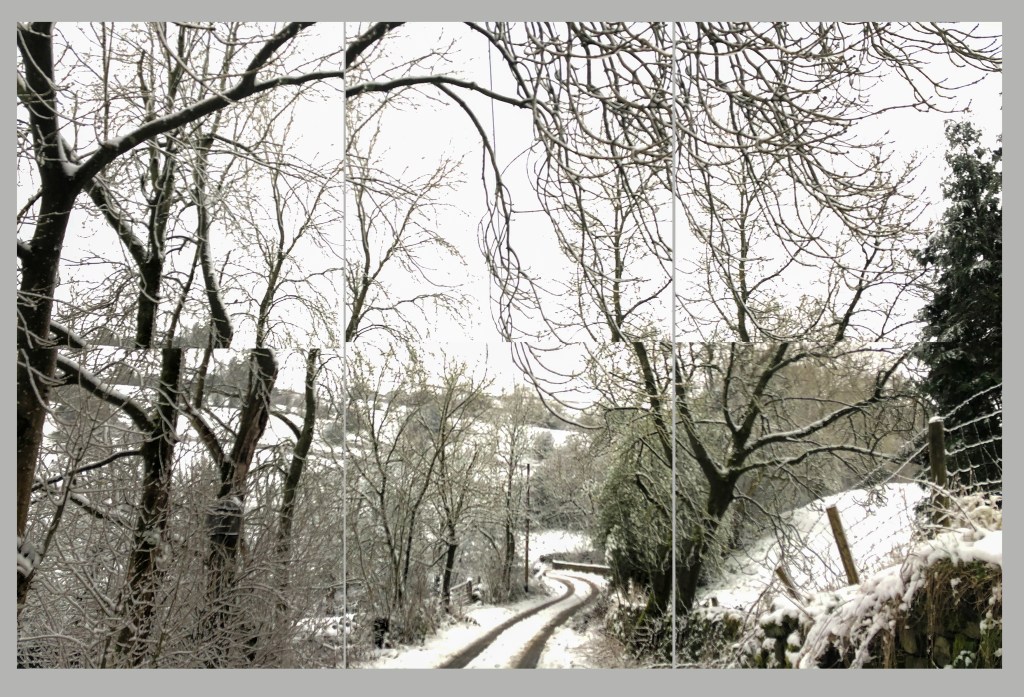
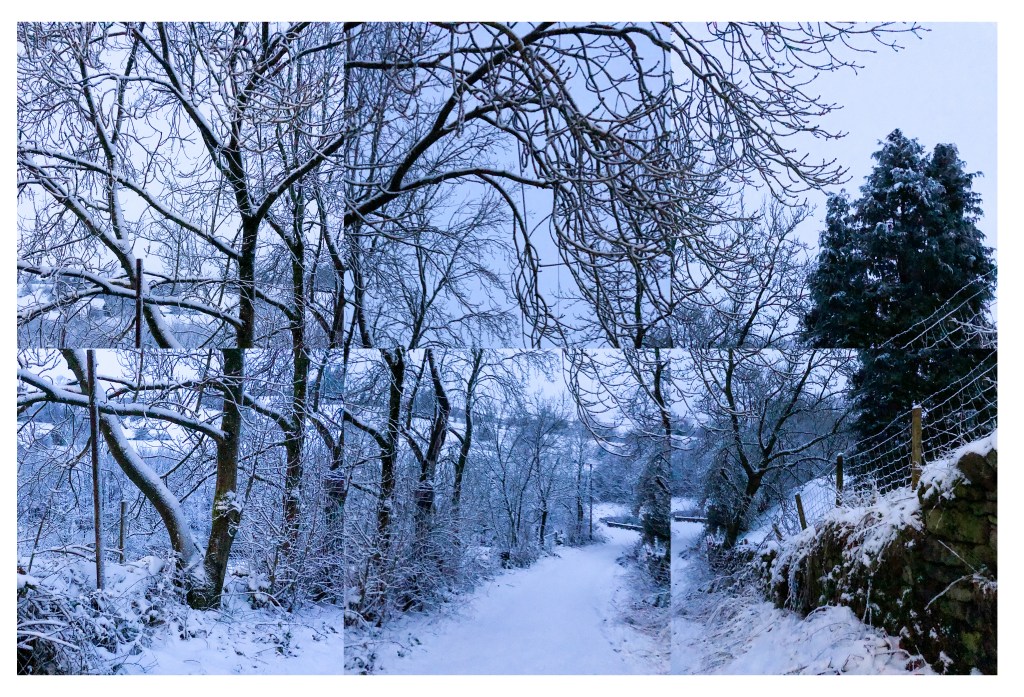
Shop Lane is about a quarter of a mile from home so easily reachable from home. I walk along it almost every day and I see the changes on a daily basis. It has many features which would allow me to work from the same perspective for each exposure. It is part of a dynamic system both naturally and shows its position in a man made environment which nature alters. Shop Lane has existed through all the traumas man has made since it was built in the mid 1800s but remains as a constant. This was the main reason I chose it, it says to me whatever the world is experiencing this road is present, constant and reassuring.
First the transition within the landscape. At the outset I had visions of showing the four seasons our nation is renowned for. Whilst my photos show the dynamic changes within the landscape they are not the four equal and distinct seasons I was expecting to capture. The weather was mild through the Autumn even into December, the leaves fell from the trees and blew away but the foliage in the undergrowth took advantage of the mild weather and stayed around. We had two spells of cold weather in January and February but not the prolonged spells I remember as a boy. This set of images shows just one year it is not enough time to make any conclusions so it may be interesting to continue this project for several years.
Next the transition within me. I have changed a lot throughout the period of time I have spent on transitions. The biggest change has to be the way I now write. I knew I would struggle with Assignment 4. I used a lot of time reading and practising writing and referencing. There is still room for me to improve and I will be working hard to do so. I read Umberto Eco, How to write a thesis, Eco, “How to Write a Thesis”. and Cite them rite, Pears, “Cite them Rite”, whilst spending time reading and practising writing with the Royal Literary Fund Unknown, “Royal Literary Fund”, an informative website for learning and practising writing.
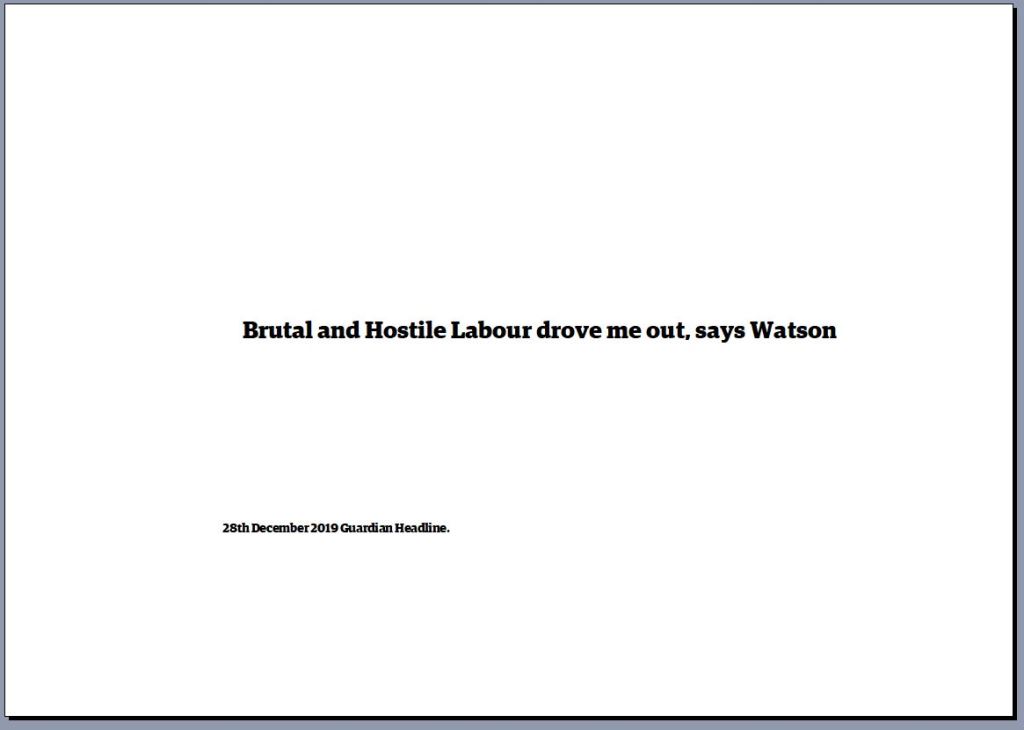
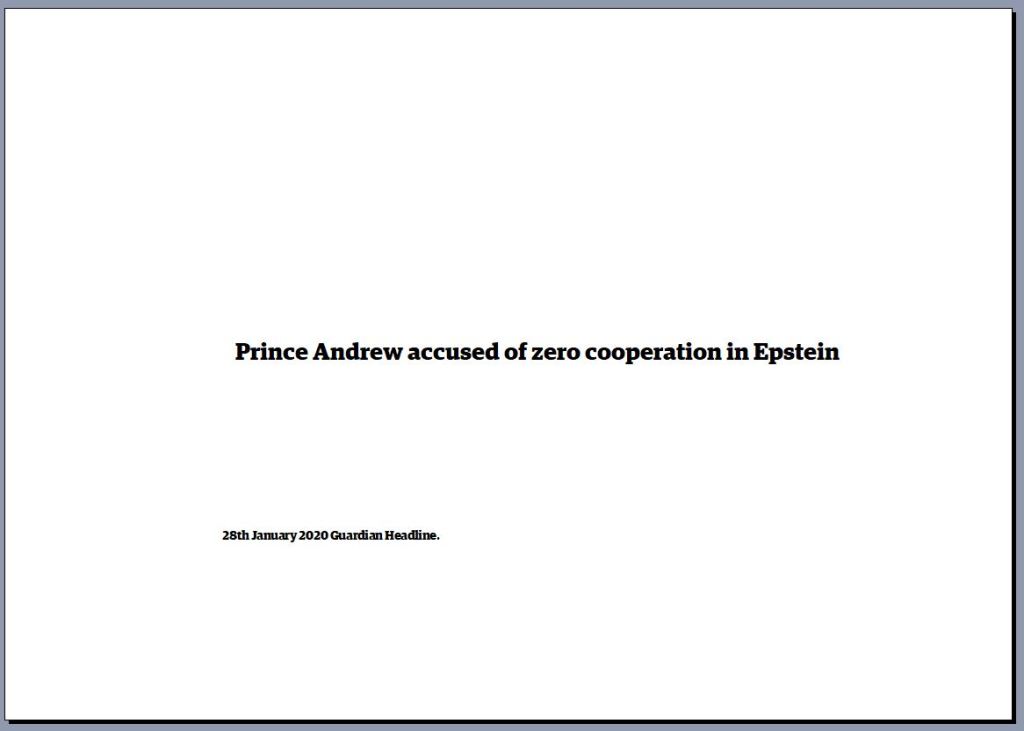
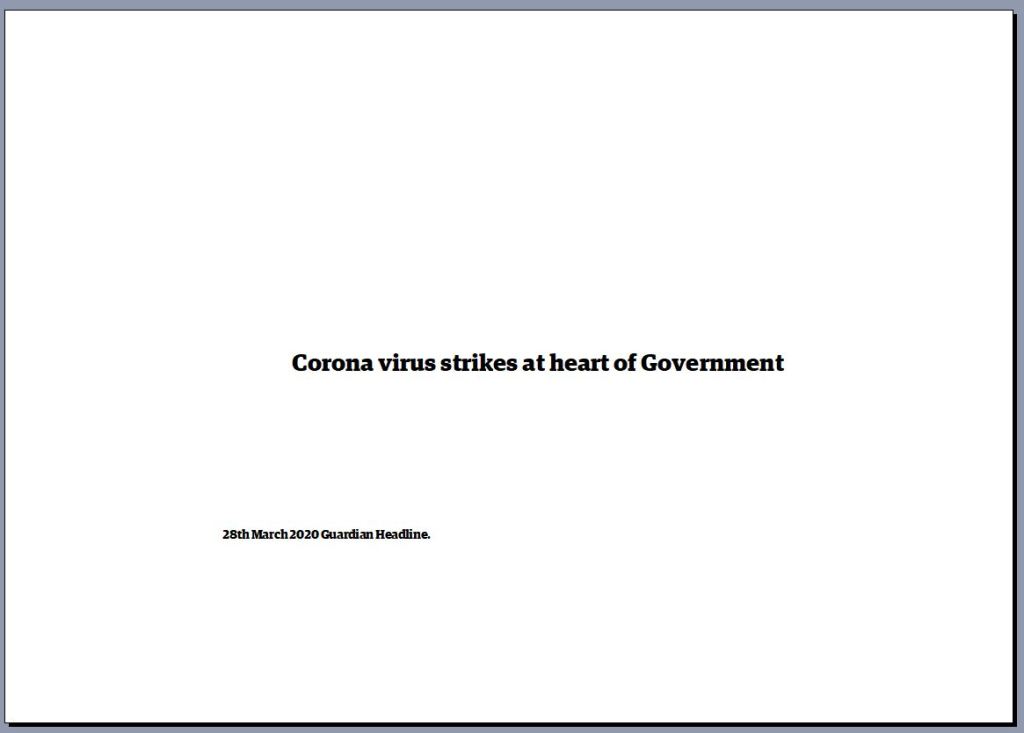
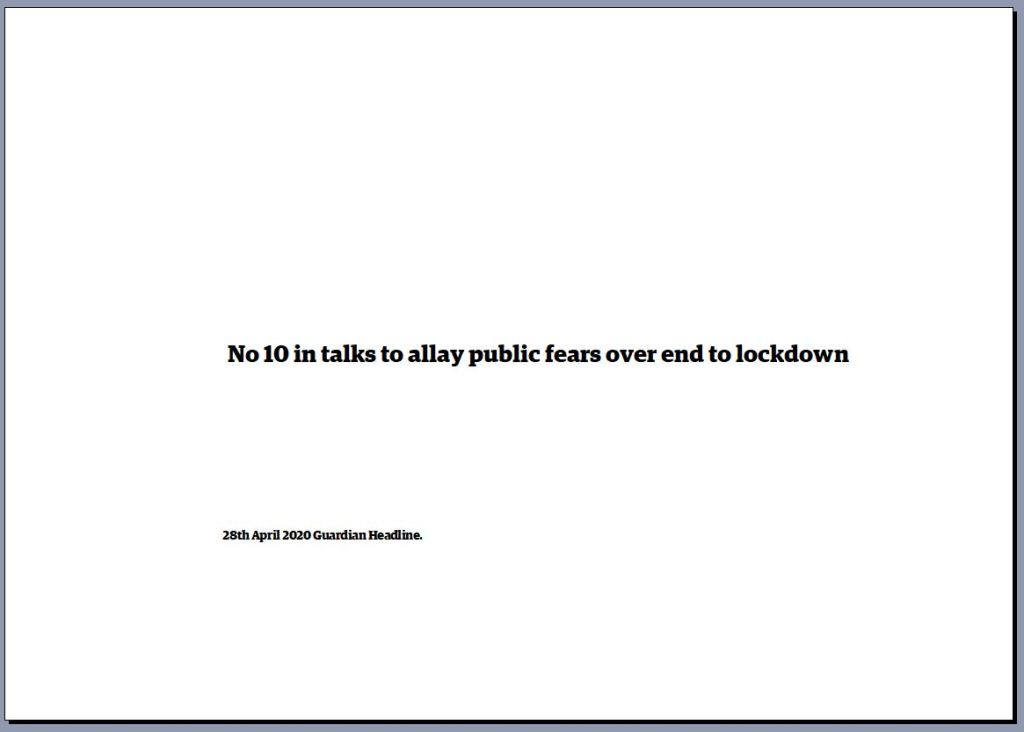
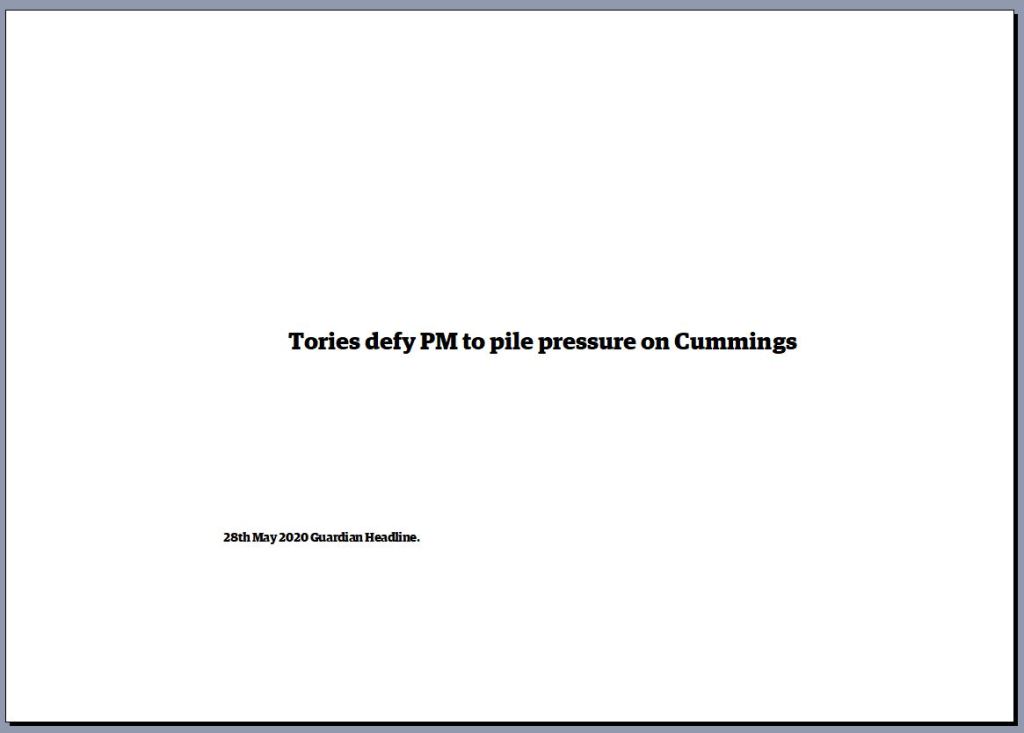
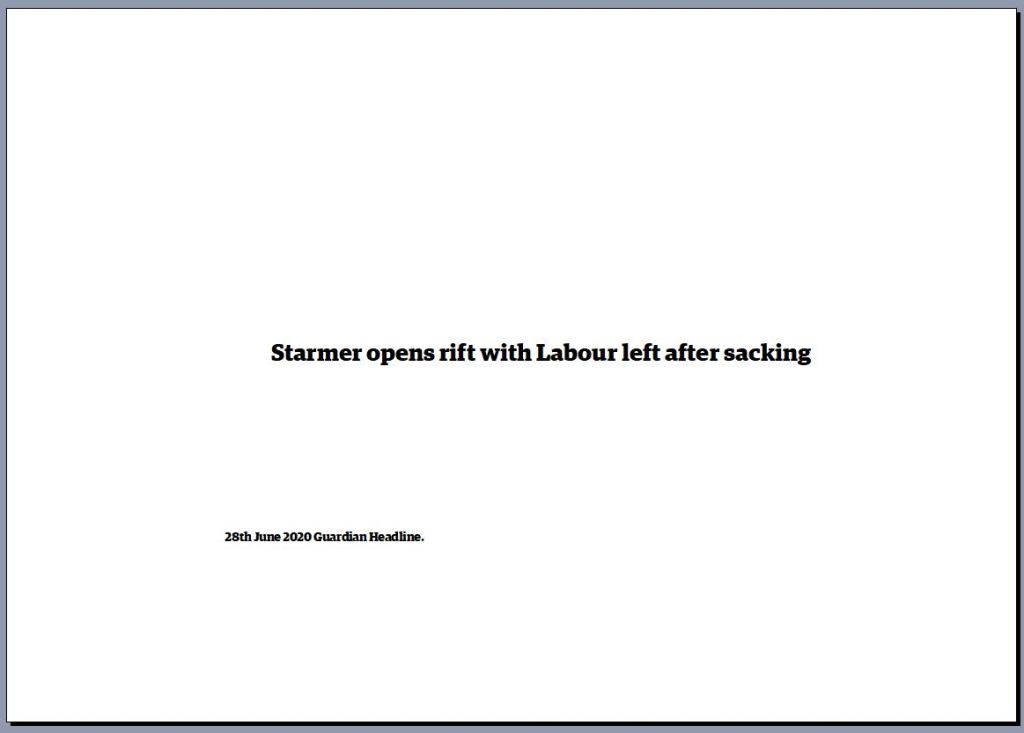
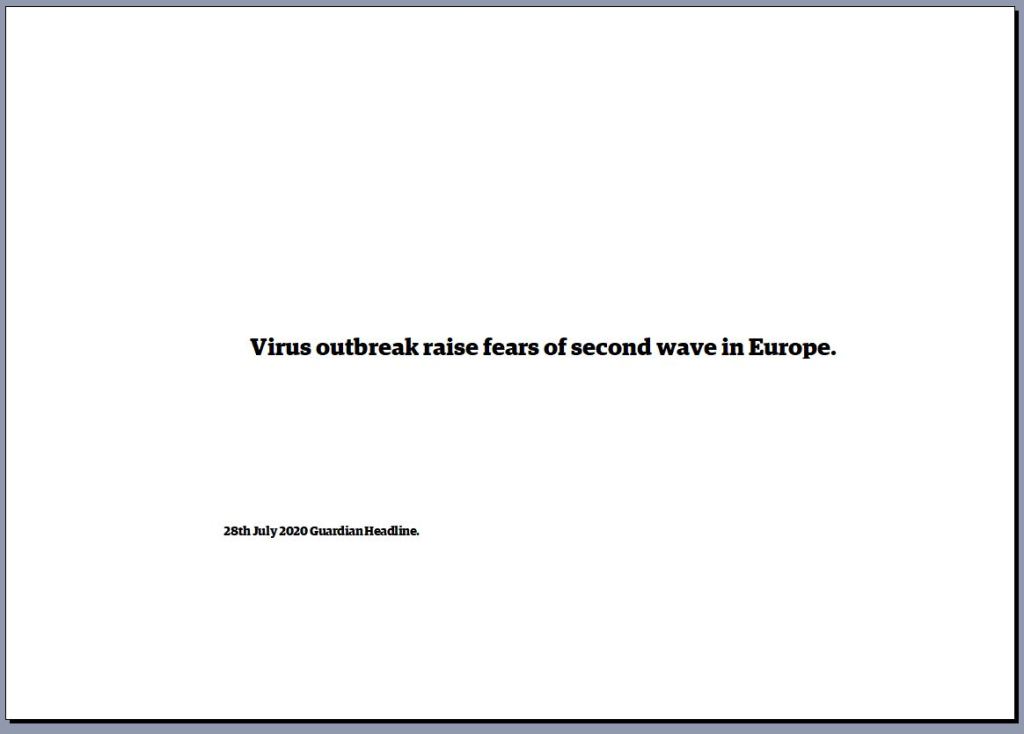
Finally the transition in the political world evidenced by the headlines I took from the Guardian newspaper Unknown, “The Guardian”, on the 28th of each month or if the 28th was a Sunday I show the headline from the previous Friday. When I started out I expected the main topic in the headlines to be Brexit with the odd curve ball such as a scandal or a disaster. It is no surprise that Covid 19 has been the main headline. In fact Brexit is only mentioned in one Headline with scandals in the Houses of Parliament and another announcing Prince Andrew not co-operating in the Epstein enquiry. The world is enduring a huge transition which I could not have foreseen at the begining. However the reassurance that places like shop lane endure, and all will return to equilibrium eventually is visible to me looking at the landscape all around
Taking these photographs has taught me to think how I can portray a message differently. A photograph iS a snapshot of time. Limited by the space in the frame.Taking the images monthly allowed me to show this dynamic system and how it changes. Using multiple views allows more space to be shown. With the outcome being this work shows the superficial change however my main message of reassurance is also their reinforced by the headlines. A single image would have been more difficult to show this message. I feel these images have allowed me to show the viewer time and space. Altering the perspective of both.
Whilst discussing my work for assignment 5 it was pleasing to hear my tutor liked the work and was great when we explored the work and found areas for improvement. After our video meeting I set to work completing the following work to fine tune the assignment.
First I corrected the spelling of Evaluation in the title this had been auto corrected to evolution and I had missed it when proofreading. This is my first learning to be more attentive to detail when checking my work so errors are eradicated.
I also added a short piece of writing about what I felt photography added to my work compared to painting.
My tutor asked me to look at the series and ensure all the photographs fit within it. After some time looking at the book I felt the photo of the man in football kit didn’t fit. It wasn’t spontaneous, the subject must have planned to take off his outer garments and be in his football strip. Therefore I removed this from the book.
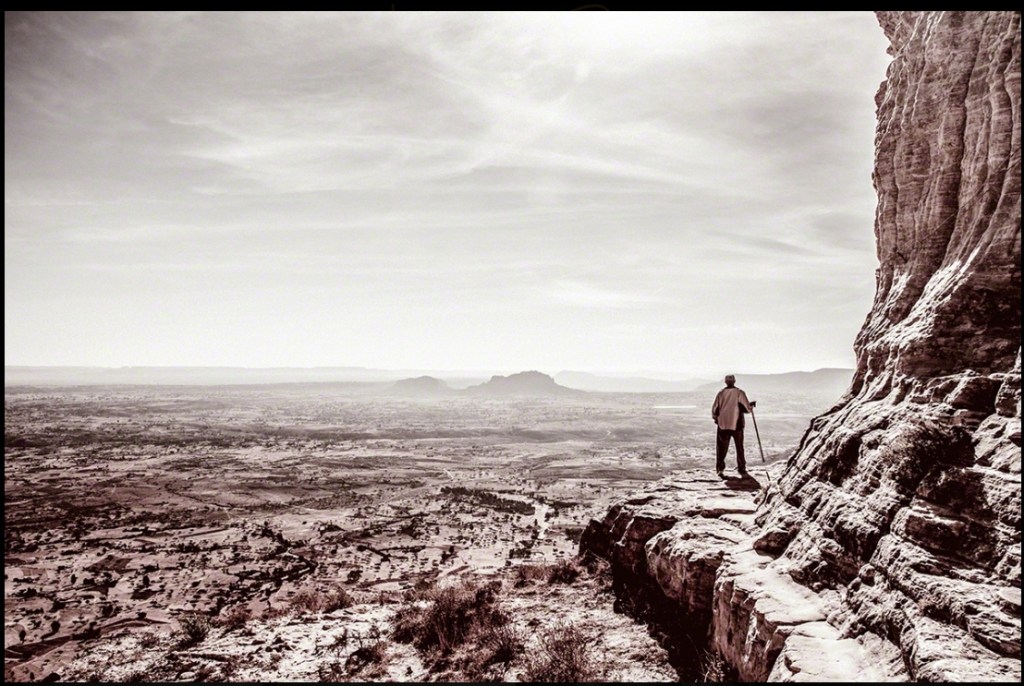
I also reprinted the image of the man stood on the large rock. My tutor was correct I had burned the subject to show texture in his clothing, it detracted from the shot. So I included the original exposure in the re-stitched book. I feel it fits better within the series my tutor was right.
Making a video showing the work in the finished book was a new challenge. I made it from the point of view of my eyes looking at the book as the pages are turned showing each page being turned. This was a hard process, getting the angle of the book so it was parallel to the lens was vital. If this wasn’t achieved the perspective was off and detracted from the video I wanted to show the viewer. Using a tripod made the whole process easier to set up.
My learning log doesn’t allow video, so I will provide a link to it on my dropbox so anyone can see it. I will also include the video for assessment at the relevant time.
Looking at the Artist Statement I agreed that it could be more critical and added more work to the statement. I explained the urgency I had had to work. Not having the time to ponder before the critical moment passed. This was one of the hardest parts of producing this work. The moment lasted a few seconds and I had to be ready.
In the explanation of the process of Japanese Stab Binding I had included the photographs from Portsmouth University (Batey, 2014) I removed these photos and referred to them instead. Providing a link to the work so any reader can see the process I used. Experimenting with a gallery of me re-stitching the book proved difficult, my attempt is not as clear as the photos from Portsmouth University`s site.
Untitled Landscapes Trangmar 1985
Inside the view Sear 2014.
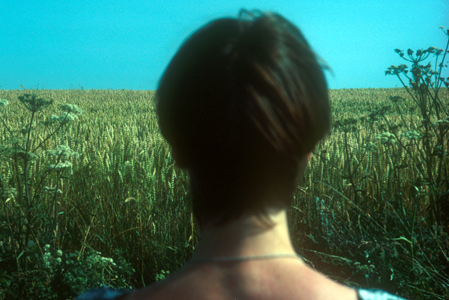
My tutor pointed me to the work of two artists first, Susan Trangmar and her work “Untitled Landscapes” (suetrangmar.com, 1985) shows women looking into the landscape. Each image invites us to look past the back of the viewer into the landscape. The subject is placed so the blind spot is emphasised. This makes me wonder what I am not seeing I start to make stories based on what I am shown and what I cant see. Intriguing and puzzling at the same time. I was unsure if the different scale of the subject worked within the series.
I looked at Helen Sears work focusing on “inside the view” (HelenSear.com, 2014). This work also shows people looking into a landscape., Sears shows two images combined into one, then she adds a third element a layer of fabric. Adding this fabric layer creates a different mood or feeling to each image. I have looked at these images in different mood and they make me feel different reflecting my mood.
Horizon Lennon 2012Boundless Lennon 2012
Whilst looking at the work of these two artists I found work by Julian Lennon (Lennon, 2014). He showed many techniques in his work but two shots showed similar emphasis on the big landscape with people looking into it (Horizon, 2014) (Follow, 2014). A third though has the subject looking out of frame into the camera. (Boundless, 2014). This was challenging to look at, I cannot decide whether I have become accustomed to seeing people looking into the frame. This image seems to bounce my gaze back out of the frame.
This assignment stretched my learning in many ways. I learnt new skills, looked at varied ways of approaching the same technique and considered my work in new ways. It was completely satisfying and most importantly enjoyable.




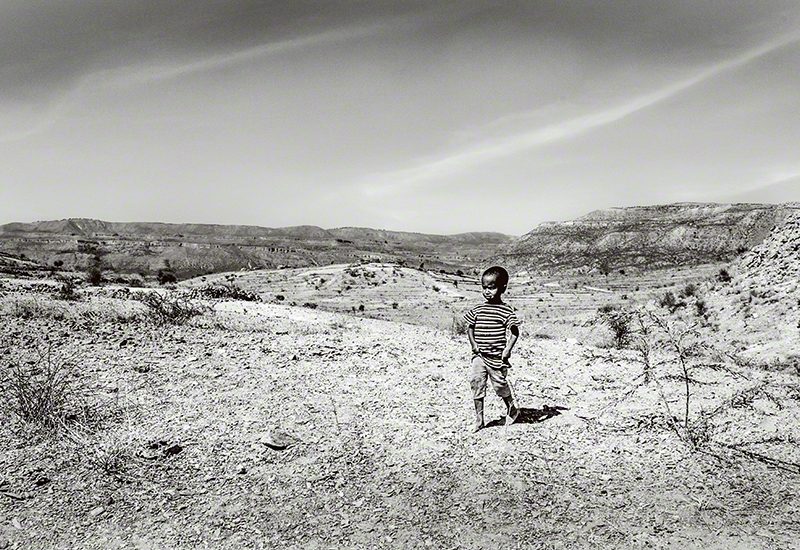
 Michael Green Landscape Studies