When I was researching David Hockney I found this video of him discussing the background to his collage photographs. I found it thought provoking and relevant to the work I was completing for transitions (Assignment 6). This work shows elements of both time and space. In this piece I want to look a little deeper at David Hockneys thoughts but start with a transcript taken straight from the video I found.
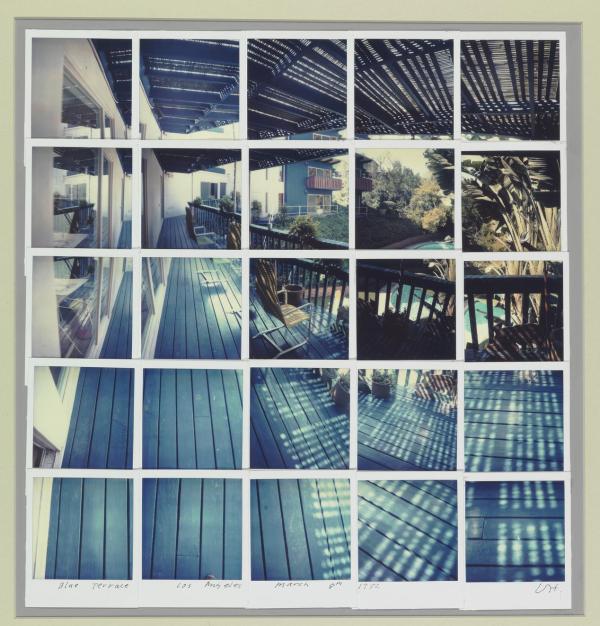
In the video David Hockney says “I was very aware of the photographs they didn’t have life in the way a drawing or painting did. It couldn’t, because of what it is. Compared to Rembrandt looking for hours and hours scrutinising his face putting all this time into the painting you are going to look at. Naturally their is many more hours than you can give it. A photograph is the other way round; it is a fraction of a second, frozen. So the moment you have looked at if for four seconds you have looked at it for far longer than the camera did. It dawned on me this is visible. I made a little experiment with a Polaroid by putting thirty of them together of this in a way I had been trying to paint this house from three different viewpoints. These photos excited me so much. Time was appearing in the picture and a bigger illusion space. Space is an illusion, I was aware of that but time is not an illusion, it is real and accounted for in the number of pictures” (Smithsonian, 2020).
This is a lengthy transcript but when I tried to extract segments the words no longer made sense so I include it all. The video is worth watching and you can find it here.
I wanted to consider what David Hockneys words said to me and look at some examples of pictures that convey my reaction to them.
Time.
A painter spends hours, day sometimes months looking at his subject. Then they make sketches, practise paintings before committing to canvas.
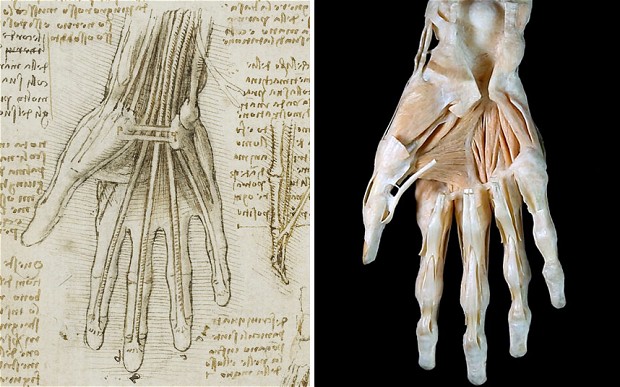
Leonardo Da Vinci performed autopsies to fully understand anatomy before painting hands etc. The process of painting is a lengthy one. Allowing painters to change imperfections add or subtract items honing their work until the painter or patron is happy with the finished work. Sometimes going back years later to change parts or all of the work to get the painting right. (Mail, 2013).
For a painter the skill is knowing when to put down the brush and stop. For the photographer who works in seconds it’s knowing the correct amount of time is needed to portray the story. My work in assignment 6 will show a year in one location but the exposures will be done in several seconds.
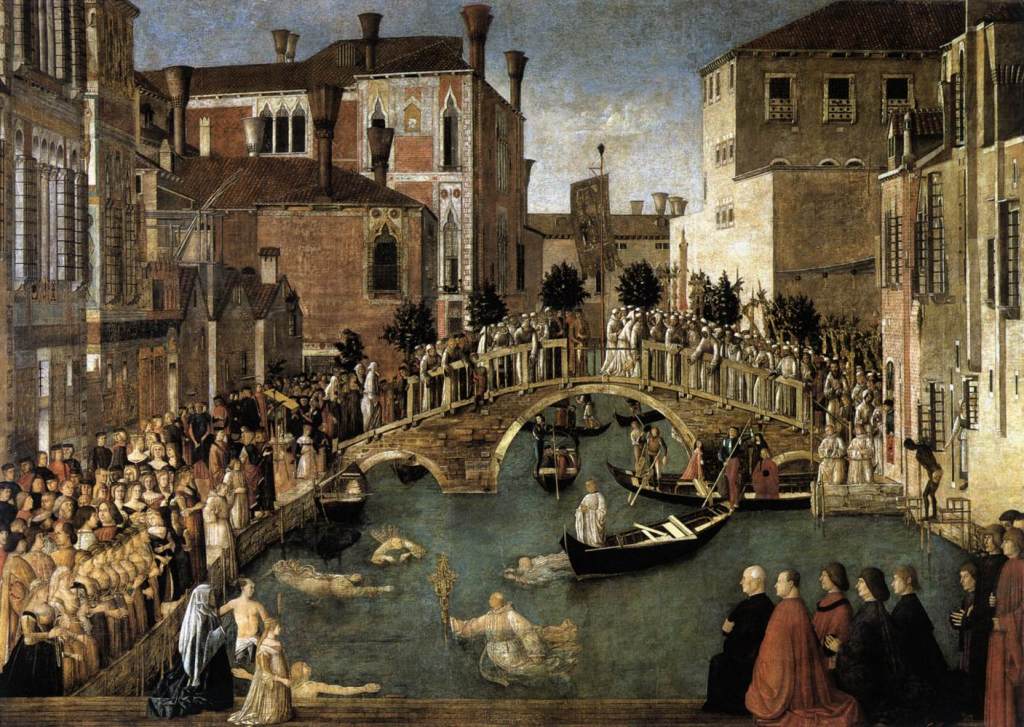
Some paintings show a period of time and include a full story, Bellini in the “The miracle of the true cross near San Lorenzo Bridge” (Bellini, 1500), shows the story of the procession of the cross. From arriving in a gondola to delivery at the dock. In one image it captures several moments and depicts a story, I look and see what has happened here.
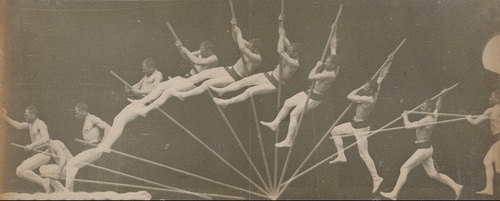
Etienne Jules Marey “Chronophotographic study of a man pole vaulting (Marey,1891) shows the second it takes to pole vault but splits the second into ten images and then superimposes them so the story is shown in one image.
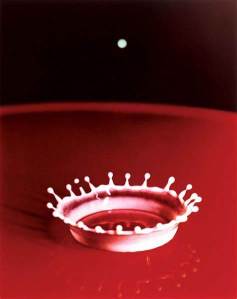
With photography we can choose many ways to show time. Short exposures freeze time such as in Harold E. Edgerton’s “Milk drop” (1936). This photograph shows the fraction of a second a drop of milk hits the surface in a saucier forming a perfect crown. The whole story is visible from drop to crown in one image.
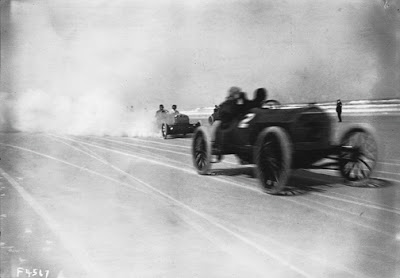
Long exposures show speed or movement. Nathan Lazarnick (1916) uses a longer shutter speed to depict the speed of a racing car. Blurring it within the frame, the tyre tracks give good leading lines whilst the background is sharp emphasising space. I can see the speed the cars have passed the spectators and that this is a race.
Hockney chooses to tell the story with a collage of many Polaroid images taken from different perspectives. These capture more time and create the space for him to “paint” a story. The experiment has speaks of in the video shows just a blue balcony however it shows the balcony in the same way the eye works darting around. The scene isn’t flat it shows us the space and the number of shots tells us that time has passed whilst he worked emphasised by the changing shadows and light cast onto the scene.
Space
Both photographers and painters are limited by space. The space created by what is before them is constrained and by the frame both need to be considered in regard to the message they want to convey.
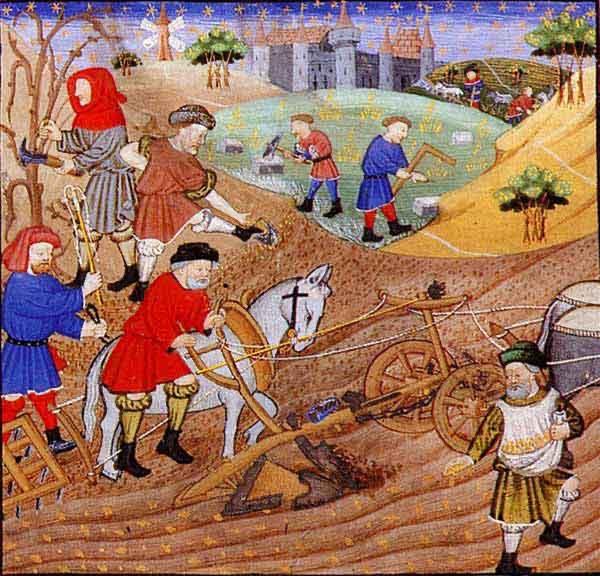
Early paintings are two dimensional and appear flat however they still have great artistic merit. Later linear perspective added depth and changes the reality of the work. Non linear perspective use colour, light and dark areas to create depth and perspective to a picture. Haze in the distance does much the same. Both tools are important to a painter and a photographer when creating the space for our stories. When used correctly they make the work more interesting and hold the viewers gaze for longer.
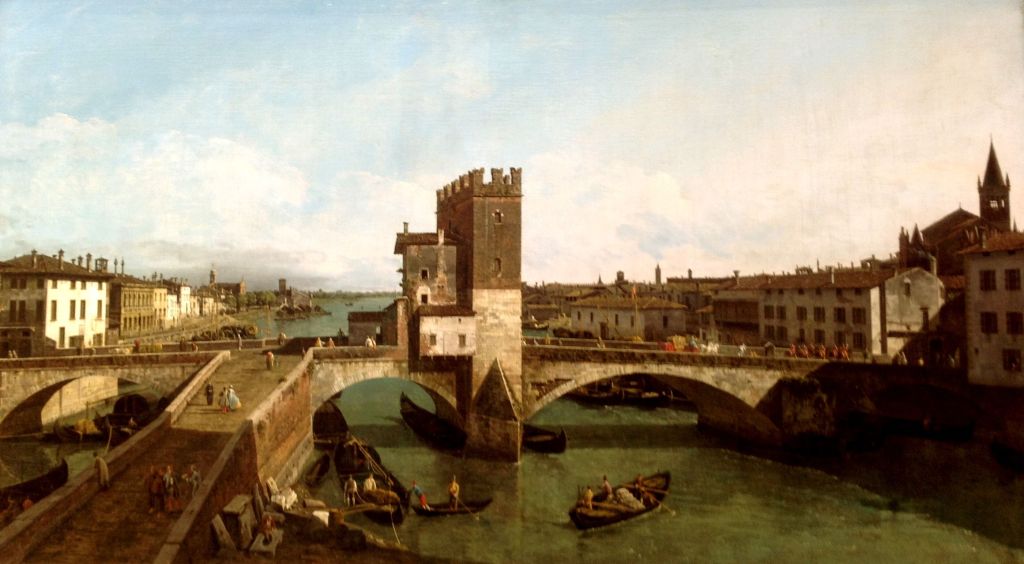
Berado Bellotto “View of the Ponte Della Navi, Venice” (Bellotto, 1745) shows a bridge over the canal. His use of leading lines and the vanishing point give depth to the image. The detail must have taken months to paint but the linear perspective holds the eye and makes a painting of a bridge compelling.
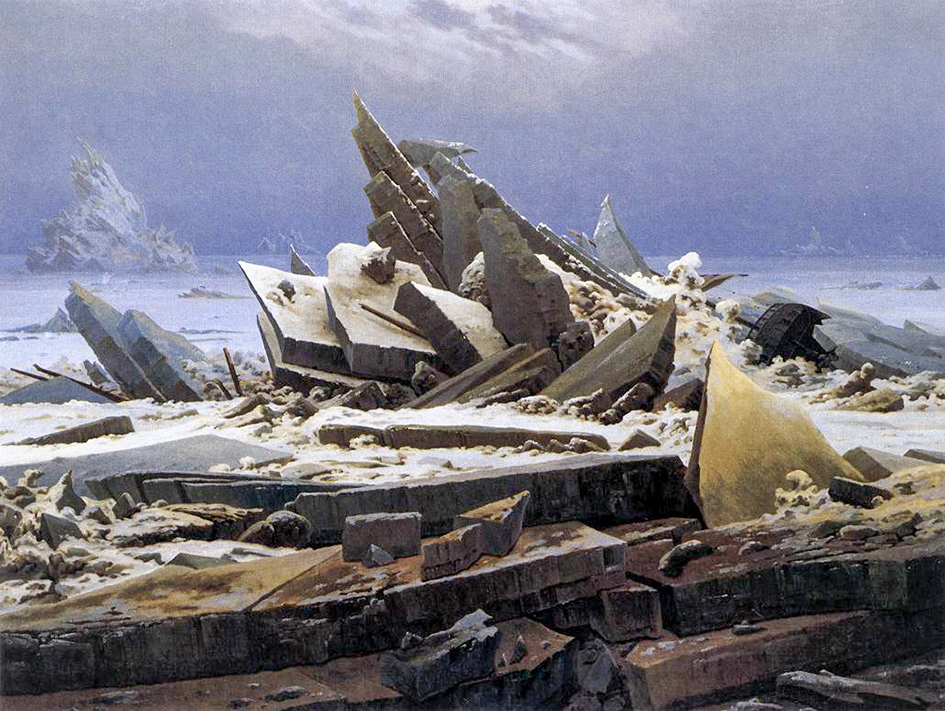
Caspar David Friedrich “The wreck of Hope”, (Friedrich, 1824) shows a ship wrecked in the ice. The lines create mayhem but no perspective. The perspective derives form the delicate portrayal of ice in the distance hidden by mist. Also the delicate cloud with a finely painted horizon hints at the depth and cold.
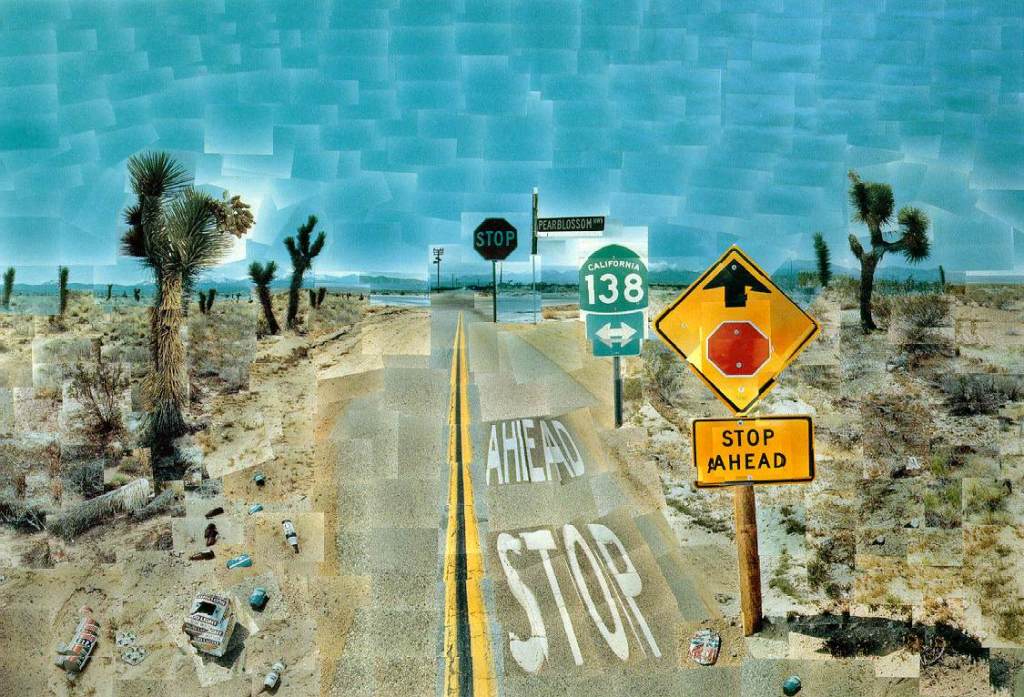
David Hockney shows us this use of time and space in photos such as “Pearl Blossom Highway” (1986) he uses hundreds of exposures to build a collage creating a huge space. In doing this he shows the time passing through the day with the Change of colour in the sky and the change in the shadows. This gives a different view than a single photo it brings the image to life.
In my work I will create space by increasing the area covered by the nine exposures in each image whilst the time naturally appears in the images I will use to complete Transitions.
Work Cited
Bellini, Gentile. The Miracle of the True Cross near San Lorenzo Bridge. 1500. Oil on canvas. Galleria Del Academia Vezezia.
Bellotto, Berado. View of Verona with the Ponte Delle Navi. 1745. Oil on Canvas, 132x233cm. Private collection on loan to the national gallery of Scotland.
Edgerton, William. Milk Drop 1936. 1936. Gelatin Silverprint, 39.5×49.9cm. ML/F 1977/229. Gruber Collection.
Friedrichs, Casper David. The Wreck of Hope. 1824. Oil on Canvas, 96.7×126.9cm. H96.7. Kunstehalle Hamburg Germany.
Gayle, Damian. “Scans That Prove Leonardo Da Vinci Was Right All along: New Show Reveals ‘startling Accuracy’ of Anatomical Sketches Which Lay Undiscovered for Hundreds of Years.” Daily Mail. March 13, 2013. https://www.dailymail.co.uk/sciencetech/article-2292206/The-startling-accuracy-Leonardo-da-Vincis-anatomical-sketches-revealed-comparison-modern-medical-scans.html.
Hockney, David. Pearblossom Highway 2. April 18, 1986. Collage of Polaroid Images. John Getty Collection.
Hockney, David. Blue Terrace Los Angeles March 8th 1982. August 3, 1982. Polaroid Collage, Photographs.
Marey, Etienne Jules. Chronophotographic Study of a Man Pole Vaulting. 1891 1890. Albumen Print. 88:0795:001. Museum Collection by Exchange.
Nathan, Lazarnick. Autos Racing on a Beach 1916. 1916. Gelatin on Nitrocellulose. 81:3051:0754. Gift of George Lazarnick. “Smithsonia Channel What David Hockneys Collages Reveal about Photography.” Accessed June 29, 2020. https://www.facebook.com/watch/?v=3079256612155771&extid=ZB4HtuZiUc4PUZjP
Unknown. 13th Century Famers using a wheeled plough in France 1279. Manuscript. “The Grainger Collection”. Accessed 2020.
 Michael Green Landscape Studies