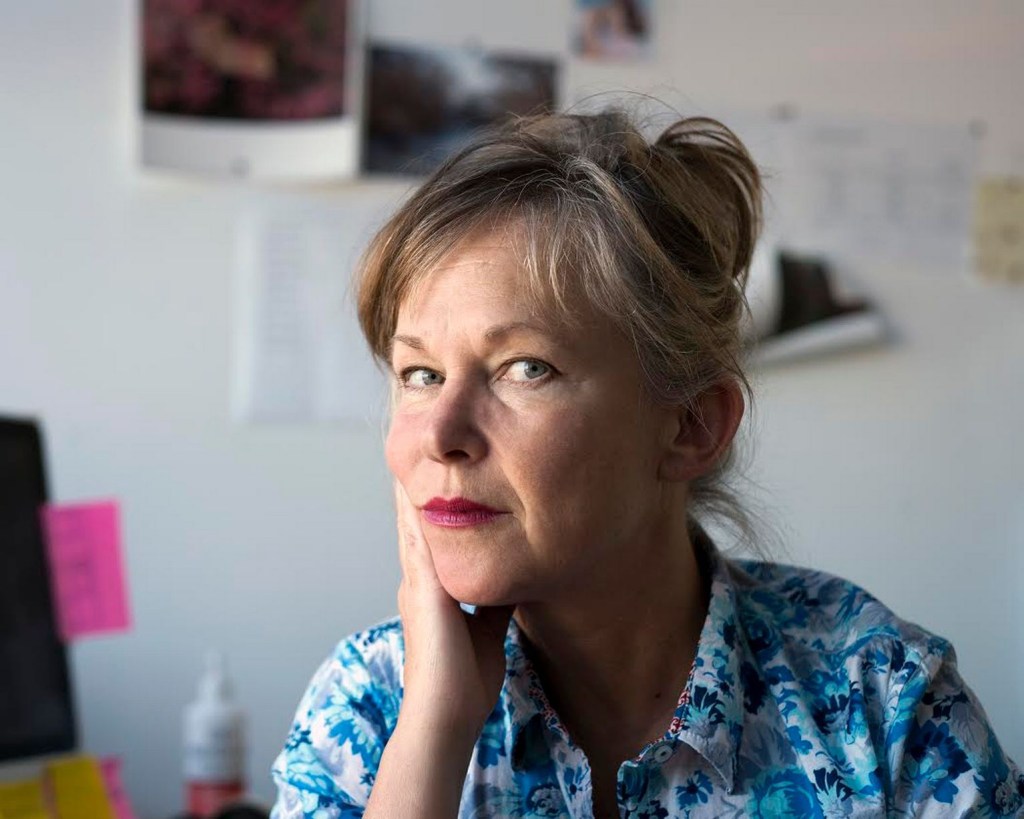
During my work for Assignment 5 I found Helen Sear. She is an artist who states she was influenced by David Casper Friedrichs. I couldn’t move on until I had completed some research into Helen and her work as she was unknown to me.
Helen was born in 1955 in Worcestershire in sight of Wales. She has made her reputation from her studio in Monmouthshire, Wales. As a small girl her father used to go on long walks with her where he taught her about the countryside and nature.
She came to prominence in 1991 when her work was included in the British Council exhibition “De-Composition Constructed Photography in Britain”, this exhibition was popular in Latin America and Eastern Europe (1997).
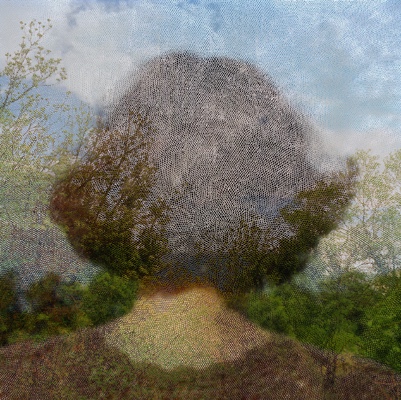
Artsy (2018) says of Sears work, “She explores her/our relationship with the natural world”. Her work “Inside out” (Sear) reminds me of Friedrichs work with the subject back to camera Helen adds elements to make the photo painterly and dreamlike.
Sear describes her work as a “Double time of image making” referring to the time between taking the initial image and the time during which she superimposes her photographic images (Artsy, 2018).
She was educated at:
1975-1979 Reading university, BA Hons.
1981-1983 Slade School London, HDFA.
2009 PhD University of Newport, Wales.
Jane Wainwright writing in says of her approach “I am trying to slow down the instantaneous of the camera” Wright continues about Sear “ She highlights the ordinary, making it extraordinary. Forcing the viewer to engage with the work and puzzle out the image”.
When Wainwright asked Sear if she had any particular artists or pictures that influenced her work she replied “I am interested in Romantic Painting particularly the work of Turner and perhaps the German romantics such as David Casper Friedrichs.
Pushed further she continues “The people who influenced me were in the end the ones who taught me at college. At the Slade artists like Tim Head and Helen Chadwick” (Wainwright, 2000).
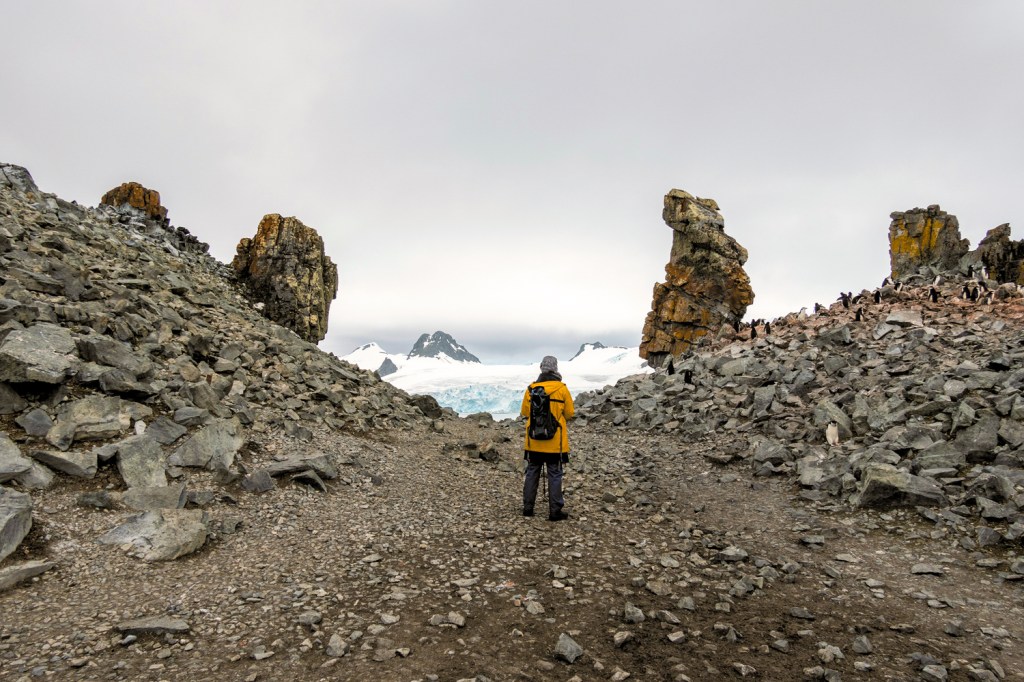
Friedrich`s “Wanderer above a sea of fog” (1818) must have influenced Sear as it did me. However I can not find any specific reference to it doing so. When I look at Sears images I see a similar message as the one I wanted to portray however Sears images have added layers where mine are straight photographs. I want to experiment with this technique and will do so before I leave this research.
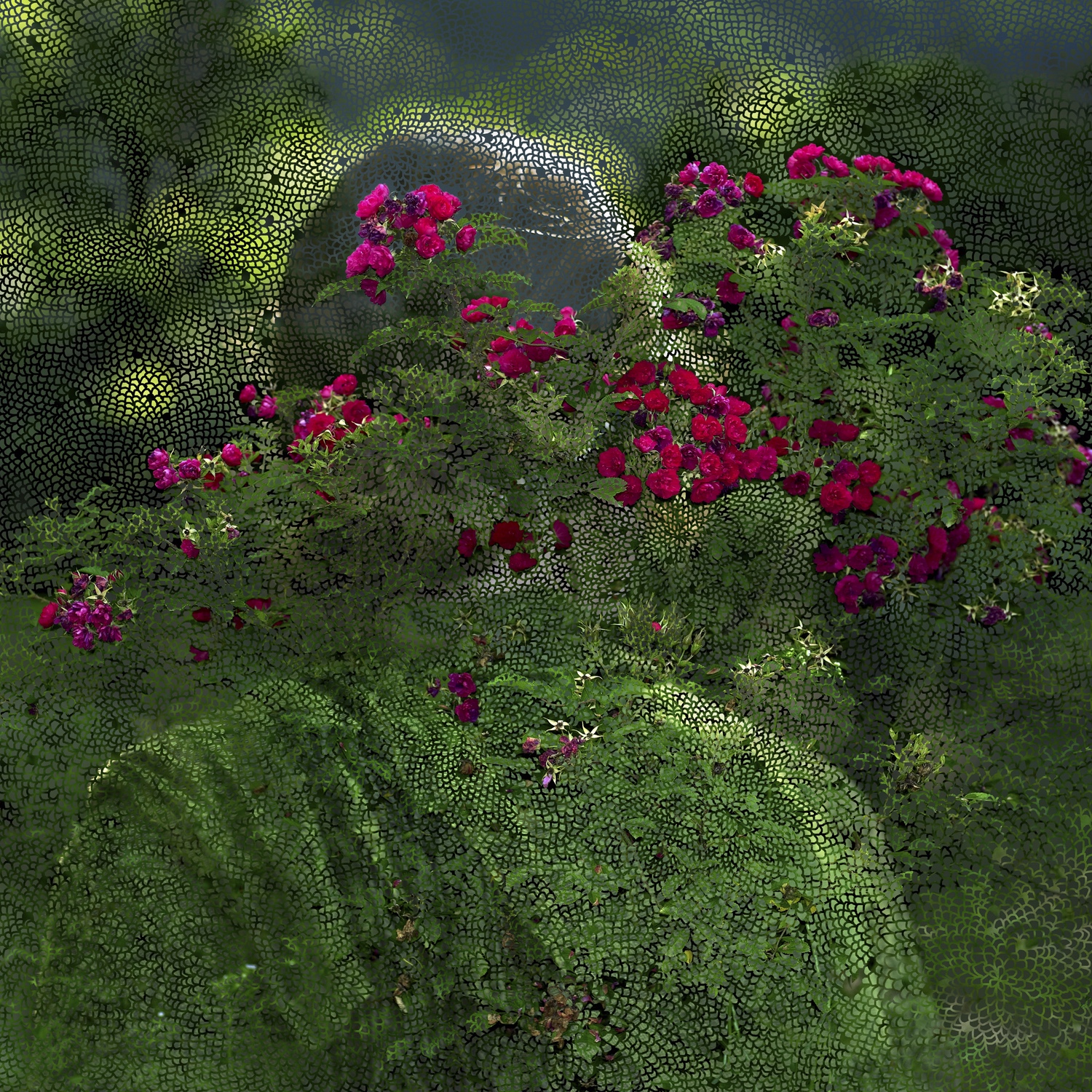
Three images from Helen Sears work “Inside the view” (Sear, 1997).
Valerie Reardon wrote off Sears’s body of work, “Sear draws on the Freud’s notion of the “unheimlich” the uncanny sense that what is hidden is also somehow ghastly. Jacques Lacan reworked this notion and came up with the term extemite a blurring of the line between interiority and exteriority which points to neither but is located where they coincide and become threatening”(1998).
This paragraph was challenging to me I didn’t understand the two words unheimlich and extemite. So I had to spend some time understanding them both. The former means Uncanny/weird and the latter means the lines become blurred and thus threatening. I can see this Angst in Sear’s images at first glance they look sweet but when you look and see the layers they take on new meaning which to me are somehow dark.
David Campany compares her work with Fox Talbot’s image of lace “Talbot placed black lace directly on to sensitised paper and exposed it to the sun, The lace appears white on a dark background it doesn’t look like a negative, the flat fabric is so well rendered by the simple technique. It is stoic and removed yet the light that touches the object then touches a receptive surface” (Campany, 2005). This is talking about the single layer Sear adds more layers to create her art.
Having looked at this work I thought that at first sight it seems simple. It is not, within the square frame are complex layers. The more I look and reflect the more the work asks me to think. I like Helen Sears work very much and I think I will have to explore the artists who influenced her.
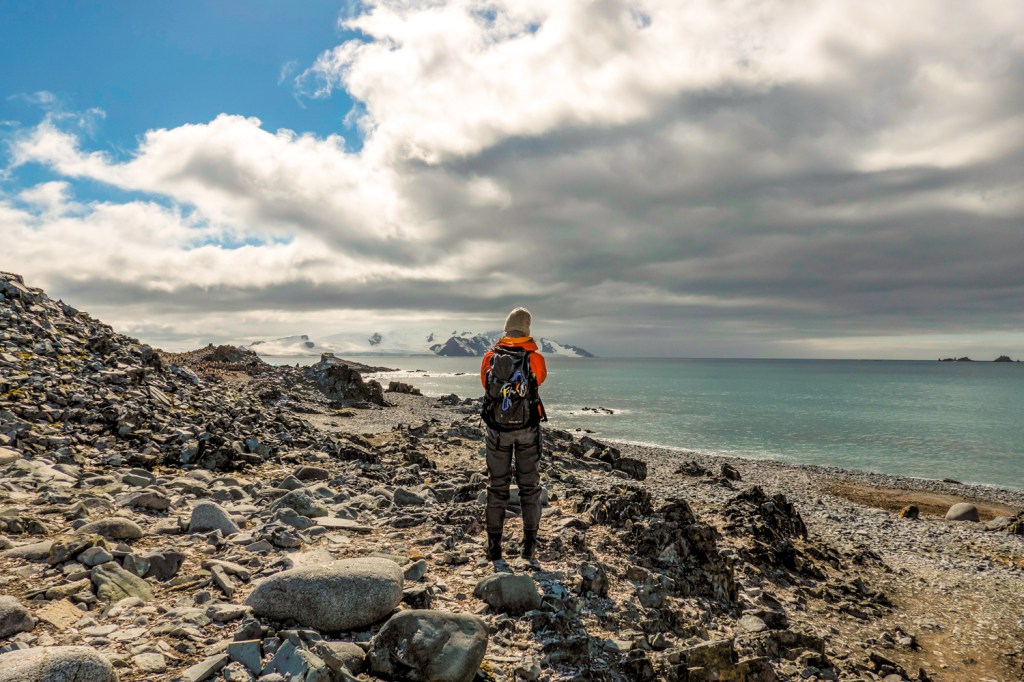
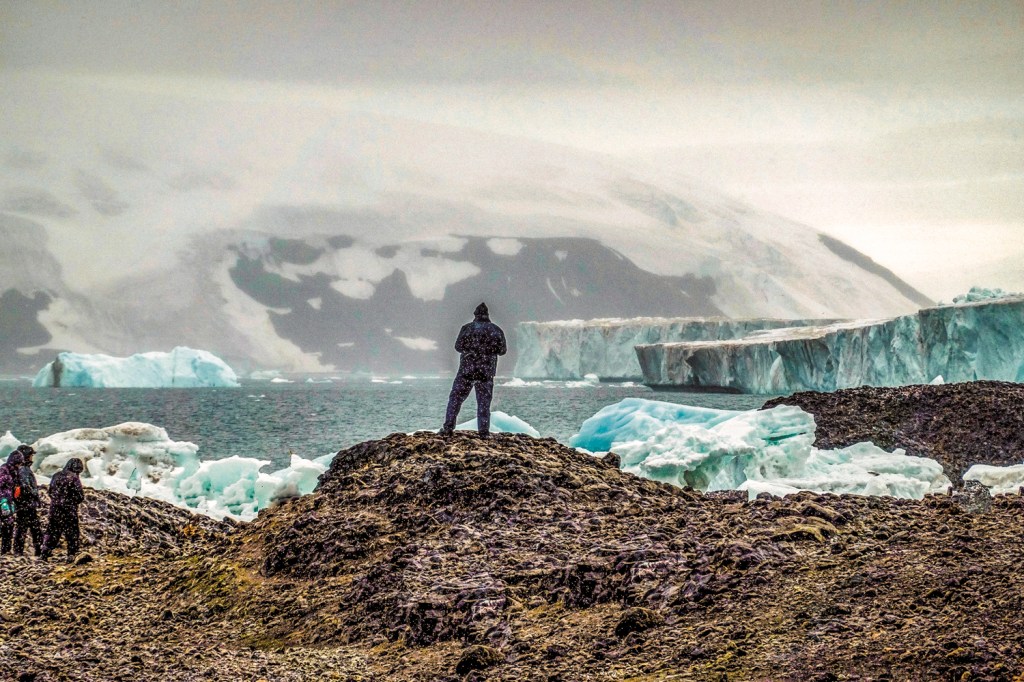
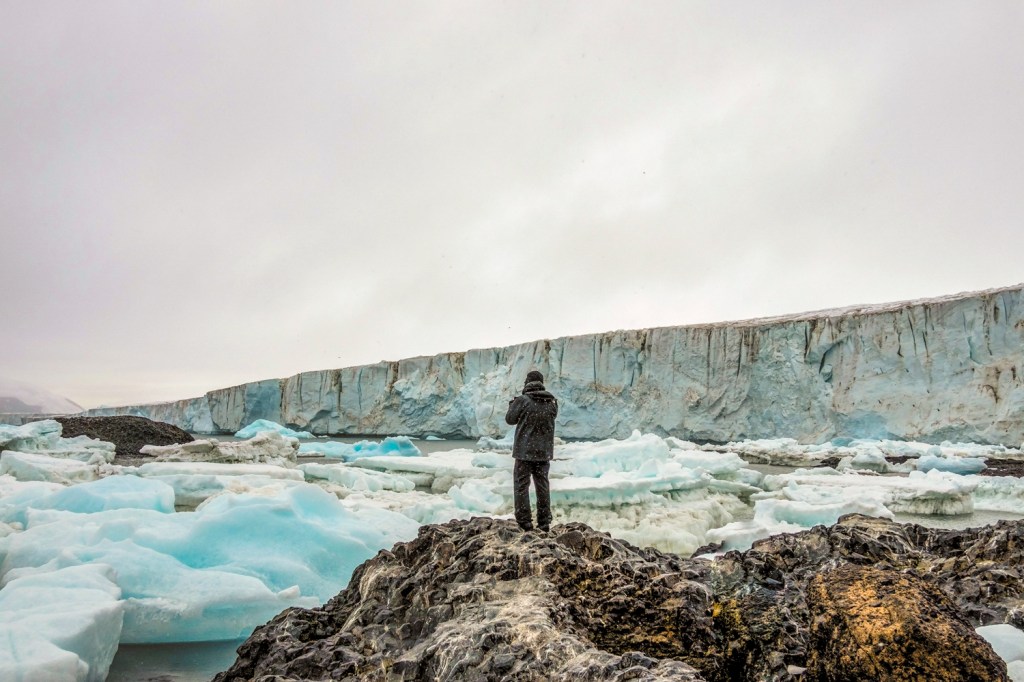
Earlier I said I would experiment with how I see Sears’s images and here is that work.
Caspar David Friedrich The wanderer above a sea of fog 1818.
Caspar David Friedrichs was born on 5th September 1774 and died on 7th August 1840. He was a German Romantic landscape painter. He is known for allegorical paintings showing people in a landscape from behind, contemplating the glory of nature.
He studied in Copenhagen, Denmark and after his studies, he settled in Dresden.
Friedrichs felt disillusioned with the materialist world that was being created at this time. J.M.W Turner and John Constable felt some of the same and painted with this in mind showing nature as a divine creation. Constable said of Turner “Turner . . . seems to paint with tinted steam, so evanescent and so airy” (Frist, 2019). Steam was produced by nearly everything in the industrial revolution.
The sculpture David D`Angers said of Friedrichs “He has discovered the tragedy of landscape”, (Vaughn, 2004). Maybe Friedrichs felt this when he witnessed his brothers drowning in an icy lake as a teenager. His mother and two sisters died around the same time of ill health this could have been a catalyst for the tragedy in his work.
Friedrich won the Weimar competition in 1805 a competition organized by the writer and academic Johan Wolfgang von Goethe this competition had lost its way a little, attracting less skillful artists than Friedrichs. Winning this competition ensured his name was made locally and then his reputation grew. He completed watercolours and etchings completing very little work in oil at this time. Friedrich did draw and paint the local landscape in a divine sort of way.
Goethe said “We must praise the artist’s resourcefulness in this picture fairly. The drawing is well done the procession is ingenious and appropriate. His treatment combines a great deal of firmness, Diligence, and neatness” (Siegel, 1974).
Part of his education was at the Academy of Copenhagen this educational institution allowed him external visits to draw. On one of these outings he met and was later schooled by the theologian “Ludwig Gottard Kossgarten”, who worked with the Lutheran church preaching to a poor congregation of herring fishermen and women. Here Kossgarten preached “Where beauty is understood a metaphysical and related to the divine”. (Raisbeck, 2018). Listening to this would link the divine and Friedrichs landscapes.
In Copenhagen, Friedrichs had studied under Jens Juel who was part of the movement “Sturm and Drang” (Storm and Stress). This movement painted storms at sea or on the coast and often showed shipwrecks in a pre-romantic way. In the 2010 Radio 4 program (BBC, 2010) presented by Melvyn Bragg explored the whole of Sturm and Drang. This program looked at each part of the arts and discussed their part in this Romantic Movement.
In music composers, Mozart and Haydn are huge names within the movement writing soaring pieces of music that have stood the test of time. More angry young men producing art to counter the destruction of industry.
Henri Fuseli Falstaff Kunsthalle Hamburg 1792
Claude Vernet Storm on the Mediteranean Coast J.P. Getty Museum 1798.
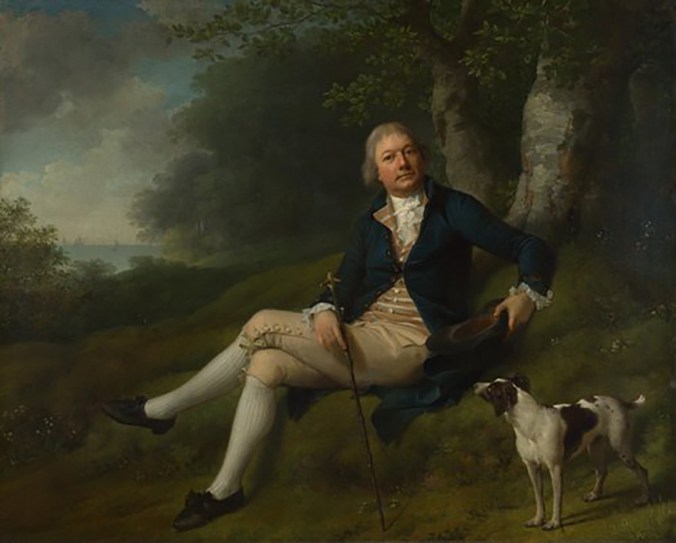
Jens Juels Joseph Greenaway National Gallery London 1786
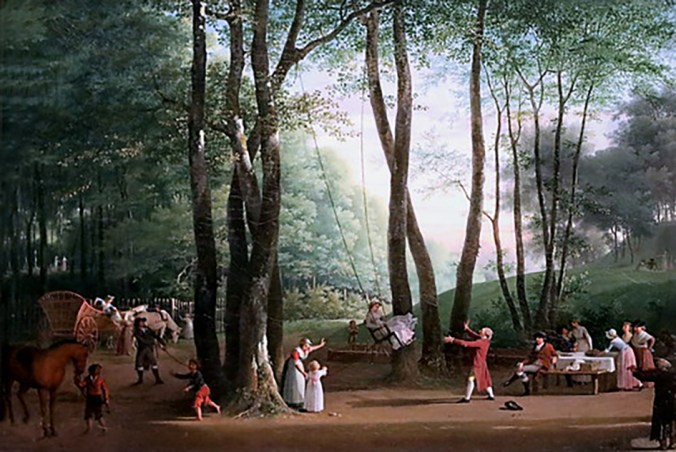
Jens Juel The dance in the glade at Sorgenfri Statens Museum For Kunst Copenhagen 1800.
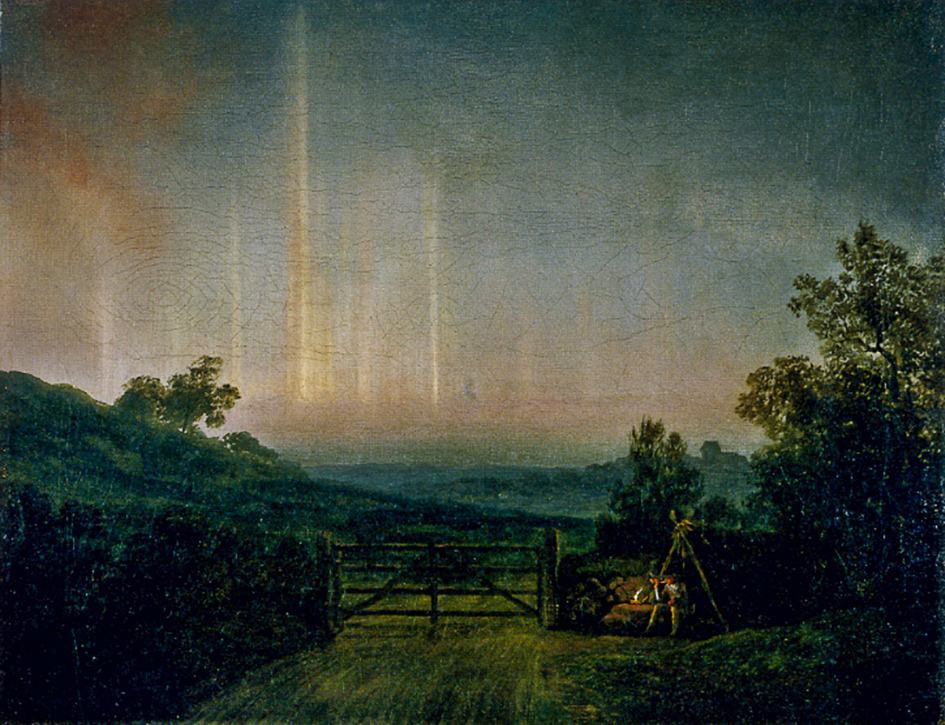
Jens Juel Landscape with Northern Lights NY Glypotek 1790.
In Painting, Henri Fuseli was painting scenes from Shakespeare’s plays such as Falstaff (Fuseli 1792). Claude Joseph Vernet painted shipwrecks one being “A storm on the Mediterranean Coast” (Vernet, 1767). Jens Juel painted Joseph Greenaway (Juel, 1789) a portrait of a man who doesn’t quite fit the romantic movement but he then produced “The dancing glade at Sorenfri” (Juel, 1800) a painting of a glade just north of Copenhagen painted with the divine in mind. Later he painted “Landscape with Northern Lights” (Juel, 1836) a painting that connects the divine with natural phenomena and the land.
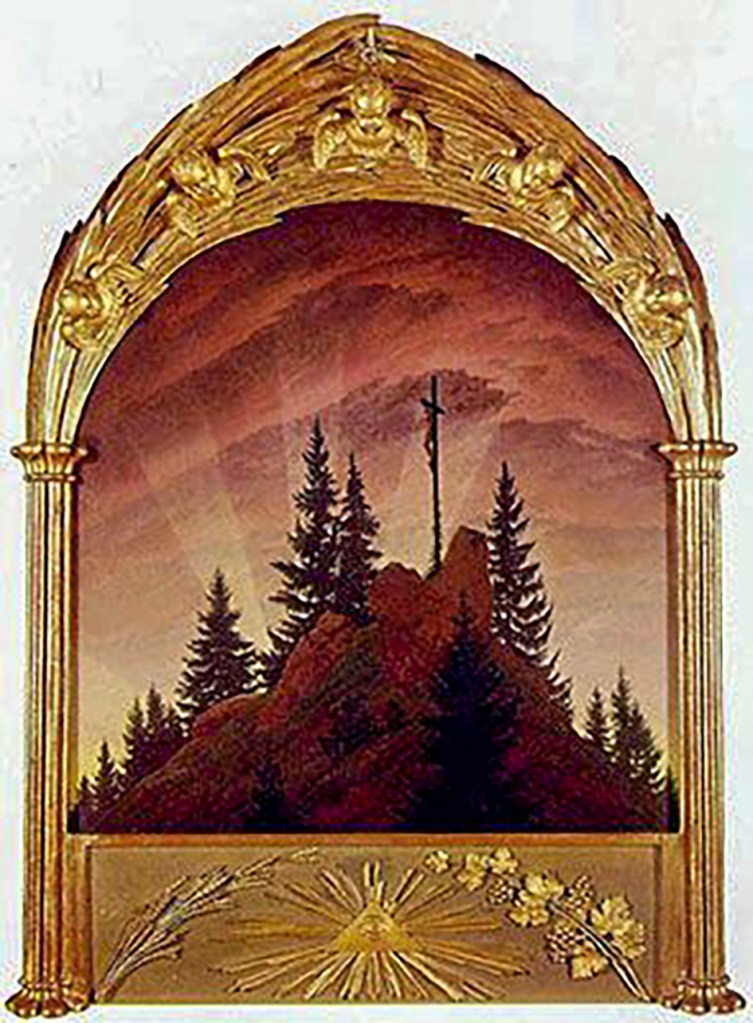
Casper David Friedrich Cross in the Mountain Gallery Nieu Dresden 1808.
Friedrichs completed his first major work in 1808. Cross in the Mountain (Friedrich, 1808). The painting shows the crucifixion of Christ in a different way. Before paintings of the crucifixion had the human figures as the main subject of the painting. Here the landscape is the main part with the crucifixion being smaller. It is the divine within the landscape. Siegel says “Logical climax of many other drawings of his in which he depicted a cross in nature’s world” (Siegel, 1978).
The German Lawyer and Art Critic Bascilus Von Ramdohr (Zeitung die elegant Walt, 1809), questioned landscape entering the church stating “Indeed it is a truly presumptuous thing, that Landscape Painting should try to slither into our churches and clamber onto our altars,”. Friedrichs counters this with “The ray of sunlight compares to the Light of the holy father”. This is the one and only time I can find Friedrich explaining his art?
In 1810 the Crown Prince of Prussia purchased several of Friedrichs work, shortly after these purchases Friedrich was elected a member of the Berlin Academy. This relationship and election reinforced his position within Germanic art.
In 1816 Friedrich applied for citizenship of Saxony this was a surprise as Saxony was pro-French. He acquired this citizenship in the same year sponsored by his friend Graf Virthum von Eckstart.
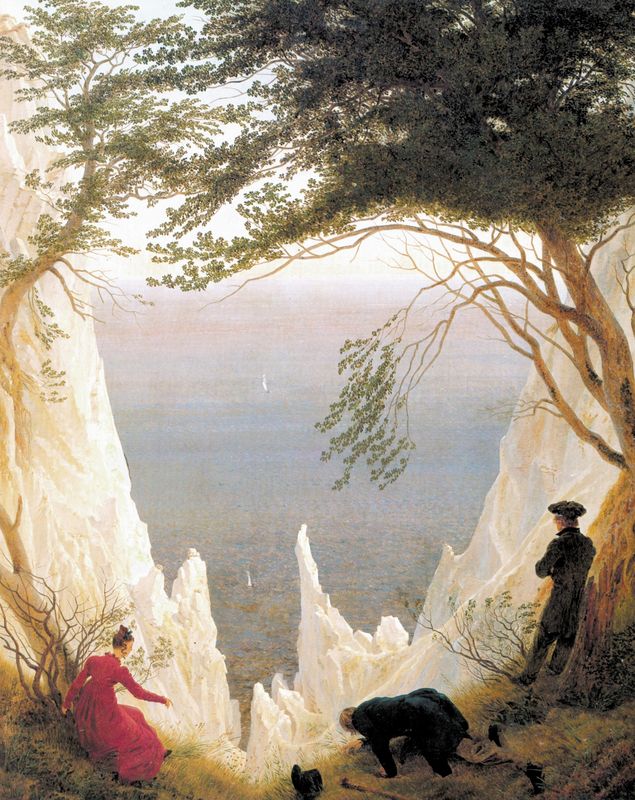
Casper David Friedrich Chalk Cliffs on Rugen Museum Oskar Reinhart Stuttgarten 1818.
Friedrich married Caroline Bummer with whom he had three children. At this point, he began showing more human figures in his work such as “Chalk cliffs on Rugen” (Friedrich, 1818). This painting is playful and shows three characters on the cliff perhaps retrieving a lost hat that has blown over the cliff. It shows the people from the back. This style is called Rückenfigur or figure from the rear. The painting was painted on their honeymoon and celebrates their marriage.
In later life, he met the Poet Vasily- Zukovsky who tutored Alexander II. They became good friends Alexander said of Friedrichs work “They please us by their precision, each awakening a memory in our mind” (Vaughn, 1980).
In 1835 Friedrich suffered a major stroke which left him paralyzed. He sold earlier works to allow him to convalesce in Czechoslovakia. He died on May 7th, 1840.
That covers his life now let’s consider his work.
Friedrich moved the landscape to the backdrop to human behavior. He employed the Rückenfigur to do this.
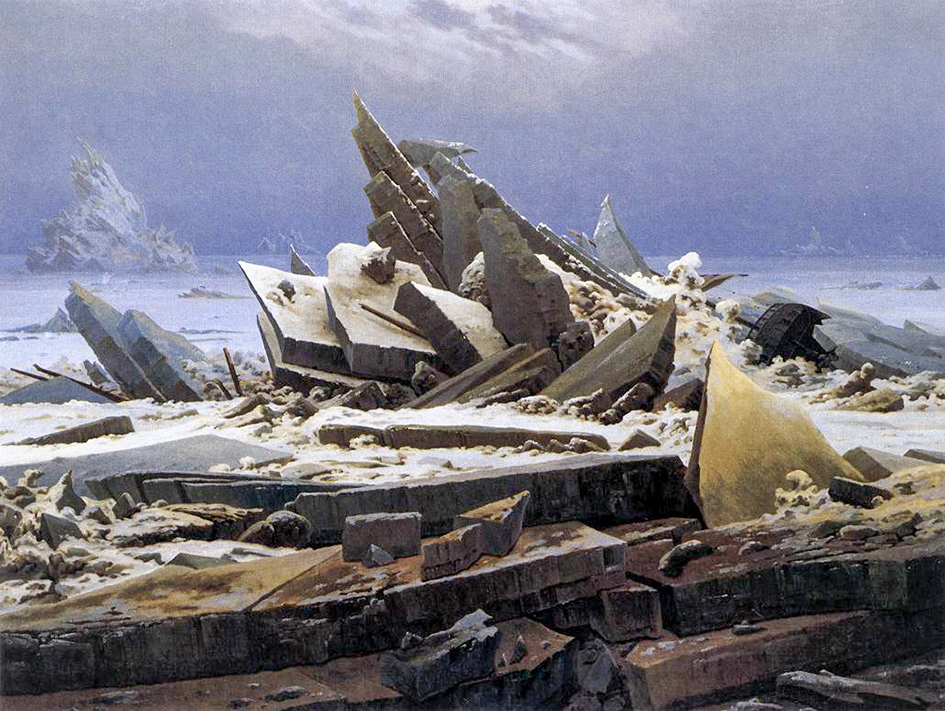
Casper David Friedrich Sea of Ice Kunsthalle Hamburg 1824.
This puts the viewer of the painting, in the painting, understanding what the Rückenfigur is seeing. “The sublime potential of nature, understanding that the scene is as perceived and idealized by a human”
(Prettejohn, 2005). Friedrich filled his landscapes with romantic meaning. “Die Romantische Stimmongscansschaft” (Beenken, 1938). His life experiences with death and loss meant his work reflected these losses. Perhaps he was thinking of his own mortality it would not be a surprise when you look at “Sea of Ice” to think of his brother falling through the ice to drown.
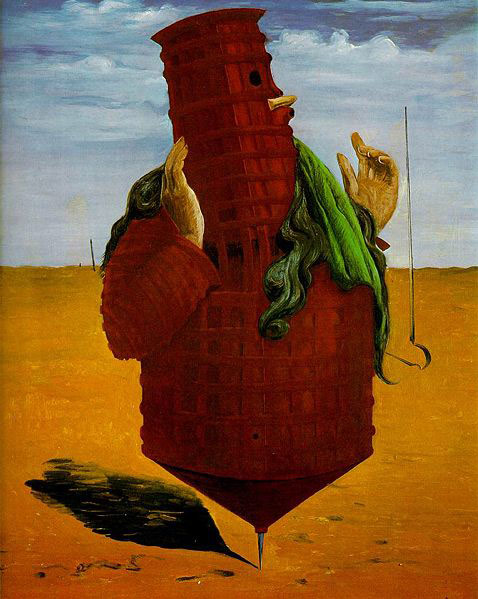
Max Ernst Ubu Imperator, Musee d Art Moderne Paris 1923
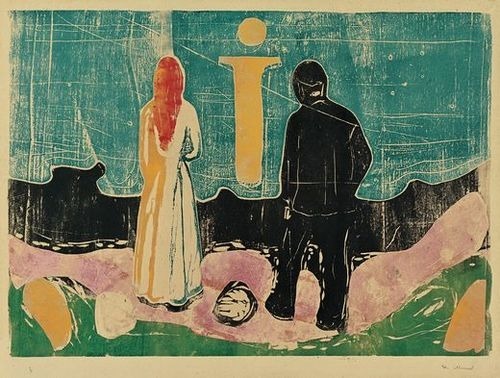
Edvard Munch The Lonely Ones Munch Museum Oslo 1935.
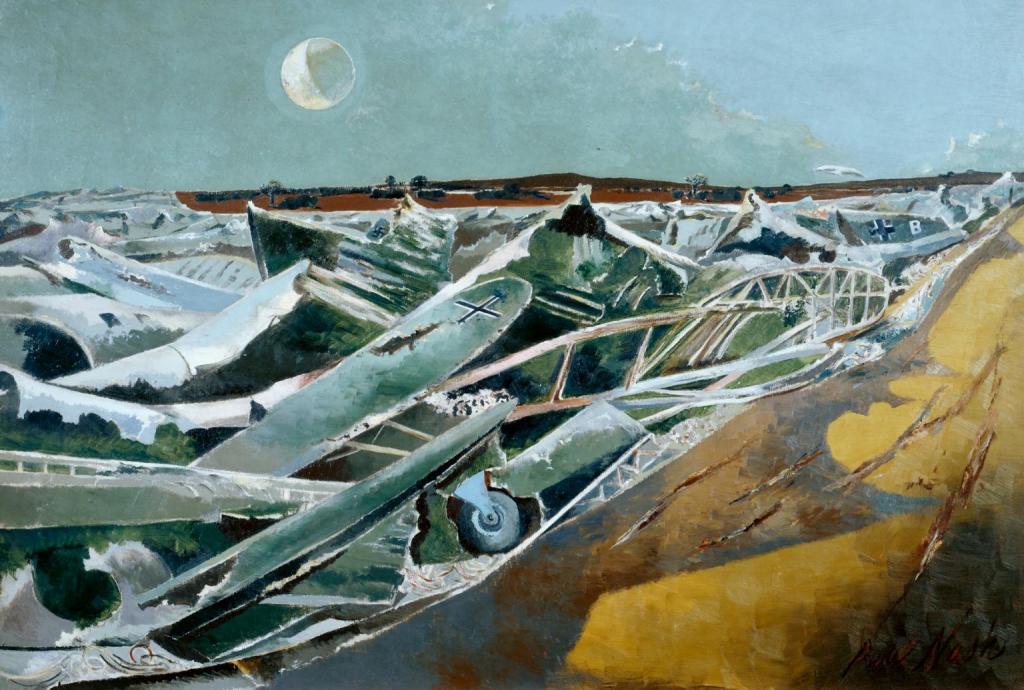
His work was influential notably to Johan Christian Dahl, Arnold Bocklin, Max Ernst and Edvard Munch. If you see Paul Nash work “Totes Mares” (Nash, 1940) a sea formed by Nazi warplanes you can see the influence of Friedrichs work “Sea of Ice”.
Anslem Keifer Fig 4 Occupations Tate Modern London 1969.
The Nazis claimed Friedrichs work and used it to reflect Germanic ideals. Hitler under his slogan “Blood and Soil” connected Nazism with the landscapes of many German artists. This meant Friedrichs work lost its popularity and didn’t regain recognition until the 1970s. In summer and autumn 1969 Anslem Kiefer completed a series of photographs showing ruined places with Keifer performing a Sieg Heil salute. This was controversial at the time as it would be now. One photo “Occupations” (Keifer, 1969) clearly reflects Friedrichs “Wanderer above a sea of fog”. This work helped regain public attention.
If the Nazis had understood the hidden meaning of the painting, Friedrich was showing someone in awe of the divine light feeling beneath the divine. The Nazis saw someone in uniform above Nature in control. This is the danger when you release work with subtle meaning it is left open to interpretation.
Caspar David Friedrich Wanderer above the sea of fog Kusthalle Hamburg 1800
The “Wanderer above a sea of fog” Shows a man on a rocky crag looking at trees shrouded by fog with an air of confidence. His hair is blown by the wind. He leans on a stick to support himself against the wind. The man wears the uniform of the volunteer rangers of the Saxony Army. This uniform was banned at the time as it was the uniform of the opposing army of Napoleon.
I see a man contemplating an uncertain future. Others think he is contemplating the divine. I think he has seen beauty in nature and he has frozen for a moment to take it all in. At first glance, it appears the painting locks us out with the figure showing us his back. However, this draws the eye into the picture as I want to explore the scene he is looking at.
The painting is unusual as it is painted in a portrait format this is done to emphasize the height of the man and the landscape. The landscape is shown with pinks and blues, the light in the valley seems to be from below this would be unusual almost divine. The green coat on the man repeats the green in the trees.
It makes the painting more mysterious, I want to know who he is? What he has seen? What is out of the frame? I have looked at this painting hundreds of times and I still don’t see the answers which makes me want to look again.
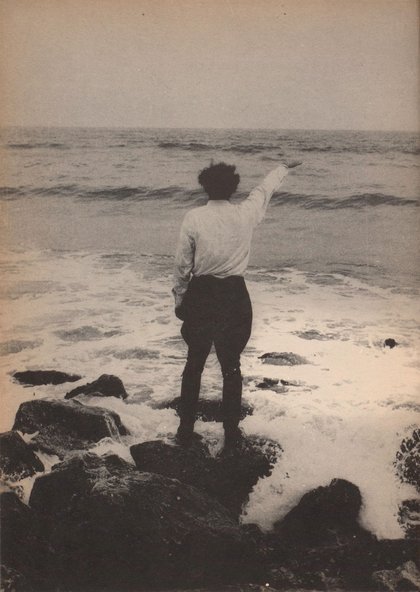
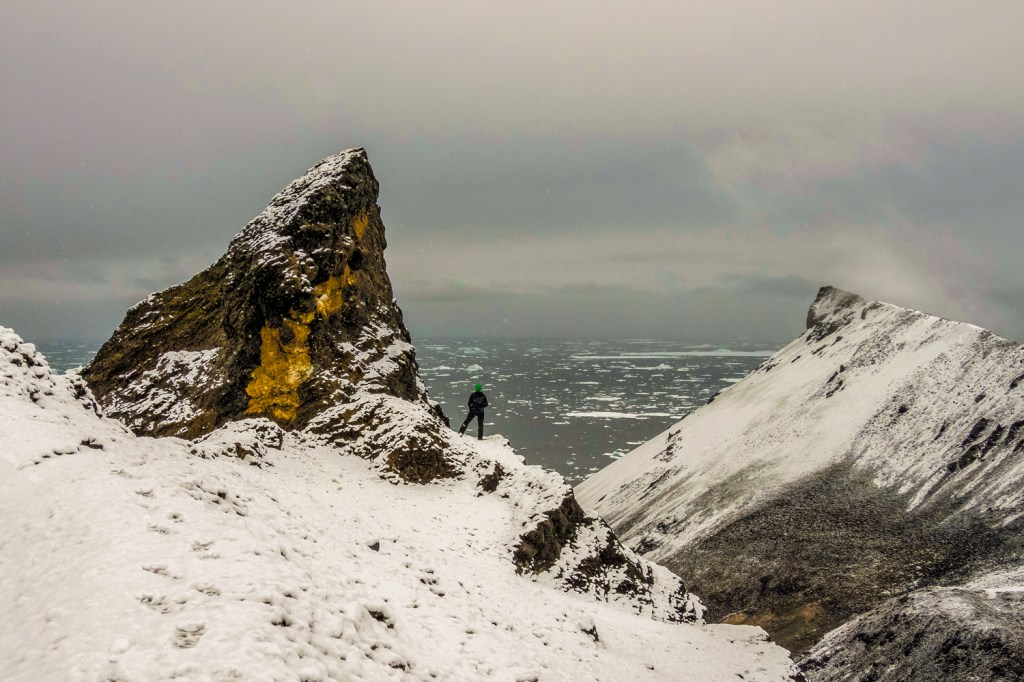
I see Friedrichs influence in the work of Alec Soth he puts a lone figure in the center of a lot of his work. In an environment that makes the person. Showing them having a divine moment. Whilst they are not taken from behind the person the influence is there to see. Soth wants to identify the person more, so shows them from the front looking straight at you.
Alec Soth, Joshua, Angola Prison, LA 2002
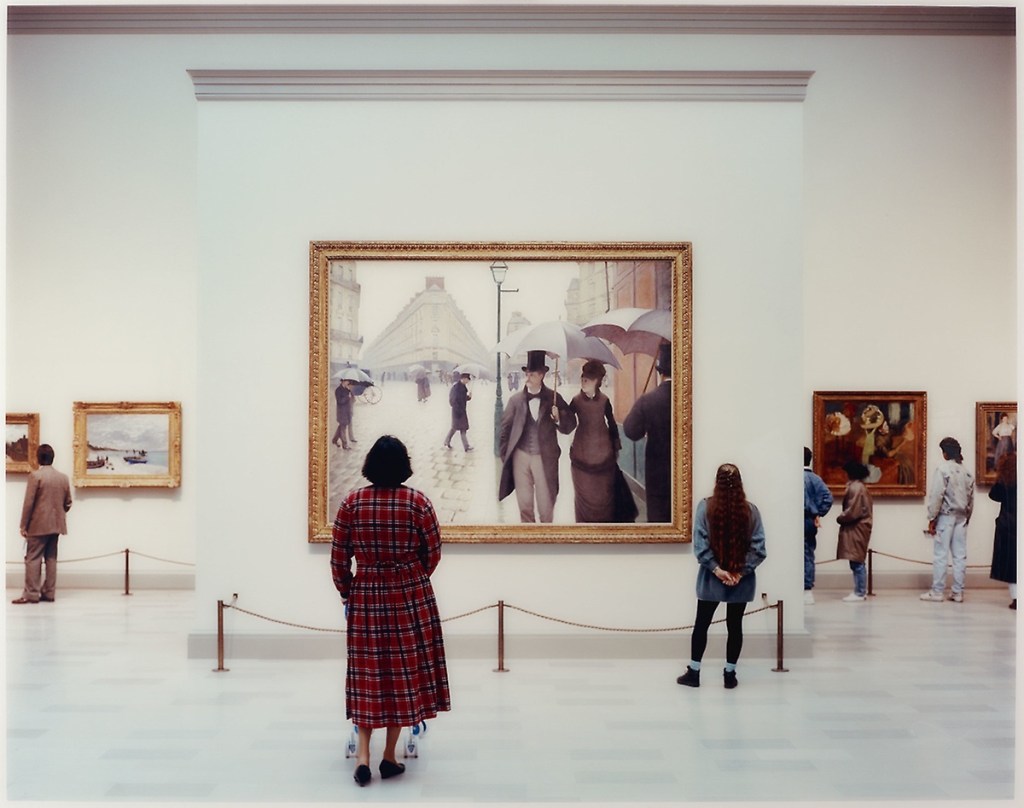
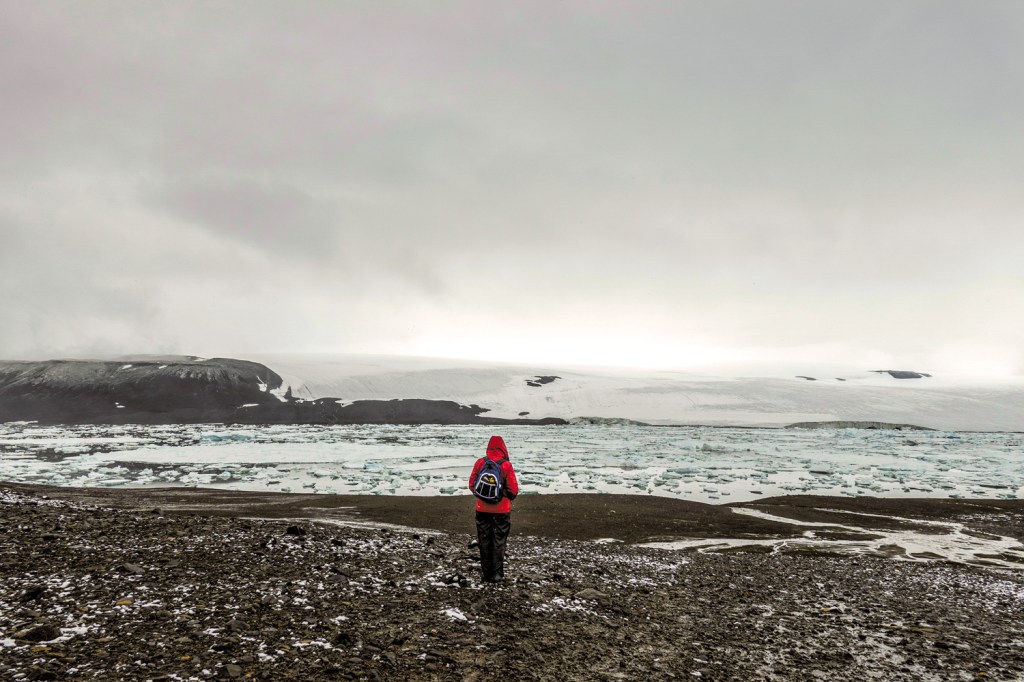
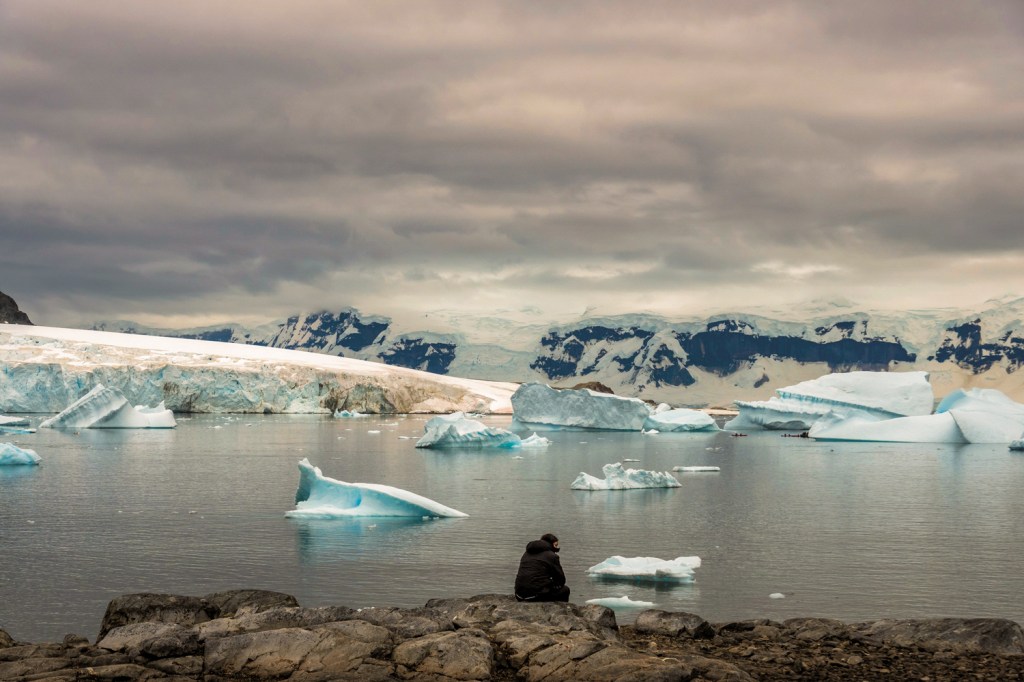
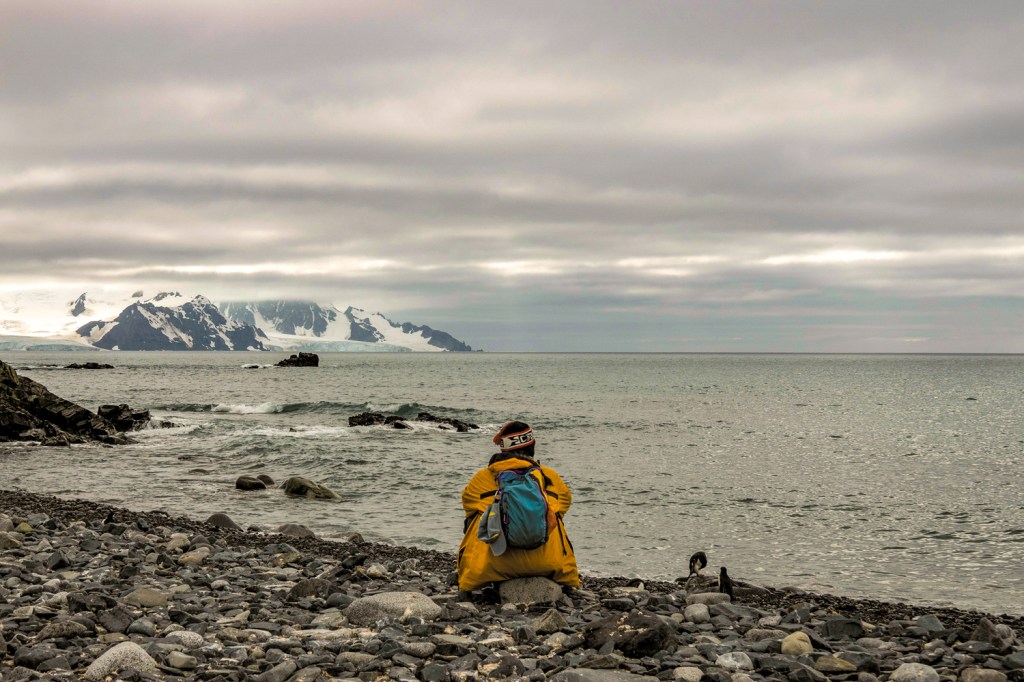
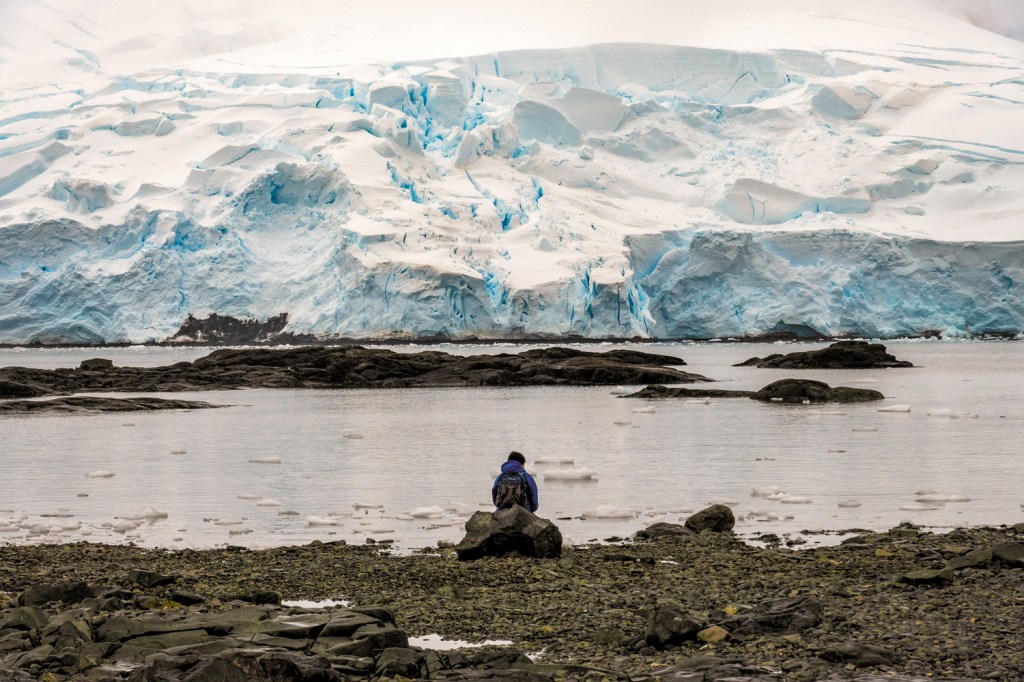
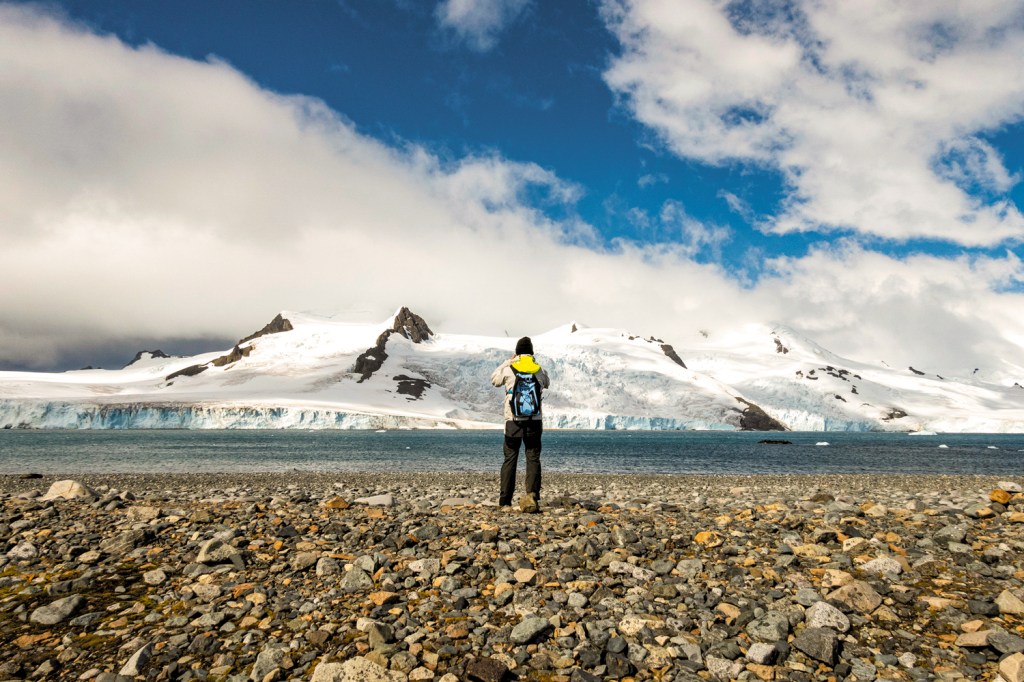
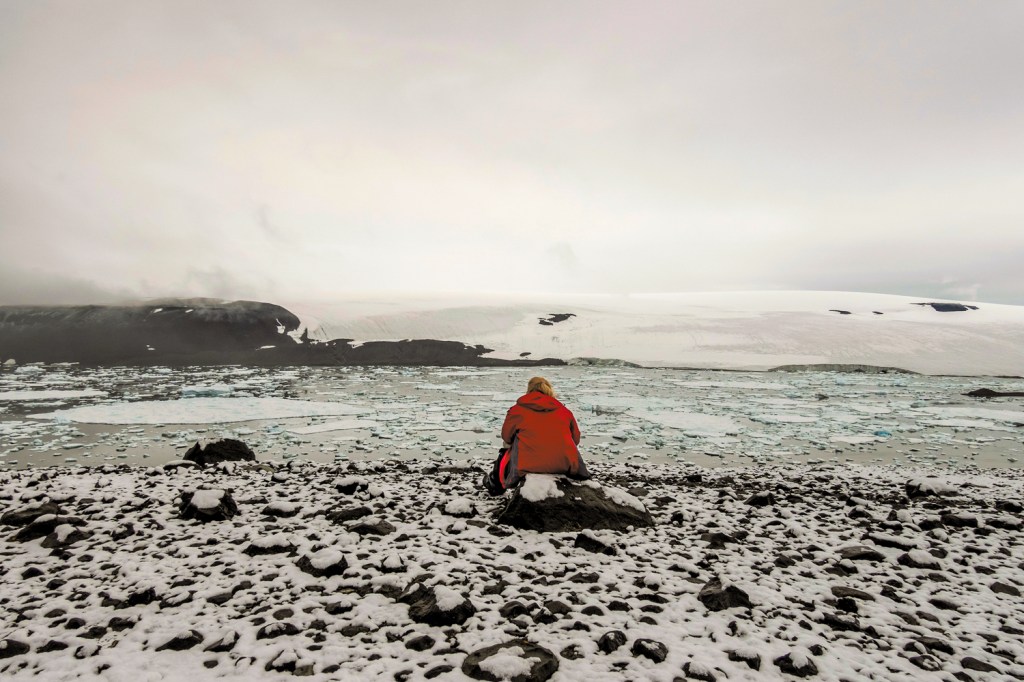
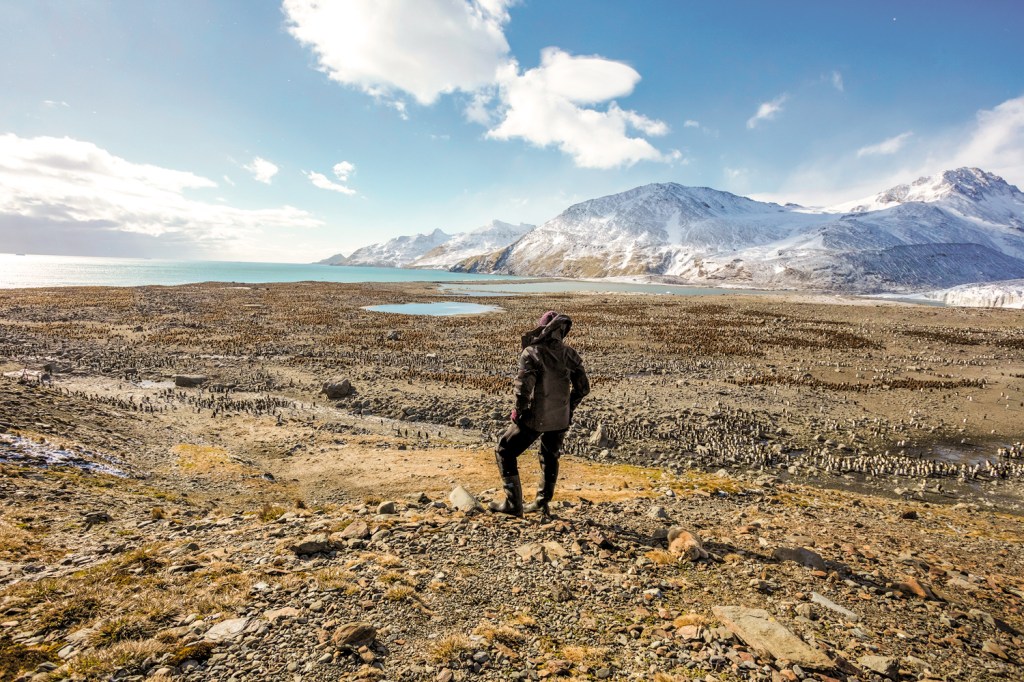
Thomas Struth took a series of large photos in Art Galleries across Europe in the 1980s (Struth, 1990). He had seen a photo of an art critic who was looking at a book of Art images. The photo spoke about peoples reaction to art and Struth went to his local gallery and started to take images of members of the public starting at paintings in a gallery all from behind. He wanted to show the connection between the almost religious reaction we have when we engage with art. His work shows the relationship between the Photographer and the viewer, The viewer and the art work and the camera and the whole scene. Whilst my images are of the scenery of Antarctica the premise is much the same.
Thomas Struth Art Institute of Chicago II 1990,
Works Cited
BBC (Composer). (2010). Sturm und Drung. [M. Bragg, Conductor] London, UK.
Beenken, H. (1938). Romantic Meaning. The Burlington magazine for connoseurs , 171-175.
Ernst, M. Ubu Imperator. Musee d Art Moderne, Paris. 1923.
Friedrich, C. D. Cross in the mountains. Galerie Nieu, Dresden, Germany.
Juel, J. Joseph Greenaway. National Gallery , London, UK.
Juel, J. Landscape with Northern Lights. Carlsberg Glypotek, Copenhagen, DK.
Juel, J. The Dancing Glade at Sorenfri. Staten Museum for Kunst, Copenhagen.
Kiefer, A. Occupations. Tate Modern, London.
Munch, E. The Lonely Ones, Munch Museum Oslo 1935.
Nash, P. Totes Mares. Tate Modern, London, England.
Prettejohn, E. (2005). Beauty and art (1750-2000). In E. Prettejohn, Beauty and art (pp. pp54-56). Oxford, England: Oxford University Press.
Ramdohr, B. V. (1809). Article criticising Cross in the mountain. Zeitung für die elegante , 17-21.
Rasbeck, J. (n.d.). University of Oxford. Retrieved 05 21, 2020, from Boydell and Brewer: HTTPS://dot.org/10.1017/9781787444379.013
Siegel, L. (1978). Casper David Friedrich and the age of German romanticism. In L. Siegel, Casper David Friedrich and the age of German romanticism (pp. p55-56). Boston: Branden Publishing Co.
Soth, A. (2002). Joshua, Angola Prison, LA, 2002. Sleeping by Mississippi. Mack Publishing 2004.
Struth, T. 1990 Thomas Struth.MoMA New York. Art Institute of Chicago 1990.
Vaughn, W. (2004). Friedrich. In W. Vaughn. London: Oxford Phaidon Press.
Vaughn, W. (1980). German Romantic Painting. Yale, USA: New Haven, Yale University Press.
Vernet, C. J. A Storm on the Mediteranian Coast. JP Getty Museum, Los Angeles, USA.
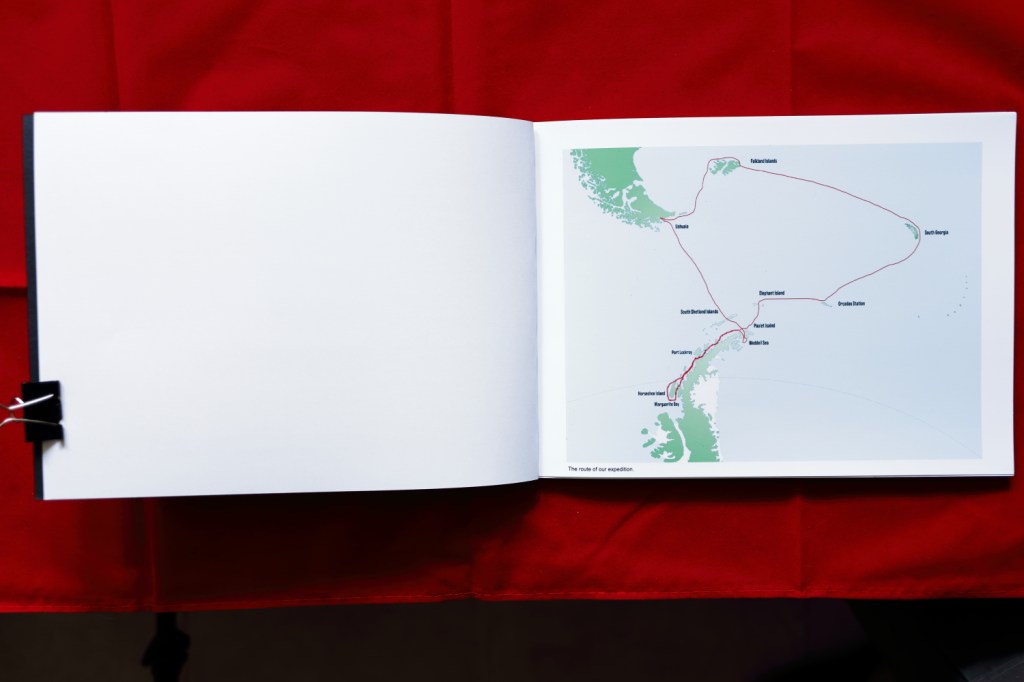
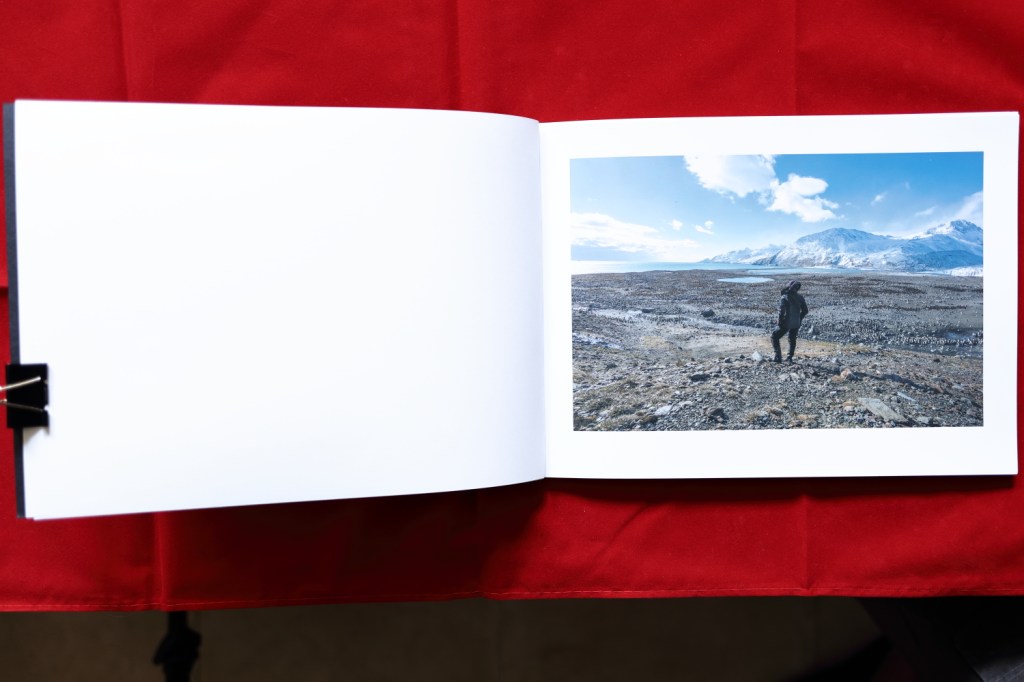
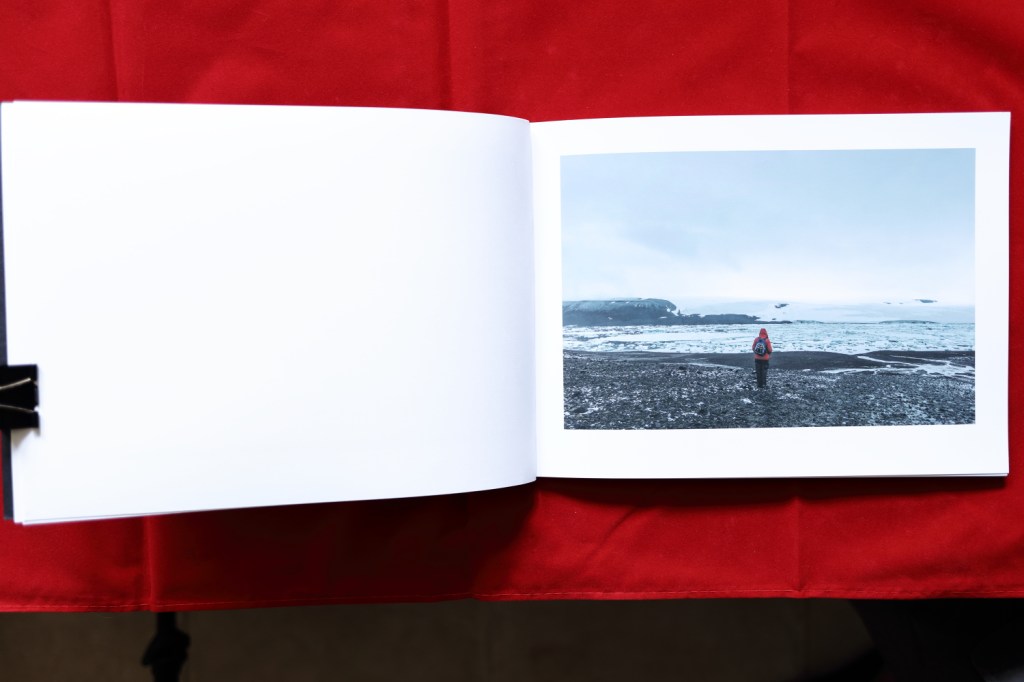
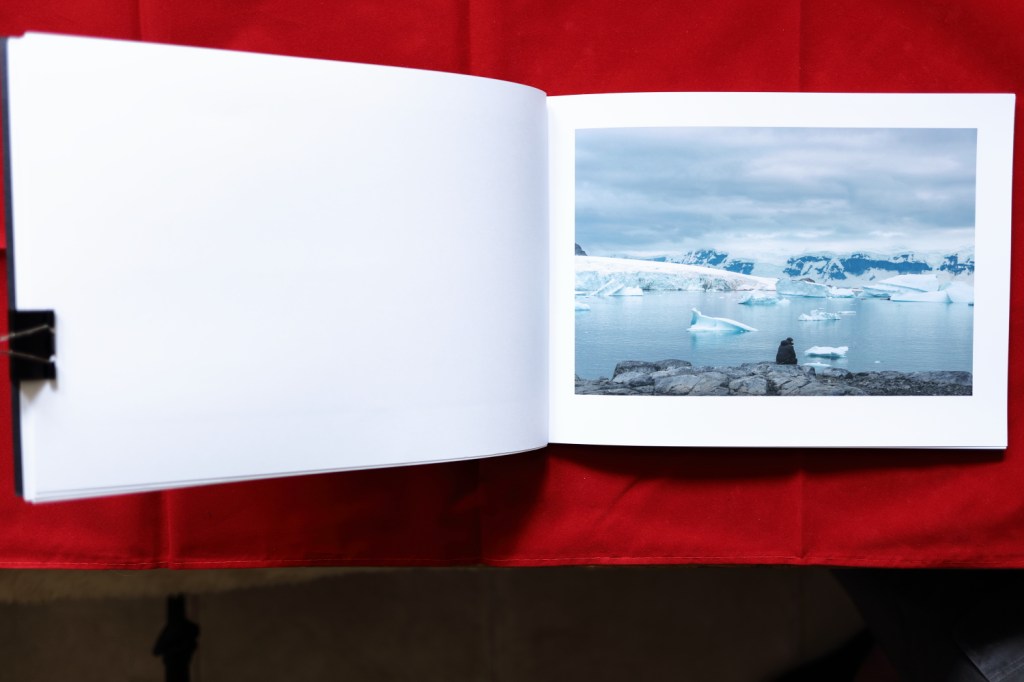
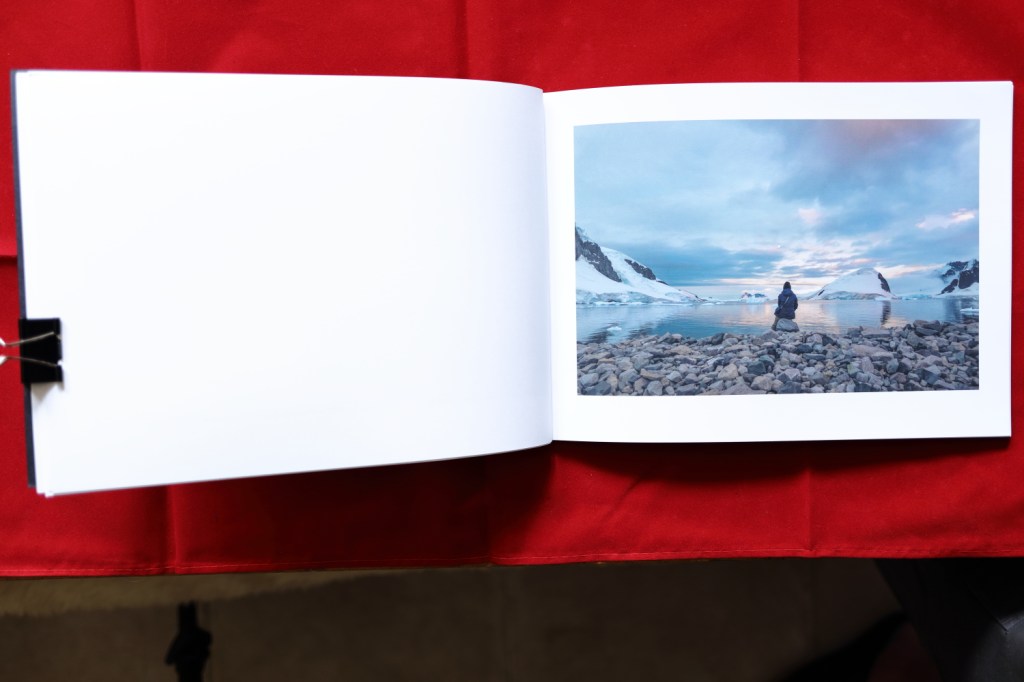
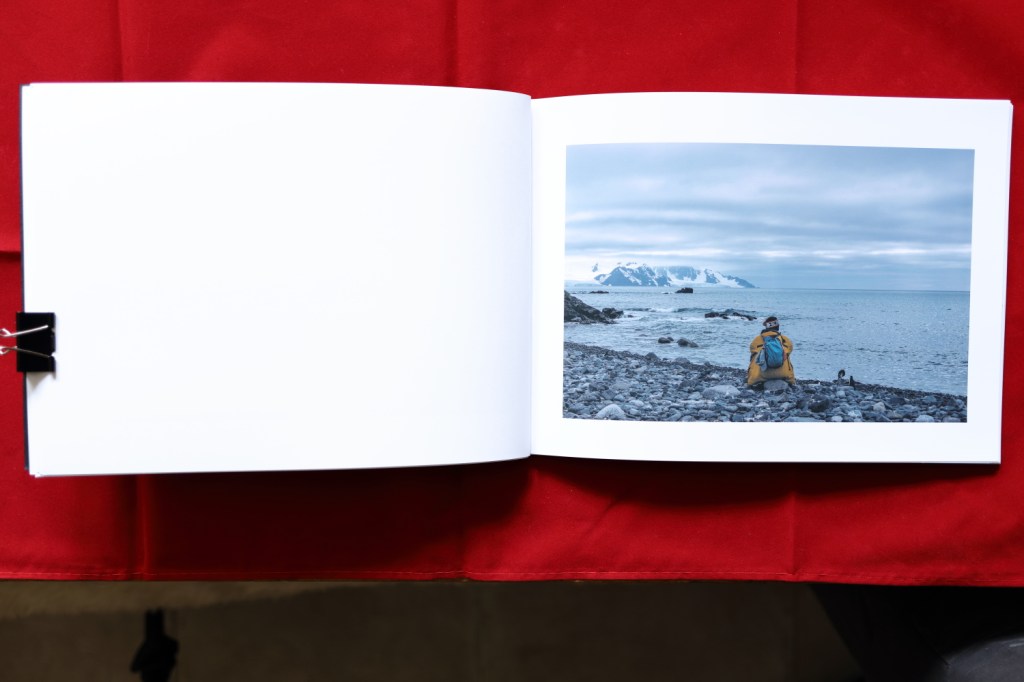
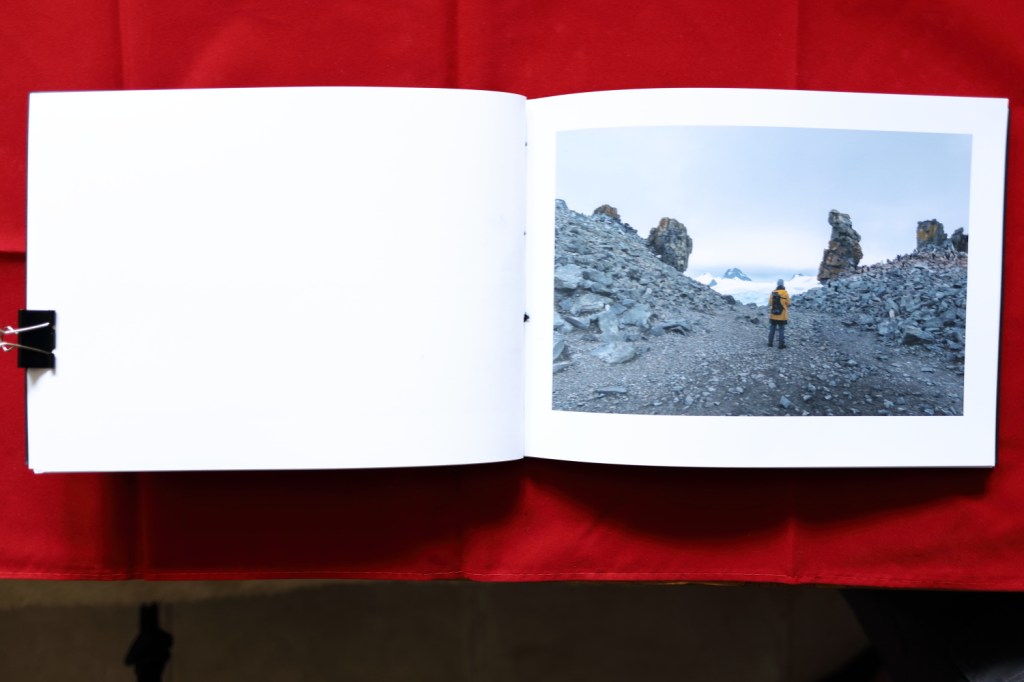
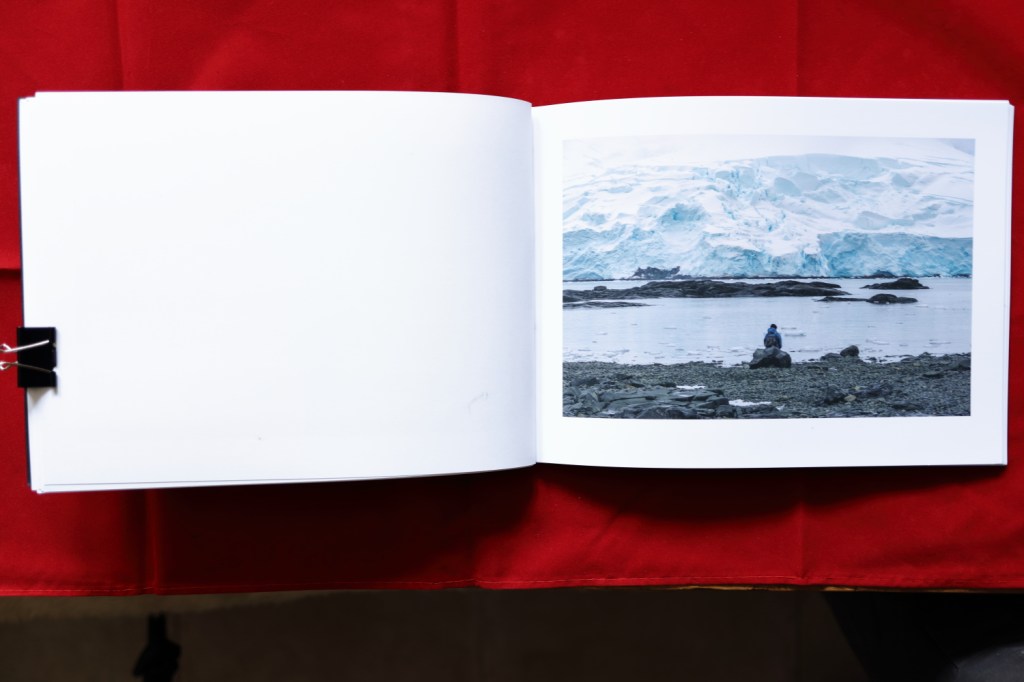
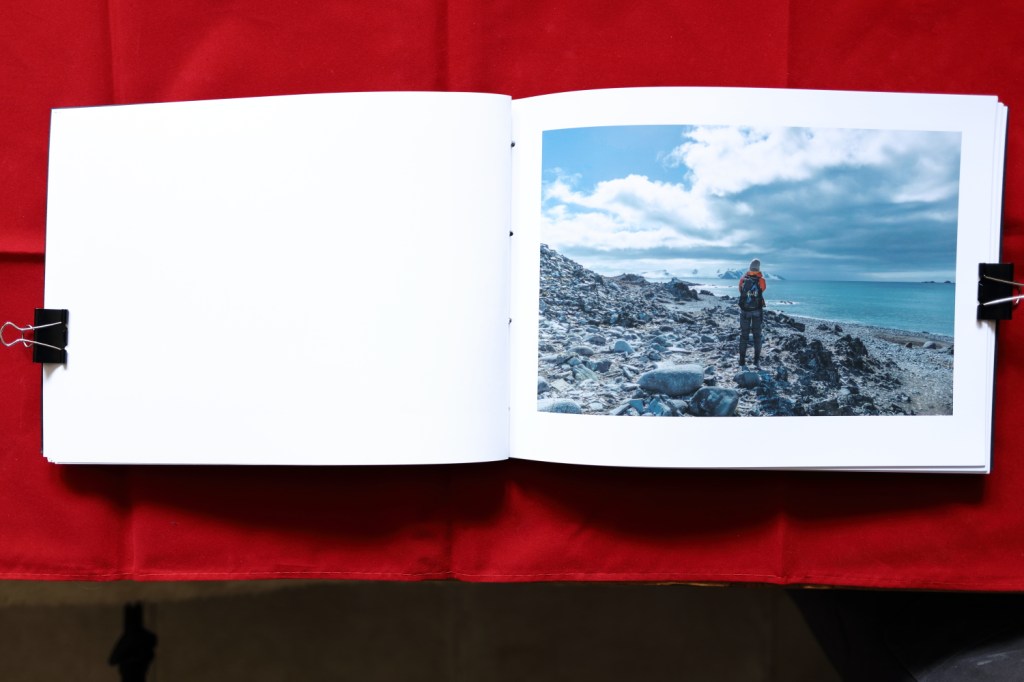
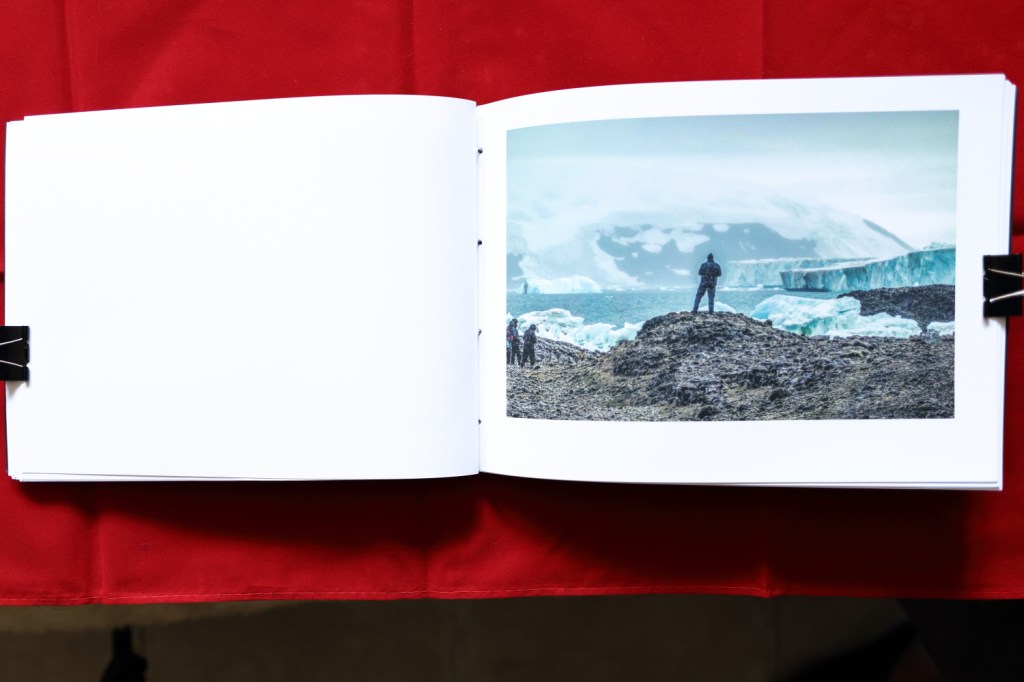
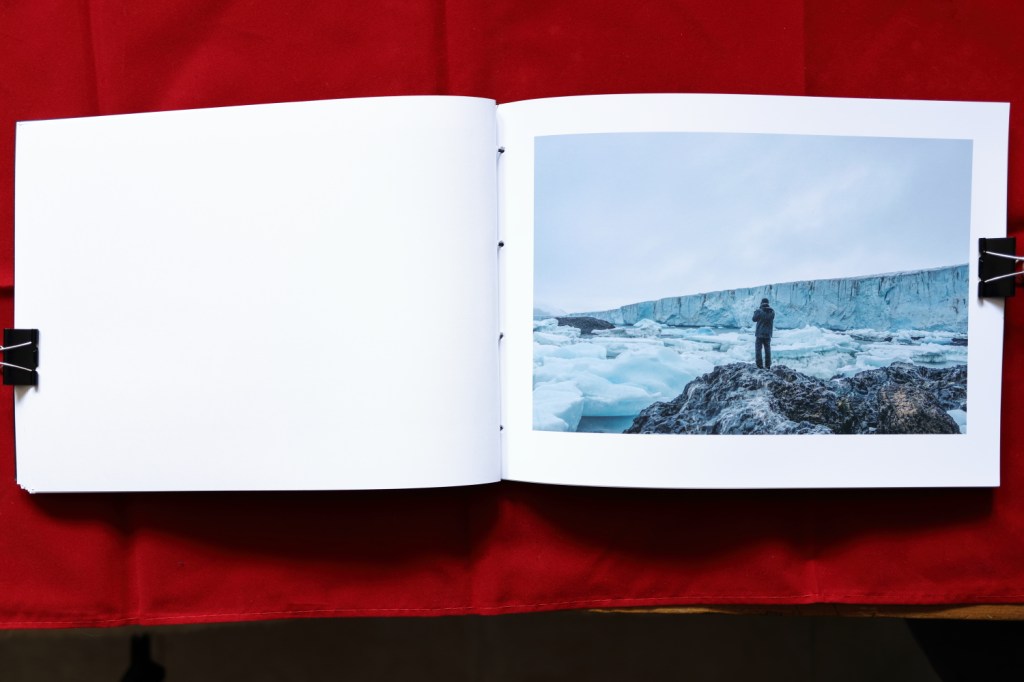
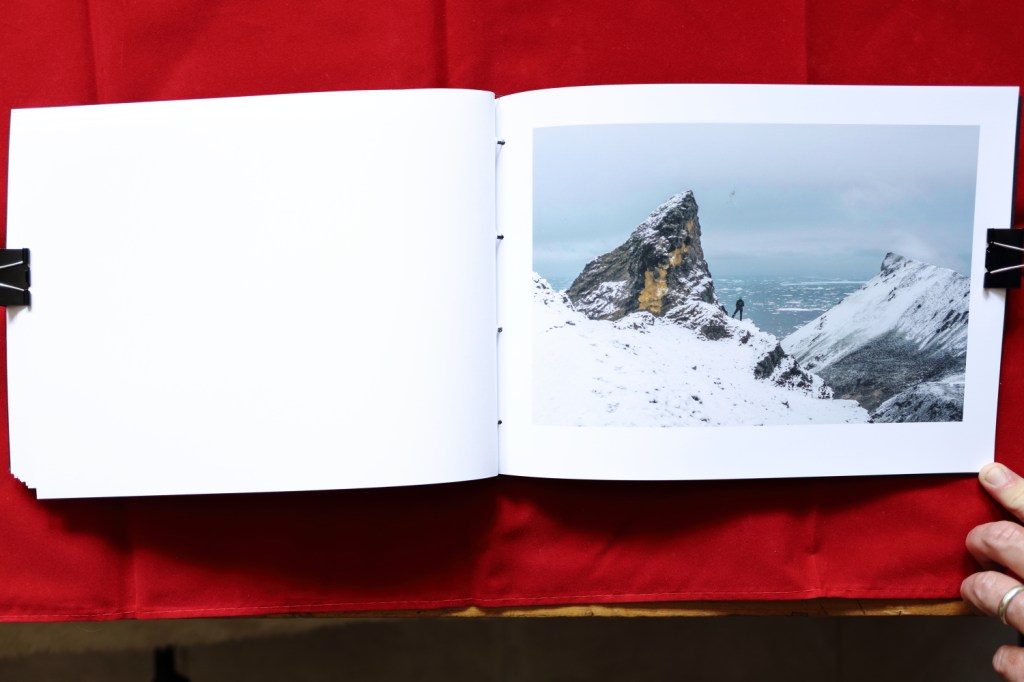
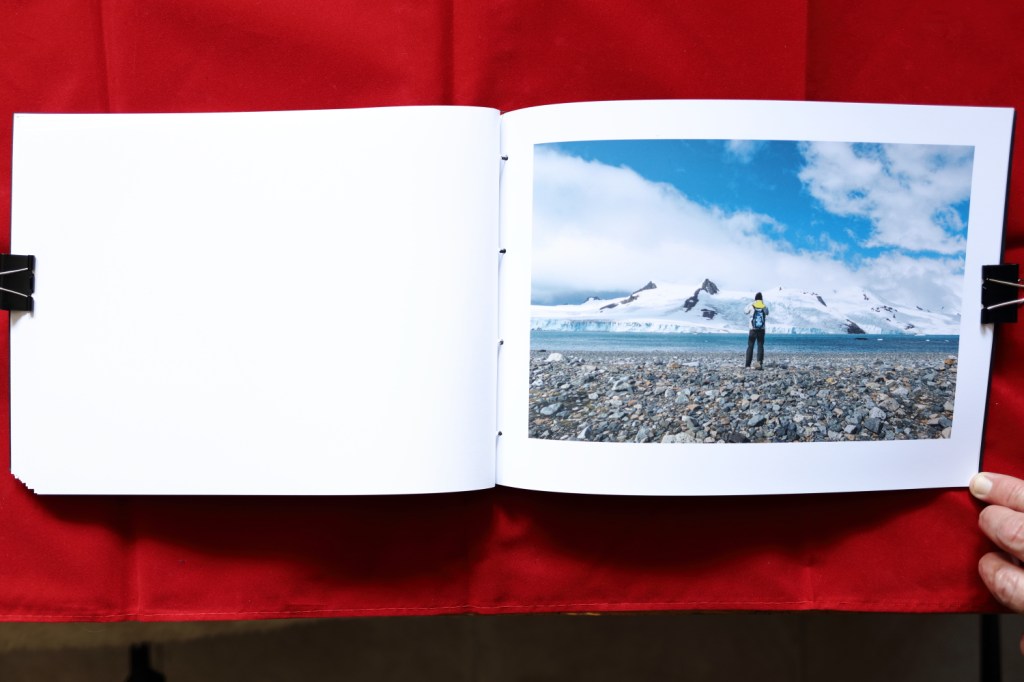
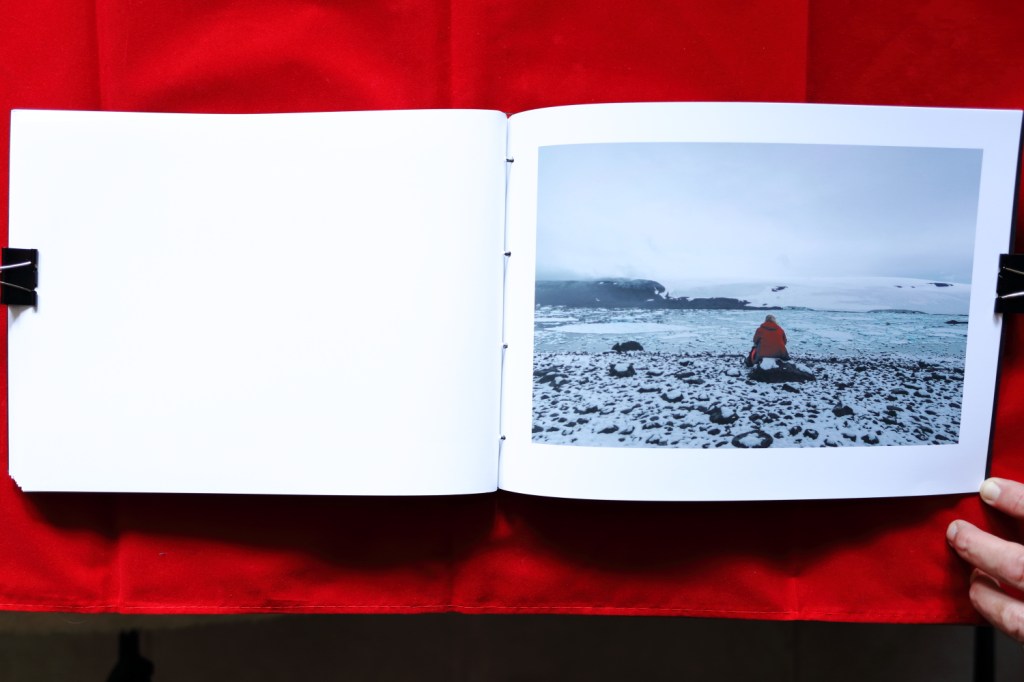
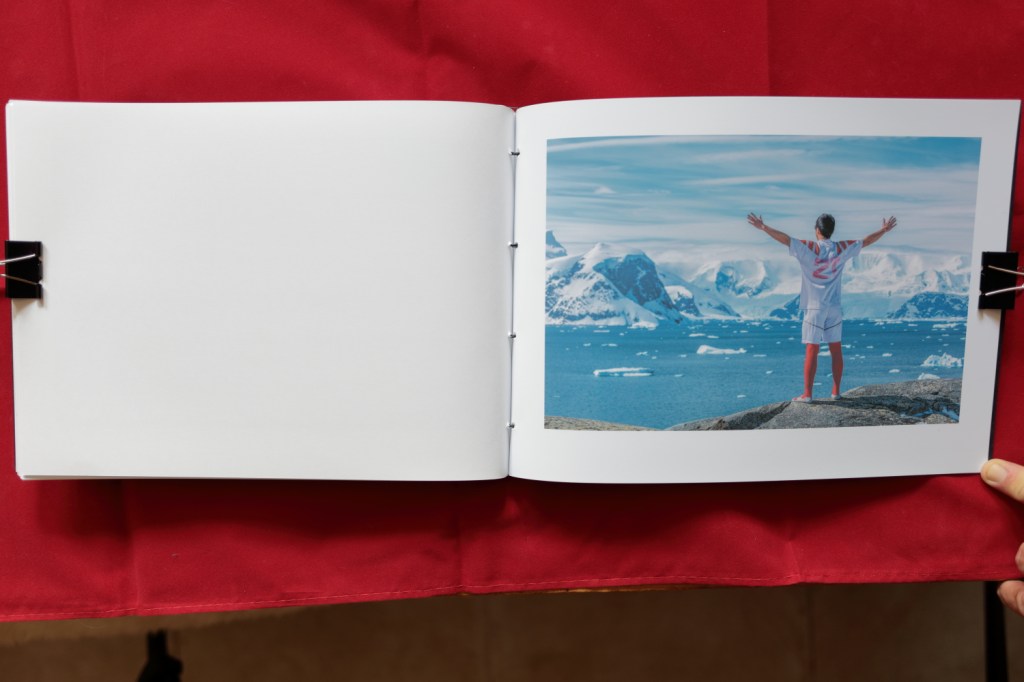
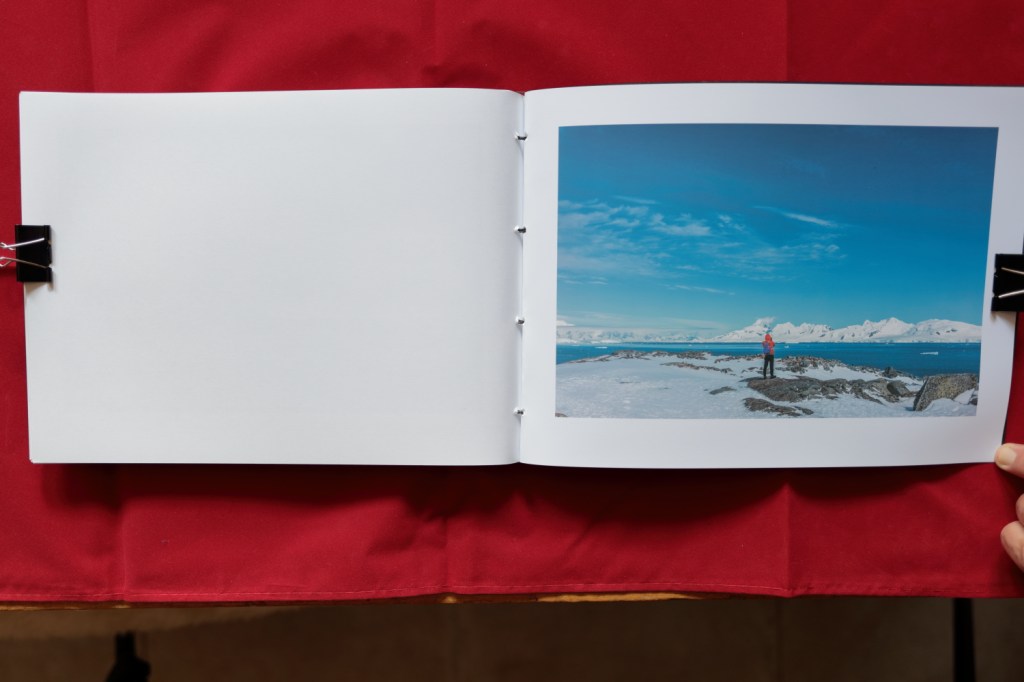
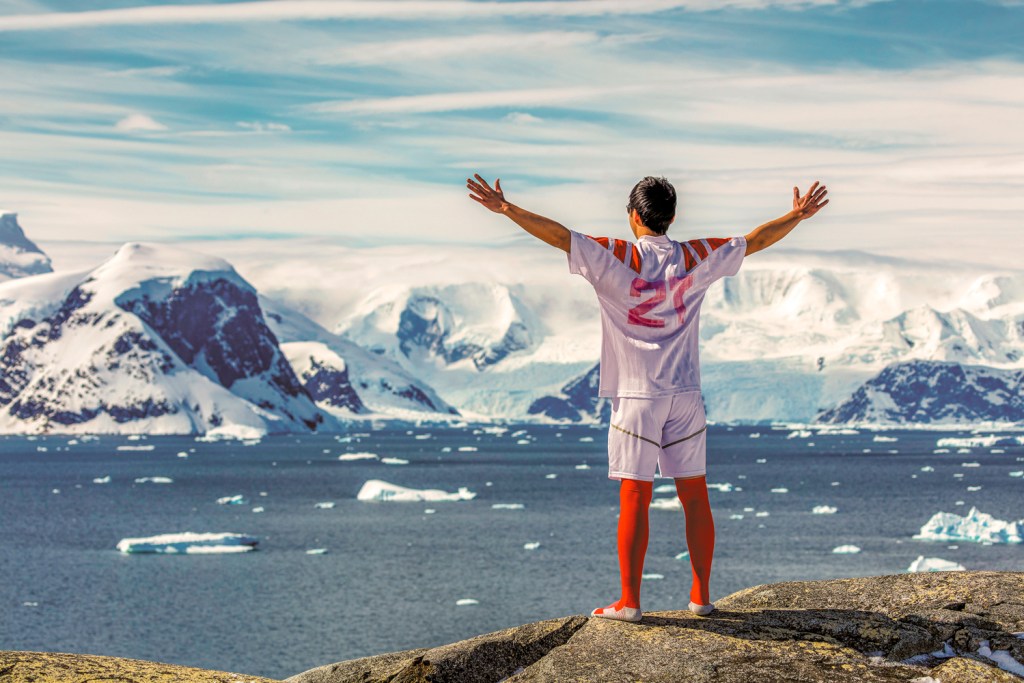
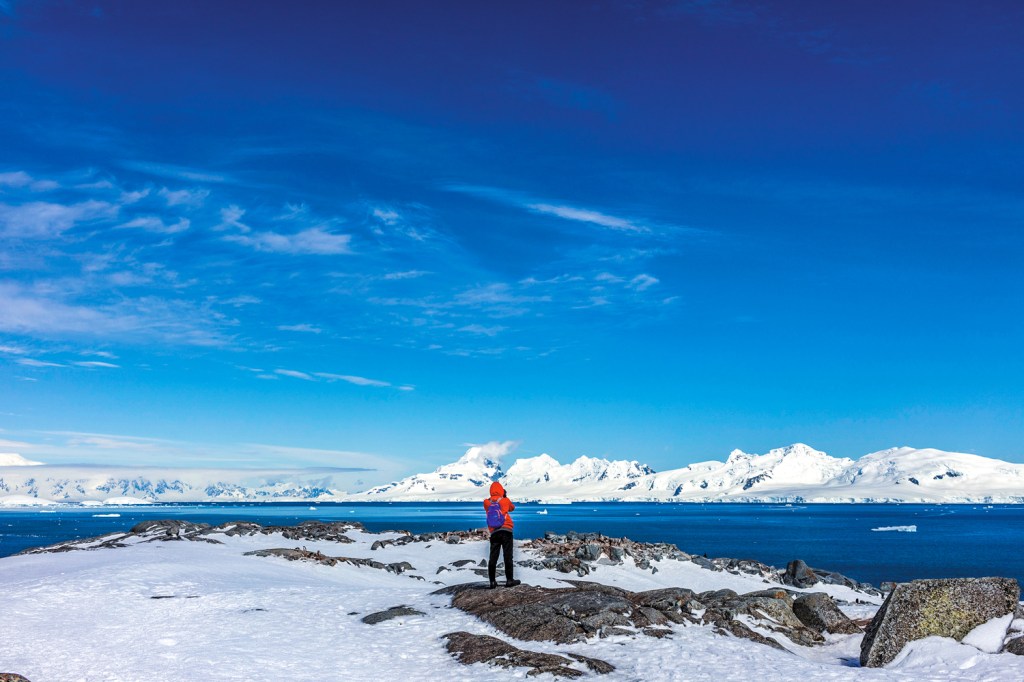
Work inspired by the work of Caspar David Friedrich.
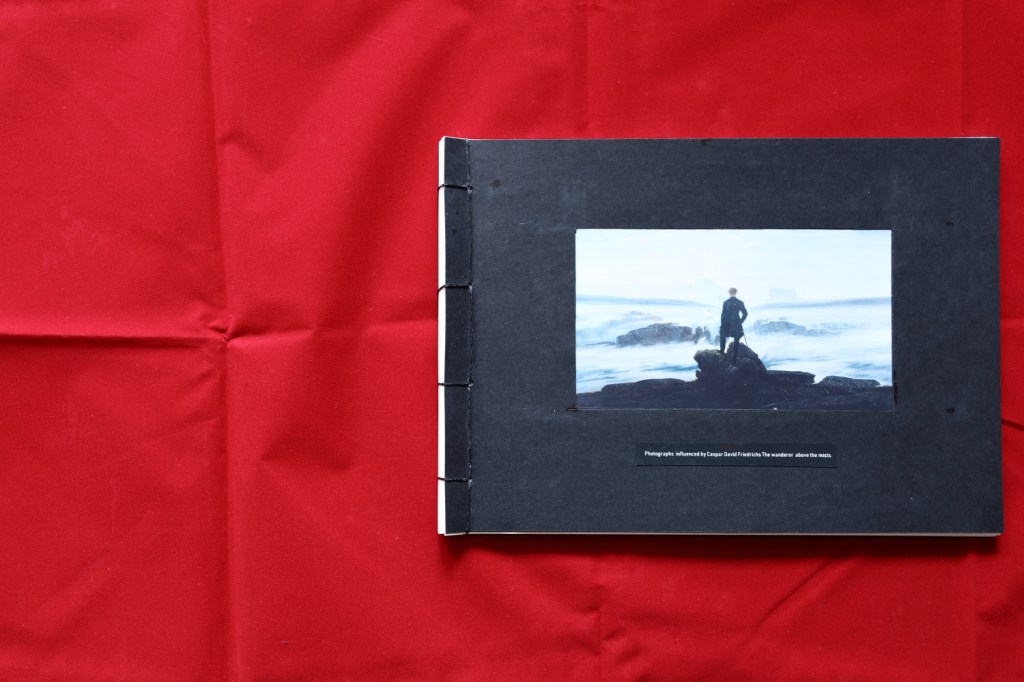
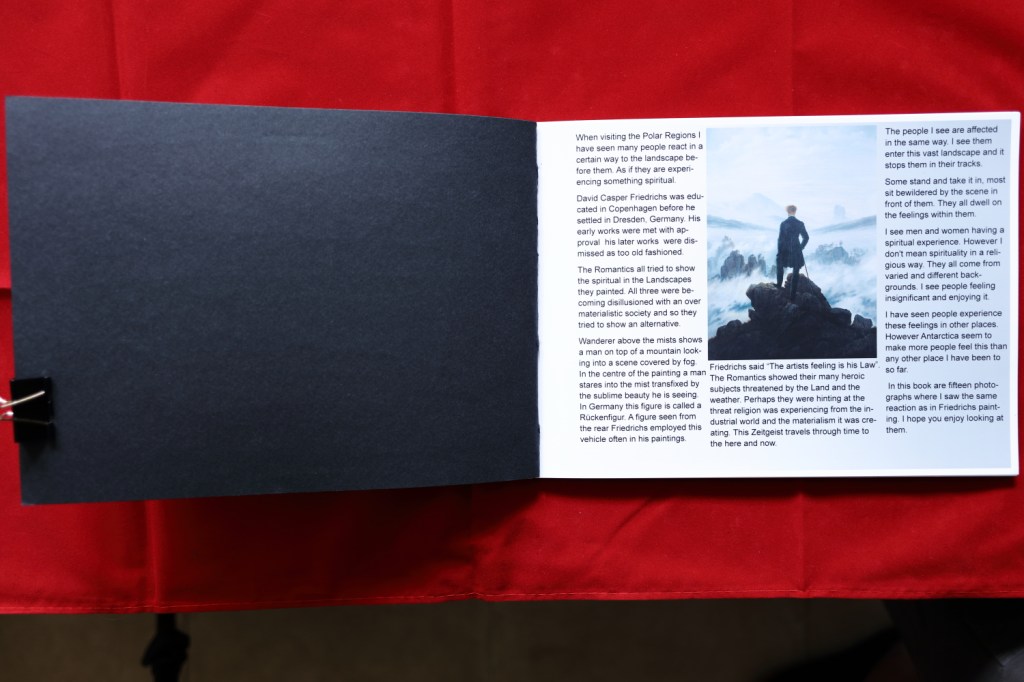
All the time I was away I planned on showing my work in a large book printed by Blurb. My tutor challenged me to learn Japanese Stab Binding and make my own book so taking control of the whole process from beginning to end.
I planned to send the finished book to my tutor but CoVid19 put a stop to this. As I returned from Antarctica the whole world was closing down. Buenos Aires and Sao Paulo were like scenes from a war film with coffee shops closing and people leaving as quickly as possible.
The problem I have of not being able to send my book to my tutor is a small one compared to the problems of others. I am glad I can find a solution to my insignificant problem by creating digital copies of my book.
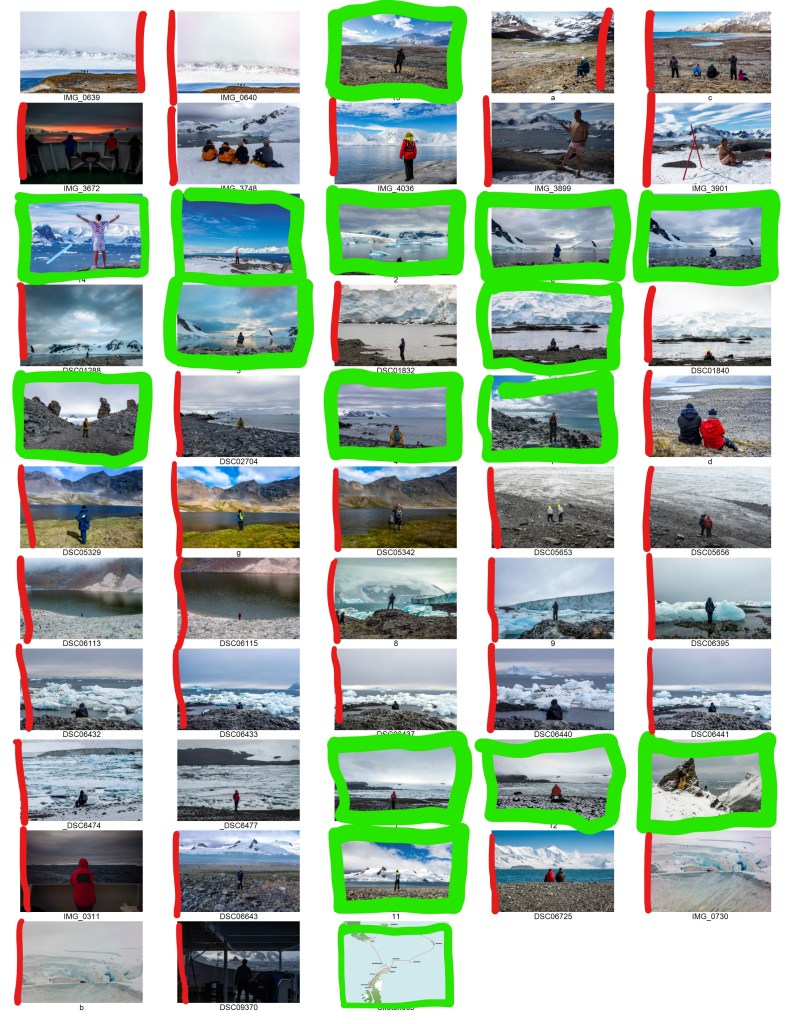
My solution is to photograph the book I and send the images to show the book. I will also include the images as they are on my computer so you can see the images in more detail if you would like to. Finally, I include the contact sheets of the set of images I took with this project in mind.
For the other pages from my learning log here are the links to each page.








 Michael Green Landscape Studies